Trend

The art market has 'shrunk'

Global auction exchanges shrink due to stalled sales of large works and less appeal for the luxury segment in China

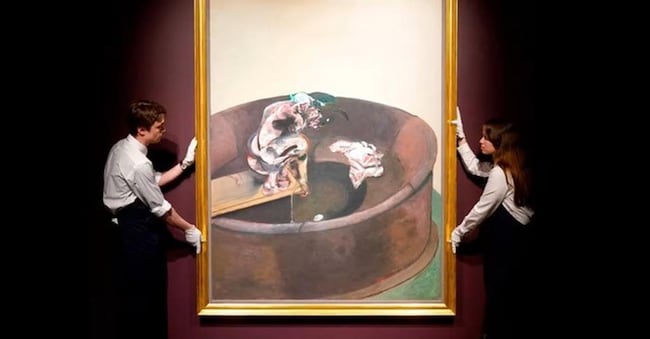
Una delle aste più importanti di Sotheby’s è stata al di sotto delle aspettative a maggio, quando l’offerta vincente per un ritratto di Francis Bacon del suo amante George Dyer non ha raggiunto la soglia minima della stima di 30 milioni di dollari (© Timothy A Clary/AFP/Getty Images)

4' min read

4' min read

At the beginning of the year when Arteconomy24 tried to outline together with art market experts what would be expected in 2024, a not too reassuring snapshot emerged. The year 2024 brought with it a market in which, after two years of euphoria, a certain calm and thoughtfulness had prevailed on the part of collectors in concluding deals. In summary, the art market had returned to more sustainable price levels, as stated by the experts, and in some geographic areas they were even lower than in 2021, in particular the US and APAC (Asia Pacific).

Two trends were expected at the beginning of 2024: a sideways trend, confirming the price level reached at the end of 2023, or a continuation of the downturn towards sharply declining values. The reality shows that in the first half of 2024, we have witnessed a continuation of the downward trend and a marked cooling down even for those collectibles that are most in demand, in the luxury segment, which had driven business volumes in the recent past, and in the most promising geographic areas (Asia Pacific) where major investments have been made by auction houses to open new venues and some galleries.

Loading...

In essence, weakening luxury spending in China together with the demand for artworks hit both Sotheby's and historical rival Christie's.

The two auction rivals

.

The results of the two big rivals Christie's and Sotheby's recorded sharply declining sales volumes. For Sotheby's, the drop in auction turnover was 25%, indicating a marked weakening of the market. Last May, one of Sotheby's most important auctions fell short of expectations when the bid for a portrait of Francis Bacon by his lover George Dyer failed to reach the minimum estimate of $30 million.

Sotheby's balance sheet

.

According to foreign press reports, in the first six months of 2024, Sotheby's posted revenue of $558.5 million, down 22% from $712.3 million in the same period last year. The results relate to Sotheby's core auction business and do not include earnings generated by other branches of the BidFair holding company, such as the financial services division that grants loans to art collectors. But even heavier, in the first half of 2024, Ebitda (earnings before interest, taxes, depreciation and amortisation) plummeted 88% to just $18.1m Even after removing additional costs - such as severance payments and legal settlements - from this measure of earnings, Sotheby's adjusted Ebitda fell 60% to $67.4m.

The first-half figures of Sotheby's main auction business reveal the extent of the auction house's financial pressure prior to the arrival of the white knight, namely Abu Dhabi's sovereign wealth fund ADQ, which is entering with a minority stake in Sotheby's capital through a capital increase that will be used by the auction house to reduce debt, further strengthen its balance sheet and finance growth plans. Bidfair, owned by Patrick Drahi, which acquired Sotheby's in 2019 in a deal that valued the auction house at $3.7 billion, including debt - marking its return to private ownership after 31 years -, will also invest additional capital along with Adq and remain majority owner of Sotheby's. All in all, this is a EUR 1 billion deal, and the transaction is expected to be completed before the end of the year.

Thus, Drahi will remain the auction house's majority shareholder, while ADQ buys newly issued shares to 'reduce leverage' and support 'growth and innovation'.

The first six months of Christie's

.

Sotheby's slowdown follows that of Christie's, which last month publicly announced a similar 22% drop in auction sales over the same period.

In the first half of the year, the auction house posted total sales of $2.1 billion worldwide, some $600 million less (-22%) than in the first six months of 2023. At the same time, Christie's maintained surprising stability in the face of recent turbulence. The sales rate of 87% was equal to that of 2023 and 2022. The bid-price ratio compared to the low estimate was 111% through June, meaning that winning bids for all lots sold (before commission) exceeded their minimum expectations by about 11%. The equivalent figure for the first half of 2023 was 107%, a 4% improvement on the previous year.

By sales category, around two-thirds of Christie's $2.1 billion first-half auction revenue came from 20th and 21st century artworks and luxury goods were the second most profitable category under the hammer, contributing $362 million (around 17% of the global total in value terms). The unattractive results did not change the logic of Christie's investment in its new 50,000 square metre Asia-Pacific headquarters, which will open in September in the Henderson building designed by Zaha Hadid Architects. Hong Kong remained the auction house's top market in the region during the first half of 2024, followed by Mainland China. Asia-Pacific buyers also provided more than a quarter of global auction revenue among buyers new to Christie's during this period, as well as 38 per cent of spending among millennial clients worldwide.

Copyright reserved ©
Loading...

Brand connect

Loading...

Newsletter

Notizie e approfondimenti sugli avvenimenti politici, economici e finanziari.

Iscriviti