The art of hospitality: lights, scents, bubbles and dreamlike projections
A visit to the heart of the Maison Ruinart for an immersion in taste and art that enhances the five senses. With an eye, always, on environmental sustainability.

Gregoire%20Machavoine-U14628867166uwM-1440x752@IlSole24Ore-Web.jpg?r=650x341)
3' min read
3' min read
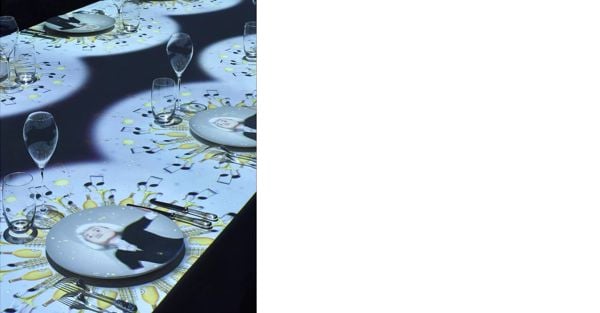
A table of understated elegance for just twelve diners, illuminated by soft lighting, where we can already foretaste the dishes with chef Valérie Radou's light and precise hand, paired with glasses of the Maison's late disgorgement cuvées.
And suddenly the table comes alive, plates and cutlery seem to float in the air, moving and reassembling themselves, vine shoots tie themselves to the stems of the glasses and the story of Maison Ruinart begins to unravel. Under a dome of powder pink light, the most dreamlike experience the Maison has ever conceived comes to life: 'Dîner Immersif Petit R'. A multi-sensory dinner, created to subvert the rules of time and let the dream sit at the table. In a play of lights, scents and immersive projections, each course becomes a story, each goblet a memory in the making. There, in the heart of the new pavilion designed by Sou Fujimoto, matter dissolves into vision, and the art of hospitality merges with that of desire.
Champagne, an evolving history
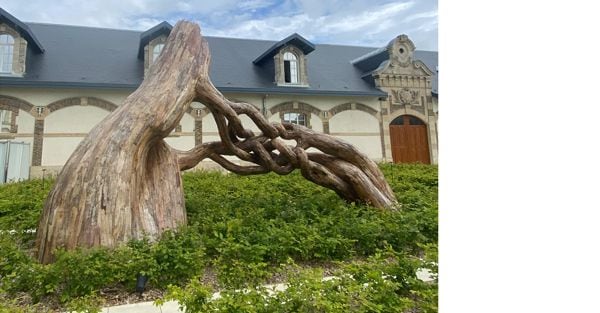
Welcome to 4 rue des Crayères, where the oldest history of Champagne meets the lightest future. In Reims, Maison Ruinart has allowed itself to be traversed by time and the seasons like an ancient vineyard, and the recent metamorphosis of its historic address is not just a restoration: it is a manifesto of style. The pavilion, harmoniously nestled between the 19th-century buildings and gardens sculpted by biodiversity, is like a drop of champagne solidified in light. The natural materials, the transparency of the surfaces, the continuous dialogue between inside and outside: everything speaks the language of sustainable refinement.
Gregoire%20Machavoine-U24752851725Ech-600x313@IlSole24Ore-Web.jpg)
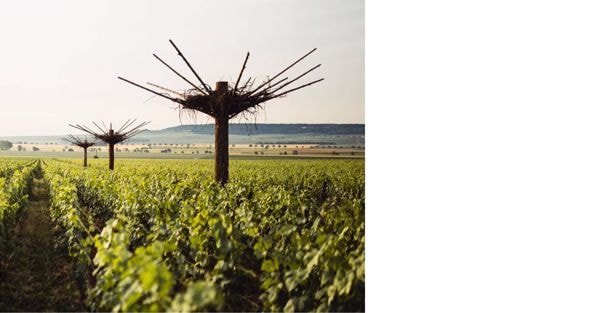
Arriving there by walking along the new Chemin des Crayères, a dazzlingly white corridor, is a poetic act. The traces of the ancient chalk quarries, now a UNESCO heritage site, accompany us towards the living heart of the Maison: the crayères, cellars dug as deep as 35 metres, where the bottles rest as if in meditation. It is there that the magic of Blanc de Blancs is born, the signature chardonnay that has made Ruinart unmistakable. The savoir-faire of the Maison is a gesture that is handed down, but which also knows how to reinvent itself: as in the case of the cuvée Blanc Singulier, a refined response to climate change, capable of interpreting the new nuances of the vine with audacity and grace. And of surviving time: in the late desgorgement project, some of the bottles are not disgorged at the same time as the others, but kept sur pointe (upside down) for years, so that resting on the lees maintains the freshness and identity of the vintage, while allowing the aromas and taste sensations to evolve. An example? The extraordinary R de Ruinart 2004, unveiled in 2024, after a good 20 years.