
The art of tailoring: expressing who we are through what we wear
The Italian provinces and the underground scene, comics and street culture, erotic illustrations and manga. Andrea Grossi takes traditional menswear as his starting point and reinvents it.

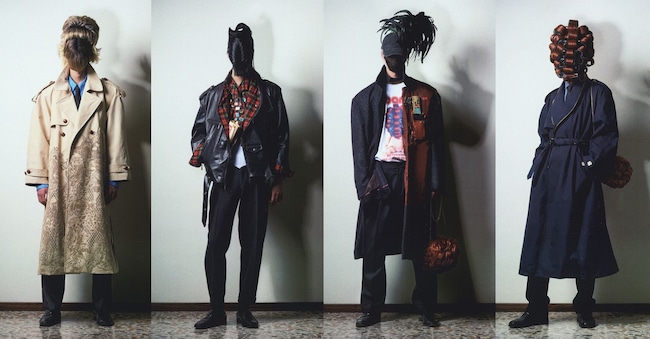
Redefining the language of menswear by starting with an understanding of the cultural codes of the traditional male wardrobe. This is the aim of Andrea Grossi and his project, founded in 2025 and presented at Milan Men’s Fashion Week that same year. Grossi – the brand’s name – is a narrative framework through which to observe the contemporary Italian man, his contradictions, his vulnerabilities and the symbolic constructs that define masculinity. His work stems from a precise reflection on masculine aesthetics and their relationship with the concept of status. Not ostentatious or spectacular, but everyday, almost invisible, constructed through small shared codes: the way a jacket is worn, the relationship with denim, the cultural weight of elegance, the idea of manhood handed down through generations. His perspective – lucid, yet never cynical – combines irony, affection and critical scrutiny.
The designer’s collections – spanning 30 years and rooted in Emilia – speak the language of the Italian provinces, the streets, 1990s television, comic books, subcultures and a popular culture that rarely finds its way into the world of luxury in an authentic way. Grossi’s strength lies in his ability to make these references immediately recognisable without turning them into nostalgia. The past is never invoked as an aesthetic exercise, but used as living material to be manipulated. Indeed, the designer works on the concept of collective memory as a surface to be altered. The garments seem familiar, yet something always appears slightly off-kilter: a silhouette shifts in proportion, a fabric is treated in an unexpected way, or a detail introduces an ambiguous element. With L’Uomo per Gioco, the latest evolution of the project, the exploration takes on an even more psychological and narrative dimension. The collection revolves around the idea of play as the primary tool through which we construct our identities. Even before we become adults, we learn to play roles: we dress up, imitate heroic figures, invent characters and experiment with how we present ourselves to others. Grossi uses this mechanism to examine the concept of contemporary masculinity, portraying it as something performative, fragile and constantly evolving.
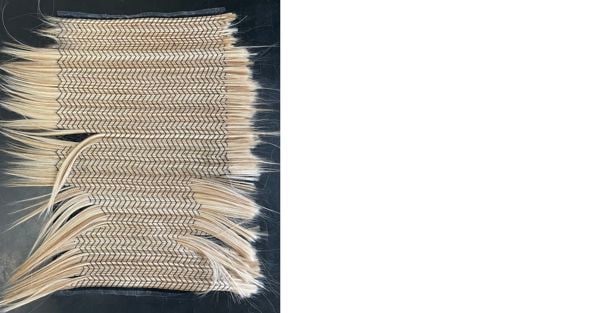
The visual universe of the collection is thus built around figures suspended between reality and representation. The models wear wigs inspired by the synthetic hair of dolls, elements that transform the face into a character. The hairstyles become emotional masks: artificial, yet also incredibly vulnerable. Some looks are complemented by masks that cover the face, erasing identity and emphasising the collection’s theatrical dimension. The imagery draws on manga, video games, avatars and icons of the counterculture of the 1980s and 1990s.
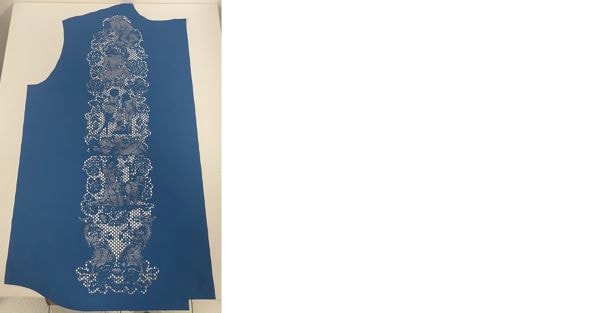
This same narrative dimension is also reflected in his work with materials – one of the central aspects of Grossi’s practice, which involves sophisticated research into the manipulation of textiles. Wool, herringbone and classic tailoring fabrics are subjected to treatments typically used on denim: coating, resin treatments and processes that stiffen the surfaces, creating a soft texture that resembles leather. The result is menswear with the authority of a traditional wardrobe, yet imbued with a rougher, more emotional and contemporary edge. Among the collection’s highlights is the work on lace, reinterpreted in a new way. Grossi uses a decorative language historically associated with femininity and transforms it with laser cut-outs inspired by Andrea Pazienza’s erotic drawings from Pazeroticus. The result is a graphic motif that combines sensuality, irony and underground culture. Lace is not a romantic decoration, but a narrative surface, a subversive gesture.
Alongside the clothes, a whole world of characters: the Sbarbi, caricatures that adorn T-shirts and accessories as childlike and irreverent alter egos, and a leather doll, a symbolic presence in the collection; somewhere between play and a fetish for growing up, it prompts reflection on the relationship between masculinity, vulnerability and the social construction of adulthood. His communication strategy also draws on the same codes. Grossi references and reworks the aesthetic of Armani’s 1980s campaigns, in which the male figure appeared as a symbol of power and desirability. That heroism is, however, stripped of rhetoric and reinterpreted with a touch of light-heartedness. The man is no longer an unattainable ideal, but a complex and fragile figure. The project speaks Italian, yet touches on universal themes: the need to belong, the construction of identity and the attempt to understand who we are through what we wear.

