Industry

The Asti region drives the packaging industry

Trend. Llast year the sector recorded a turnover of 550 millionIn the region there are around sixty companies employing over 3 thousand people

by Claudio Andrea Klun

3' min read

3' min read

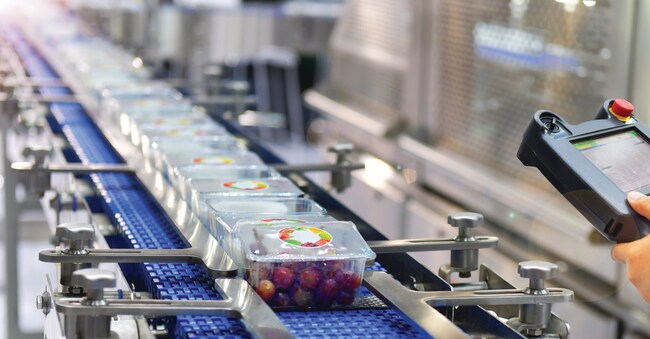
For the third year in a row, the sector of automatic packaging machine manufacturers posted record growth at national level and Piedmont confirmed its position as one of the top Italian regions for packaging machines.

This is the picture that emerges from the figures for 2023 released by Ucima's Mecs Study Centre, which takes a snapshot of the industry's development every year.

Loading...

In 2023, at national level, the sector recorded a total turnover of EUR 9.229 billion, an increase of 8% on the previous year. This is the third consecutive record, following 2021 and 2022. An important result, 78.7% of which was achieved on international markets totalling 7 billion 262 million euro and 21.3%, 1 billion 967 million euro, on domestic markets. In the breakdown of turnover between the various customer sectors, 2023 confirms a predominance of the food industry (food and beverage), which accounts for 57.1% of the total turnover.

The primary packaging machinery family remains predominant with 52.4% of turnover distribution, followed by the end-of-line, labelling and ancillary equipment segment (27.2%) and secondary packaging (which absorbs the remaining 20.4%).

Companies producing packaging and packaging machinery are mainly concentrated along the axis of the Via Emilia, the so-called Packaging Valley. Emilia-Romagna is home to 205 companies (34.5% of the total) that employ 21,881 people (57.3% of the total) and generate 62.6% of the total turnover, amounting to 5 billion 781 million euros. They are followed, in order, by Lombardy, Veneto and Piedmont. The latter occupies fourth place in the ranking of regions with the largest number of companies dedicated to packaging. In fact, Piedmont has 60 companies, representing 10.2% of the total, and 3,135 employees, or 8.2% of the total. The aggregate turnover amounts to 554 million, or 6% of the total.

Asti is the province with the highest number of companies and ranks sixth among the top 10 in Italy. In detail, Asti has 24 companies with 1,432 employees and a 2023 turnover of 203 million; in second place in Piedmont is the province of Cuneo, with 9 companies, 702 employees and a turnover of 139 million; in third place is Novara, with 5 companies, 552 employees and a turnover of 115 million; in fourth place is Alessandria with 8 companies, 221 employees and a turnover of 48.151,092 euros; in fifth Turin, with 12 companies, 197 employees and a turnover of 41,181,727 euros; in sixth Vercelli, with 2 companies, 31 employees and a turnover of 5,486,102 euros.

Riccardo Cavanna, Ucima Chairman and Lead Strategist of Cavanna Spa of Prato Sesia (Novara), a leading group in turnkey primary and secondary packaging solutions, emphasises that the Piedmontese trend basically reflects the national figure and that some of the most important market players are Piedmontese.

"We are all medium-sized companies, with important and historical brands, even if we do not have a weight comparable to that of the Emilia packaging district. The greatest concentration is in the Asti area, where an induced activity linked to Ferrero has developed. In the wine sector, Gai Macchine Spa (Ceresole Alba, Cuneo) has revolutionised the world of sparkling wine bottling. Arol Spa of Canelli (Asti) is a world leader in customised capping machines. Almost all of them are family companies, with brilliant and highly international entrepreneurs, who embody the concept of the pocket-sized multinational'.

Regarding the outlook for packaging machinery, both nationally and in Piedmont, Cavanna emphasises that 'although the numbers show an increase in turnover and global leadership, there are also shadows. We suffered a shock related to electronic components, which we did not receive because of the global shortage. This affected our balance sheets and customer satisfaction levels, with major delays in deliveries and consequent penalties. Important client companies, due to rising raw material and energy costs, made fewer investments and reduced budgets, and we suffered a reduction in margin and an increase in costs, which we were unable to pass on to our end customers.

Despite the stalemate, our industry continues to invest in a medium and long-term perspective, which sees the world's growing need for automation and packaging done well with quality machines. But we are also suffering from the consequences of dumping practices by Turkey in the Mediterranean basin and by China in the Asian market. However, we expect to close 2024 at the same level as 2023 because in the end, by working on global markets and differentiating, we were able to compensate for the closure of the Russian and Ukrainian markets and this deglobalisation effect in the world.

Copyright reserved ©
Loading...

Brand connect

Loading...

Newsletter

Notizie e approfondimenti sugli avvenimenti politici, economici e finanziari.

Iscriviti