
‘The audiovisual sector is at a standstill, which risks bringing investment and creativity to a halt’
Sbarigia (Apa): Regulatory uncertainties, tax credits and the issue of rights are holding back growth. The Italian Global Series Festival gets underway

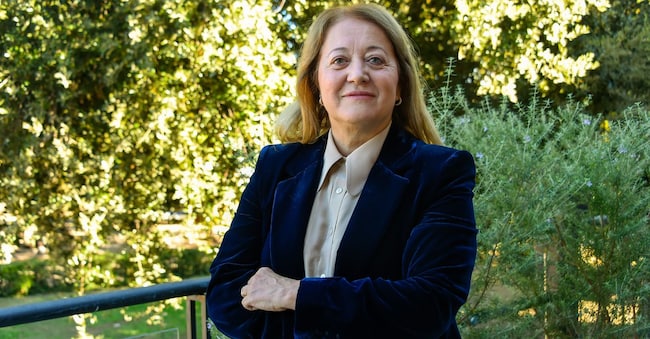
The figures paint a picture of a sector that continues to be a major contributor to the Italian economy. But behind the figures lies a slowdown that risks undermining the progress made in recent years. The Italian audiovisual sector, says Chiara Sbarigia, president of APA, the association of audiovisual producers, ‘is experiencing a period of stagnation’. And it is precisely this stagnation that now represents the most serious problem, as the association’s head points out, for a sector that, from today until 11 July in Rimini and Riccione, will be in the spotlight at the Italian Global Series Festival: a festival dedicated to the best Italian and international series.
Speaking to *Il Sole 24 Ore*, Sbarigia cites figures from a number of studies. The first, carried out in collaboration with eMedia, will be presented in October. However, initial estimates suggest ‘an audiovisual sector that will generate, in Italia, a value of around 17 billion euros by 2025’. These are provisional figures still undergoing final review; however, ‘growth is minimal compared with 2024, when the figure stood at 16.3 billion. This means that the sector has stopped growing and that we have entered a period of stagnation that we cannot ignore’.
Yet the economic impact remains enormous. Another study by OpenEconomics, commissioned by APA, estimates the audiovisual sector’s overall impact on other sectors at 23.5 billion. The figure for the social return on investment is also significant. ‘For the first time, we have measured the SROI, or Social Return on Investment. It is a tool developed by economists that measures the social value generated by the sector and shows that for every euro invested, 4.6 euros of benefit are generated for the community.’ But that is not all. The audiovisual sector is now one of the cornerstones of the Italian cultural industry. “If we consider the cultural industry as a whole – including books, music, museums, live entertainment and all other traditional activities – the audiovisual sector,” emphasises the APA president, “now accounts for almost 50 per cent of the total economic value.”
The problem is that this strength is now at risk of being undermined by regulatory uncertainties. “The tax credit window has not yet opened and, together with the reduction in the tax rate, this is creating difficulties in dealings with clients. Over the last two years, all of this has had a clear impact on companies’ profitability.” The consequences are not limited to the balance sheets. “When profits fall, companies invest less in intellectual property, in the development of new projects and in experimentation.” It is therefore inevitable that we must also address the issue of rights: “As APA, we have initiated ‘round-table discussions’ with Rai and Mediaset, precisely to tackle the issue of rights and establish a more stable framework for relations between producers and clients.”
Against this backdrop, the issue of funding risks stifling the sector. “There is still a shortfall of around 50 million euros in the audiovisual tax credit. If the available funds were to run out quickly, many productions would be at risk of coming to a standstill in the second half of the year.” And, as Sbarigia concludes, “If the use of content purchased from abroad increases, the risk is not only economic; it also undermines the country’s ability to tell its own story and build its cultural identity.”


