
The automotive supply chain loses 3 billion in turnover
Piedmont has been hit hardest, with 700 businesses recording a 4.6 per cent fall in turnover and a 3.5 per cent drop in the number of employees

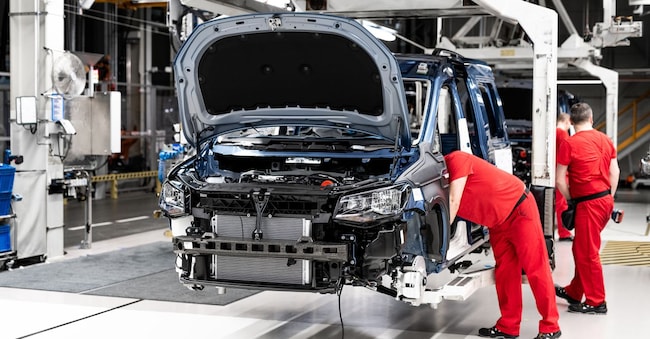
The Italian automotive supply chain has lost around 3 billion in turnover – bringing the total to 53.5 billion – and 23 per cent of its workforce (166,800) over the course of a year, at national level. Piedmont has borne the brunt of this, with 700 companies in the region recording a 4.6 per cent fall in turnover and a 3.5 per cent drop in the number of employees.
The data from the 2026 edition of the Observatory on Italian Automotive Components and Mobility Services – a survey carried out annually by the Turin Chamber of Commerce and ANFIA, the National Association of the Automotive Industry Supply Chain – paint a picture of a sector in decline, with figures falling for the second consecutive year and negative forecasts for 2026, including at a global level, where production for the current year is estimated to be down by 3 per cent.
The crisis has spread to all component manufacturers, without exception, with the sole exception of the motorsport sector, which in any case accounts for less than half of the sector as a whole. The cause, as described by the companies in the sample, is linked to the completion of existing contracts and the lack of new contracts with Stellantis, which accounts for, as an average share of turnover generated by sales, 21.7 per cent, down from 25.1 per cent in 2023, with 56 per cent of suppliers still serving the Group (compared with 60 per cent in 2023). Exports remain a strong point, with growth of 4.4 per cent and a trade surplus in excess of 7 billion.
“The sector is contracting, but companies are responding, even in a difficult climate in which investment is struggling to grow. A significant figure is the proportion of businesses looking to AI applications to optimise production processes, which has risen from 14 per cent to 22 per cent,” emphasises Massimiliano Cipolletta, president of the Turin Chamber of Commerce. “The situation is extremely complicated both in Italia and across Europe; 2026 will be an even worse year than the last, and there is serious concern about the future,” emphasises Gianmarco Giorda, director of ANFIA. This concern is evident in the urgency with which companies in the Italian automotive supply chain are calling for a second car manufacturer in Italia. “For the ‘Made in Italy’ industry, the challenge is to consolidate production volumes and maintain the strategic positioning of our companies within international supply chains,” say Miriam Sala, head of ANFIA’s Research and Statistics Department, and Barbara Barazza, head of the Research and Statistics Department at the Turin Chamber of Commerce (CDC).
ANFIA estimates that production in Italia this year, comprising both passenger cars and commercial vehicles, will be between 520,000 and 530,000 units. This figure does indeed represent a reversal of the trend seen the previous year, but it still pales in comparison to the more than 900,000 units produced in 2019 and helps explain some of the sector’s difficulties, which have been exacerbated by an unprecedented industrial crisis amongst European manufacturers and by the commercial and competitive pressure commercial and competitive pressure from Chinese manufacturers, who do not yet produce anything in Europe and hold a market share of between 10 and 15 per cent. ‘The agreement currently being finalised in Europe on technological neutrality, on openness towards biofuel-powered engines and on the “Made in Europe” requirement – which stipulates that 70 per cent of a car’s components must be manufactured in Europe – is important,’ explains Giorda.


