
The eVitara crossover, bringing Suzuki into the age of lithium-ion cars
The Japanese company's turnaround

2' min read
2' min read
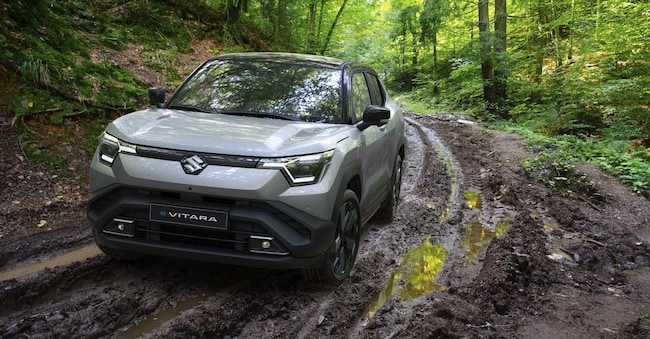
Suzuki enters the Battery Electric Vehicle (Bev) cyclone with the new eVitara, the Japanese brand's first zero-emission model that aims to meet the stringent European regulations for the reduction of CO2 emissions from 1 January 2025. But Suzuki's goal is also to reduce emissions from car production. In addition, the Hamamatsu-based company is promoting the Suzuki Smart Factory Creation, imagining what production should look like in 2030, in order to continue to ensure the means of mobility for people all over the world.
By combining Suzuki's production principle 'Sho-Sho-Kei-Tan-Bi (more compact, fewer, lighter, tidier)' with digitisation, it will optimise, minimise and simplify the flow of data, materials and energy. Through these initiatives, Suzuki will become leaner with the goal of carbon neutrality.
Suzuki's growth strategy to 2030 includes the introduction of compact SUVs and mini passenger vehicles, with up to six models to be launched by fiscal year 2030.
It will also develop new hybrid engines for mini-vehicles and compact cars, combining them with electric drives. The first electric vehicle is the eVitara to be followed by five models.
Production of the eVitara will begin at the Suzuki Motor Gujarat plant in India in spring 2025, while sales are expected to start in various countries, including Europe, India and Japan, around the summer of 2025.

