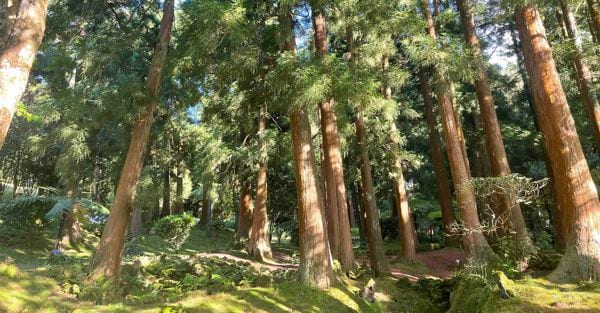
The Azores: all the charm of São Jorge in the heart of the Atlantic
With its fajãs, natural pools and unspoilt natural landscapes, it is an ideal destination for those who enjoy walking

Key points
‘This slender island, which looks like a large animal floating on the water, has rocks jutting out from its snout like teeth.’
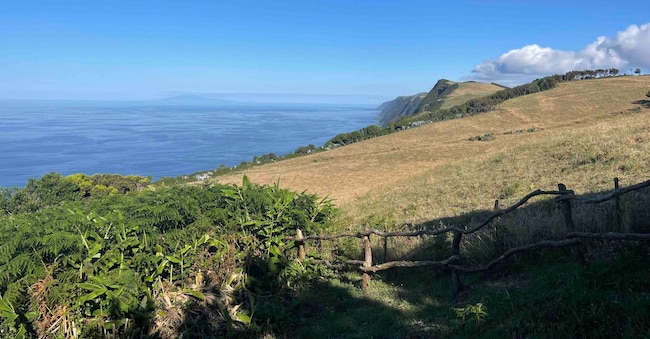
This is how the Portuguese writer Raul Brandão describes São Jorge in *As Ilhas Desconhecidas*; the book brings together the notes and diary entries from the journey he undertook in 1924 to explore the Azores archipelago. Although these nine Portuguese islands are no longer ‘desconhecidas’ – that is, unknown – they remain a destination far removed from mass tourism, appreciated by those who love places where nature reigns supreme. The fourth-largest island in the archipelago and part of the central group, São Jorge rises from the blue of the Atlantic Ocean with its long, narrow silhouette – fifty-four kilometres long and up to seven kilometres wide – which truly resembles a sleeping animal. Whether reached by ferry – with direct services operating from the islands of Pico and Faial – or by plane from São Miguel and Terceira, São Jorge has much to offer. Designated a Biosphere Reserve for the magic of its fajãs, it is a land of lush pastures, grazed by countless cows that contribute to the production of the famous São Jorge PDO cheese, of hiking trails with spectacular panoramic views, and a place where you can even sample the local coffee.
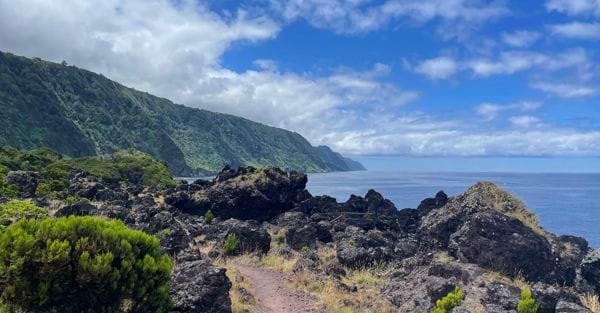
Walking from Fajã do Ouvidor to Poça Simão
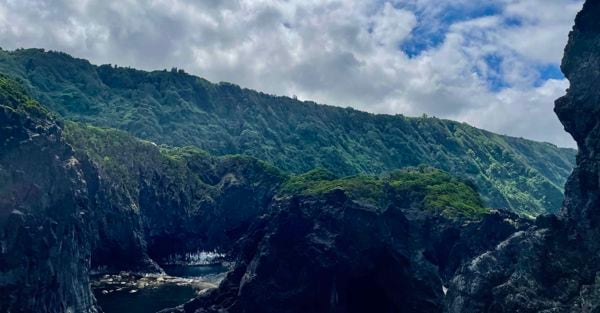
When you arrive in São Jorge, it immediately becomes clear what defines its landscape: crowning it as the realm of the iconic fajãs – flat areas formed by ancient lava flows that have shaped the cliffs plunging into the ocean – is both their number, around seventy-four, and their uniqueness. Among the most sought-after fajãs on the north coast, easily accessible via a short footpath, is Fajã do Ouvidor, home to one of the most enchanting natural pools on the whole island, Poça Simão Dias. Here, you’ll find yourself swimming in the blue waters of the Atlantic Ocean, set against the black of the basalt columns that rise sharply from the cliffs lapped by the waves. In fact, there are no traditional beaches on the island; instead, the bathing spots consist of unique natural pools scattered throughout the island. Among the fajãs on the south-eastern coast, Fajã dos Cubres offers one of the most unexpected landscapes: a lagoon with crystal-clear water. A tour of the most famous fajãs includes a stop at Fajã dos Vimes, which stands out because the area’s microclimate provides the ideal conditions for growing coffee. The plantations produce around one hundred to one hundred and fifty kilos of coffee a year, and the beans are grown, roasted and served in the only café on this fajã, Nunes, where you can enjoy a coffee with an intense aroma. Fajã dos Vimes can be reached by car via a very scenic road, but the fittest visitors can also get there on foot by following a challenging trail that starts at the south-eastern tip of the island, Serra do Topo, and ends six kilometres further on at Fajã dos Vimes.
The ideal destination for hiking
The presence of numerous footpaths, all of which offer incredible natural and scenic beauty, makes São Jorge an ideal destination for hiking enthusiasts, although a good level of fitness is required as these are medium-to-high difficulty routes due to the island’s topography. Among the best-known trails is the one linking two of the Azores’ most iconic fajãs, Fajã do Santo Cristo and Fajã dos Cubres; whilst the Caminho das Fontes is a circular route approximately eight kilometres long that starts at the harbour in the village of Calheta, on the southern side of the island; it takes its name from the ‘da Rocha’ spring, which was once used by local residents to wash their clothes. But you don’t need to be a keen walker to be captivated by the charm of this island. Even those visiting for just a day, after exploring some of the most picturesque fajãs and before catching the ferry or flight back, can appreciate the rare tranquillity that sets it apart, let their gaze wander to the horizon or linger on the enchanting hydrangeas that adorn every corner, focus on the brilliant green of the meadows sloping down towards the blue of the ocean, and admire spectacular coastal views. For example, you can discover the greenest side of São Jorge by visiting the Sete Fontes Forest Park in Rosais, on the north-western tip of the island: an oasis of lush and varied vegetation, including a vast collection of common plants, as well as species endemic to Macaronesia; don’t miss the marvellous panoramic views from the Pico da Velha and Ferrã de Afonso viewpoints. You can also visit the Moinhos dos Mistérios (Mills of Mysteries) on the Urzelina coast – these finely decorated traditional windmills form part of the island’s cultural heritage; or be left breathless by the splendour of the 18th-century Church of Santa Bárbara in Manadas, one of the finest examples of Baroque architecture in the Azores.