
The Bank of Japan has raised interest rates to 1.25 per cent, the highest level in 31 years
The 25 basis point rise had been expected, but the dissent of two of the nine board members weakened the yen. Governor Ueda leaves the door open for further tightening
from our correspondent Marco Masciaga
 Aggiungi Il Sole 24 Ore
ai preferiti su Google
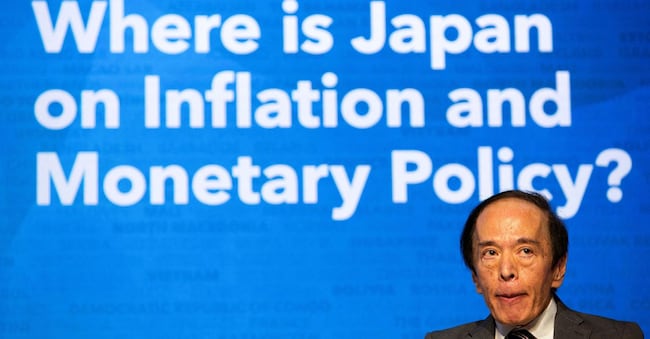
NEW DELHI - In a move widely anticipated by the markets, yesterday morning the Bank of Japan (BoJ) announced a 25 basis point rise in its key interest rate to 1.25 per cent, the highest level since 1995. However, the monetary tightening did not have the desired effect on the yen, which continued to weaken against the dollar, partly because, following hints dropped over the summer, it had already been ‘priced in’ by the markets, and partly because the decision was taken by a majority, with two of the nine board members voting to keep rates unchanged at 1 per cent.
The remarks made that afternoon at a press conference by Governor Kazuo Ueda – who explained that the central bank’s focus had now shifted from pushing prices towards the target to preventing inflation from exceeding it – proved to no avail. “It is important to stabilise core inflation at 2 per cent. Our monetary policy stance has changed,” explained Ueda, thereby highlighting the rift within the board between the members recently appointed by Prime Minister Sanae Takaichi and the rest of the board.
“The fact that the two new members of the BoJ’s board voted against a rate rise suggests that the government remains opposed to further tightening by the central bank,” explains Carol Kong, currency strategist at Commonwealth Bank of Australia. A stance that, within a year, could evolve from mere dissent into a less restrictive policy: next summer, the terms of office of two of the ‘hawks’ on the board will expire, and the solid parliamentary majority secured by Takaichi a few months ago suggests that their places could be taken by other ‘doves’ who are not opposed to the Prime Minister’s expansionary policies.
Responding to questions from journalists, Ueda explained that he was not ruling out either rate rises at consecutive meetings or increases of 50 basis points. Yesterday’s rate hike came after an unusually short interval since the previous one and, in another unusual move, followed on the heels of those decided by the European Central Bank and the Federal Reserve, just a few days later. Ueda emphasised that the BoJ intends to act pre-emptively, to avoid being forced in future to adopt far-reaching measures that could destabilise the financial markets.
The BoJ governor’s remarks were particularly eagerly awaited because Friday morning’s announcement was not accompanied by an update to the outlook that might have provided guidance regarding the central bank’s future decisions. Apart from the need to curb inflation and prevent a further widening of the yield spread with the United States, the BoJ’s move was expected due to the persistent weakness of the yen, which, in a country heavily dependent on energy imports, is making gas and oil purchases even more costly than they would otherwise be.


