The stories

From Beltrade to Cinema Troisi, the single-screen cinema attracts young people and becomes a community

From North to South, single-screen realities aim to hold together identity and economic sustainability by continuing to focus on quality programming and a more familiar relationship between audiences and exhibitors

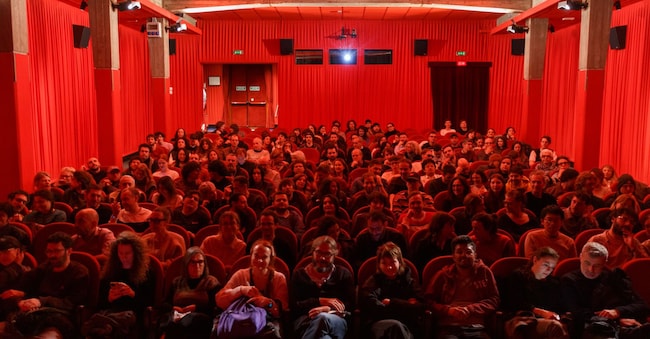
Cinema Beltrade, Milano (Credits: Cinema Beltrade)

5' min read

Translated by AI
Versione italiana

5' min read

Translated by AI
Versione italiana

Keeping the pieces together, sticking to one's own figure, engaging in dialogue with distributors and ensuring economic sustainability, remains the great challenge of the single screen realities. A goal they approach in different ways.

Beltrade, quality conquers the young

There are those who, like the Cinema Beltrade in Milan, rely on an identity impervious to passing trends. "Our cinema has been bucking the positive trend for some time: in 2019 we had made around 57 thousand admissions, in 2023 70 thousand, in 2024 just over 97 thousand and this year around 98 thousand. Weighty figures for a 200-seat reality," notes Paola Corti, co-curator, together with Monica Naldi, of the arthouse theatre that was born as a parish cinema. "What sets us apart is that we focus so much on subtitled language films and a multi-programming push. We have an audience that is largely young to whom we reserve reduced price policies and, although we are technological behind the scenes, we are keen to remain an old-fashioned cinema: we are very attentive to the quality of the projection, but then, for example, we do not assign seats in the auditorium and we manage everything in a family way and with little construction".

Loading...

Because the difference with multiplexes is there and it is evident: "There are many single-screen cinemas in Italy where in the box office or at least in charge of the management, there are always people who are passionate about cinema," Corti continues. "So it's a bit like with food: 'We are not a boutique that costs a lot of money, we are the delicatessen, the baker under the house to whom people turn because they know they will find quality products and a place where they can have a chat with the manager. And these days there is a great return to realities of this kind, even in the cinema sector'. Realities which, like the Beltrade, also aim to be prodigal on the front of the programme schedule that they propose to users with a strategy that also helps in some ways to contain friction with distributors: "I think that the single-screen cinemas must be generous with respect to the number of shows that they put on the programme and, in this way, as a consequence, also the distribution becomes more conciliatory towards the exhibitors, in a positive dialectic that manages to protect the interests of both parties".

The possibility of multi-programming remains, according to Corti, the pivot on which to leverage to attract viewers and, consequently, revenues. In a perspective that continues to see films as products to be consumed slowly, escaping the frenetic and voracious rhythms imposed by daily routine. "Proposing several different films in a day allows you, on the one hand, to guarantee as much good cinema as possible and, on the other, to please people with different tastes.

To avoid the shocks, clear of economic subsidies, there is certainly a need "on the distribution side, to recalibrate the pace of film releases, loosening them up to allow for better promotion as well. On the exhibition side, equally less frenzy: more confidence in the value of collective viewing, without too much fear of competition from platforms. The cinema is not a supermarket and bringing people to the cinema preserves the magic of the encounter with the story on the screen and between the people watching it".

Cinema Troisi, cinema becomes community

But there are also those who see a modernisation of the management models and a range of community services as a key to continued growth and a high level offer. "The relationship with the programming and the distributor that makes the figure is evident because the single-screen cinemas with the most spectators, from the Modernissimo in Bologna to our cinema all the way to the Beltrade, all do multi-programming, inserting different titles on the same day, in the same week, alternating. And by moving away from the old management that, instead, used to 'edit' the film and show only that one for a long time,' explains Valerio Carocci, president of the Fondazione Piccolo America, which in Rome organises the summer festival 'Il Cinema in Piazza' and manages the Cinema Troisi, a historic cinema in the heart of Trastevere designed in the 1930s and renovated and reopened in 2021.

"In this context, it is useful to reflect on the data: from 2024 to 2025, the Troisi went from 100 to 110 thousand spectators, while the Modernissimo reached 154 thousand, setting a new national record with around 50 per cent more spectators. We asked ourselves the reason for this extraordinary success. The Modernissimo has a unique feature compared to all the rest of Italian theatres: a programme that, with 750 titles out of about 1,800 shows a year, offers the Bolognese a different film every two hours, thus increasing its audience"

A model that, although more applicable to those who make retrospectives and not first viewings given the agreements with distributors that ask for at least two or three screenings of the title per day, should make us think, according to Carocci, about a restyling hypothesis. At least as far as cinemas in large cities are concerned: "One has to ask oneself whether, given the results of the Modernissimo, having several screenings of the same film in one day is not obsolete by now and the right path is instead to almost never repeat the same film, if not twice a year at the most". A switch (and an awareness of the market) that could perhaps help cinemas "to have more freedom even in the structure of the programming of first releases as well as a possibility of greater contractual power".

In addition to the territorial viewpoint in which they are set and a fresh and strongly identifiable presence on social networks, consolidating the standing of the single-screen cinemas among the new generations has also been the implementation of collateral services: collective spaces to be inhabited beyond the playbill (as in the case of the Troisi, a bar and a study room open 24 hours a day, 365 days a year) and which then convince them to stay for the films. A concept that recalls, in the words of the president of the Piccolo America Foundation, "the idea of the French tiers lieux, third places in the design of which a series of alternative services have been included in the transition between home and work so that, as happens here with the cinema and spaces for students, they can reinforce each other". The cinema is no longer, therefore, just the hall, but becomes almost a square: 'For us, for example, the Cinema Troisi is an expansion of the cultural space of what we have built at San Cosimato, at the Cervelletta and at Monte Ciocci'.

And it is the multitude that, given institutional aid, one must look to in order to limit the criticalities: "In addition to multi-programming, a single-screen theatre must be able to have the possibility, not only at a national but also at a local regulatory level, to diversify its services in a socio-community dynamic that contributes both to the growth and rejuvenation of the public".

Copyright reserved ©

Brand connect

Loading...

Newsletter

Notizie e approfondimenti sugli avvenimenti politici, economici e finanziari.

Iscriviti