Basel

The Fondation Beyeler is expanding its premises and reimagining the concept of a museum

The institution is being revitalised by bringing together art, architecture and nature. Thanks to a decade of hard work by the founders, donors, the city and the canton

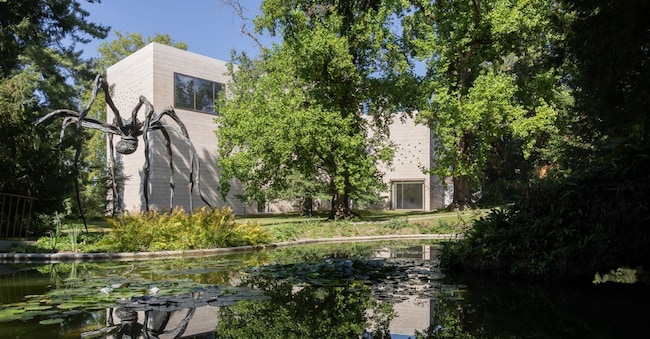
Il complesso ampliato della Fondation Beyeler, Wyss Museum di Atelier Peter Zumthor, Louise Bourgeois, Maman, 1999; Collection The Easton Foundation, New York © The Easton Foundation / 2026, ProLitteris, Zürich Foto: Iwan Baan

6' min read

Translated by AI
Versione italiana

6' min read

Translated by AI
Versione italiana

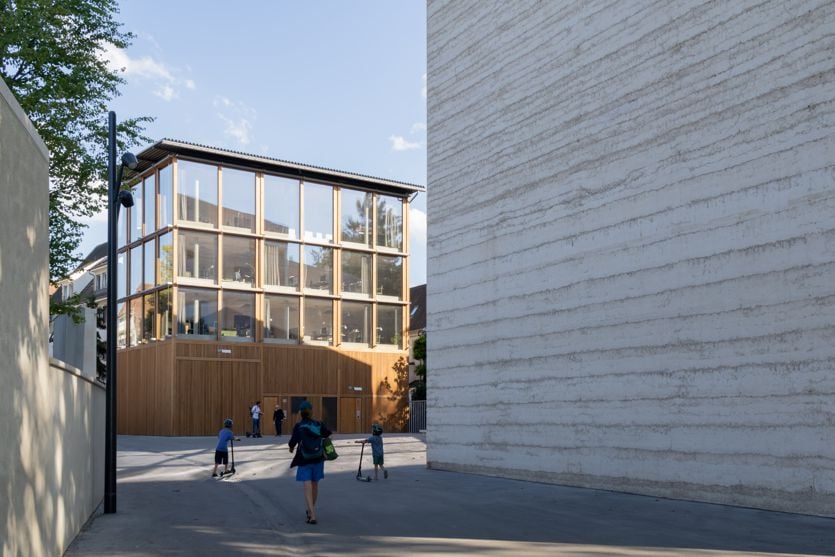
The Beyeler Foundation in Basel, one of the world’s most admired museums, inaugurated a spatial and conceptual extension to its complex on Saturday 26 September. Three new buildings, designed by the Basel-based architect Peter Zumthor, complement the building by Renzo Piano, completed in 1997, adding new exhibition spaces for the permanent collection and temporary exhibitions, new offices for museum staff and a concert hall. In addition, new spaces have been created within the existing historic buildings, including a music listening room, a conservatory and a workshop studio. The purchase of the land, the construction of the buildings and the running of the museum in its early years required an investment of 120 million francs, financed entirely through private funds, and nearly ten years of work, with a two-year delay in completion due to Covid.
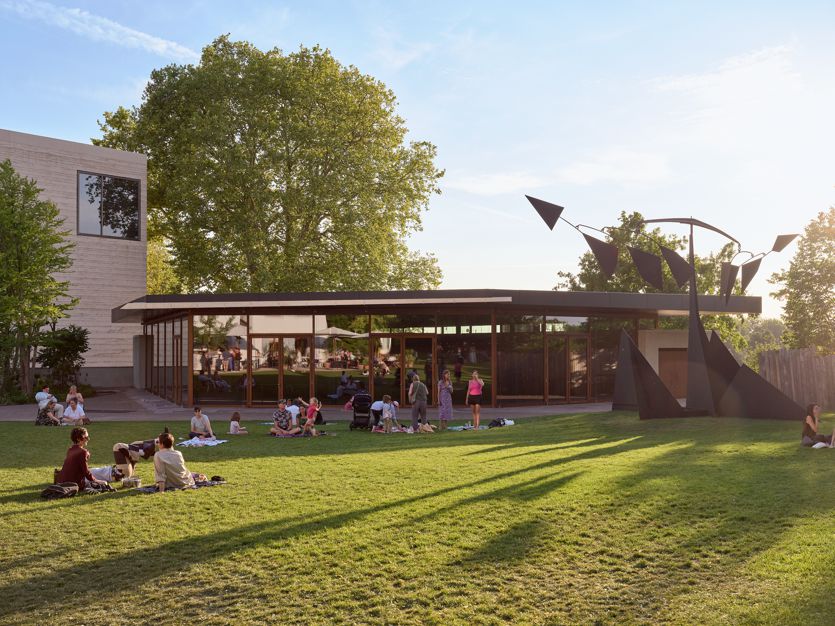
Il complesso ampliato della Fondation Beyeler, Ammann Pavillon di Atelier Peter Zumthor, Alexander Calder, The Tree, 1966 Fondation Beyeler, Riehen/Basel © 2026 Calder Foundation, New York / Artists Rights Society (ARS) New York Foto: Mark Niedermann

A conceptual extension

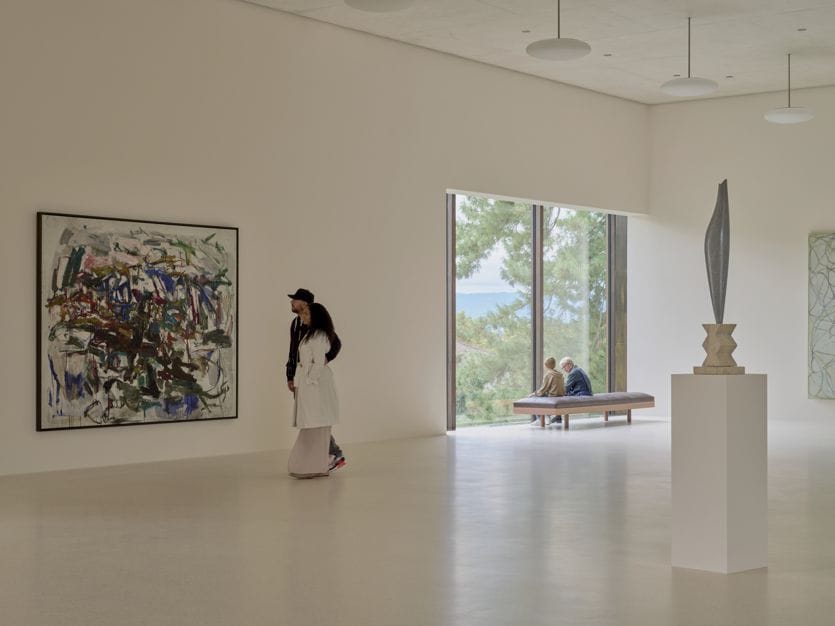
But this is not merely a matter of expanding the physical spaces for a collection that has grown from 180 to 400 works and an audience that has increased from an expected 100,000 to more than 500,000 people, but rather an update of the concept of the museum and its functions in the present day. The new complex, in fact, conceives the museum not only as a place to admire works of art, but also to stroll, listen to music, read a book and contemplate nature, in an environment where art, architecture and nature blend seamlessly together. A place to be experienced. “I’m drawing on my own personal experience,” says the director Sam Keller, former director of Art Basel, who has been at the helm of the Foundation for 18 years. “When I go to visit a museum, I want to spend hours admiring the art, but at the same time I want to take a stroll, rest, have something to eat or drink, and check my messages. We must regard people as human beings and not merely as museum visitors.”
Loading...

Il complesso ampliato della Fondation Beyeler, Erlen Torhaus di Atelier Peter Zumthor Foto: Iwan Baan

New features at the museum

Apart from the exhibition spaces, there is no charge for entry to the rest of the Foundation’s premises. The auditorium, which hosts concerts and events in the evenings, becomes a cosy lounge during the day where visitors can read, work or simply relax. The workshop space is freely accessible and contains materials for ‘do-it-yourself’ workshops for families. The listening room features comfortable sofas, a high-quality sound system and a collection of two thousand records and artist covers specially acquired by the Foundation. In the Orangerie, the designer India Mahdavi was commissioned to design a small greenhouse featuring plant species resilient to climate change, alongside a shop selling plants, pots and books on the subject.
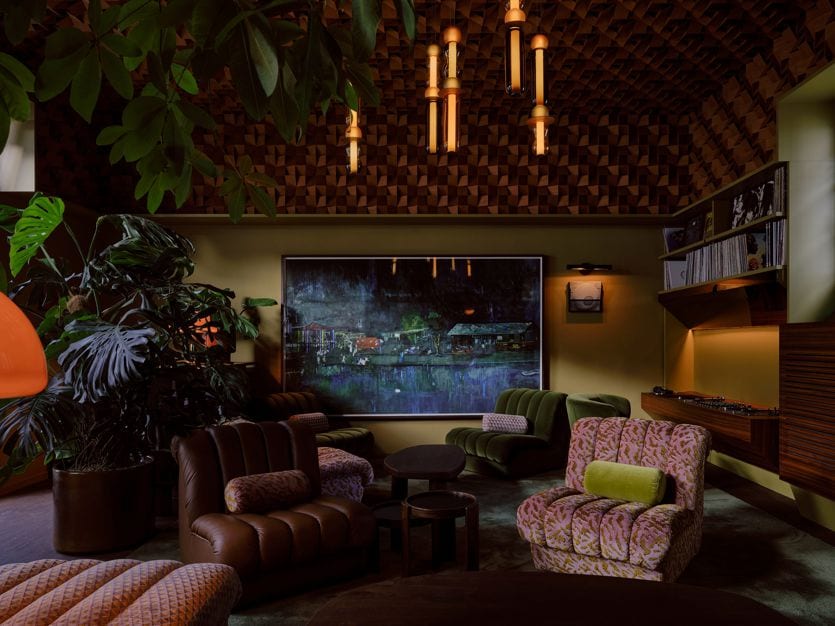
Il Salon nel complesso ampliato della Fondation Beyeler, fotografia di Mark Niedermann

The inaugural exhibition

The exhibition marking the opening of the new spaces is a display of the collection, but nothing is permanent in the new museum: over the coming months, the works will be replaced, partly in line with the changing seasons. The new exhibition building is called the Wyss Museum in honour of Hansjörg Wyss, chairman of the Beyeler-Stiftung – the organisation behind the Fondation Beyeler – and the main benefactor of the new building, which was designed to preserve the ancient trees, with no corridors and a terrace built to allow visitors to step outside and experience the surrounding environment.

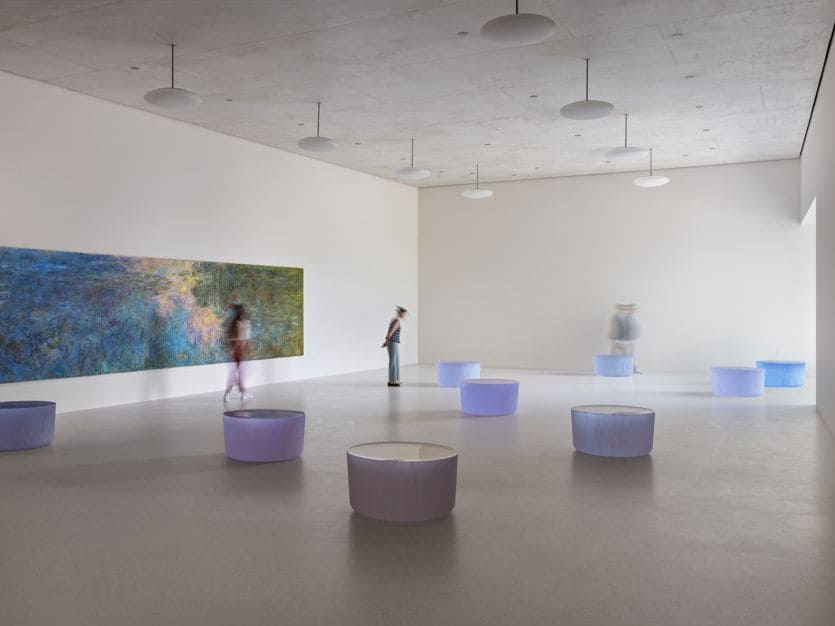
Back in the 1990s, Renzo Piano had been chosen partly because he was the architect of the Centre Pompidou, the museum that, more than any other, had embodied the idea of democratising contemporary art institutions. Today, the entrance to the Beyeler’s new art building invites visitors to come in and enjoy the first works on display without having to pay an admission fee: “Most museums don’t have art in the foyer,” says Sam Keller, “they have the ticket office, the shops, the toilets, the cloakroom. We want the first thing they encounter to be art.” And so here we find Wolfgang Tillmans – an artist who features prominently at the Beyeler – in dialogue with a sculpture by Charles Ray, ten “cylinders” by Roni Horn (both new acquisitions) and with Monet’s large water-lily triptych, the work around which the first building was conceived. “It’s not out of the question that I’ll go back there,” said Keller, “nothing is set in stone. It’s a bit of a litmus test to see if the building works and whether it will bring us luck, just like the other building did!”
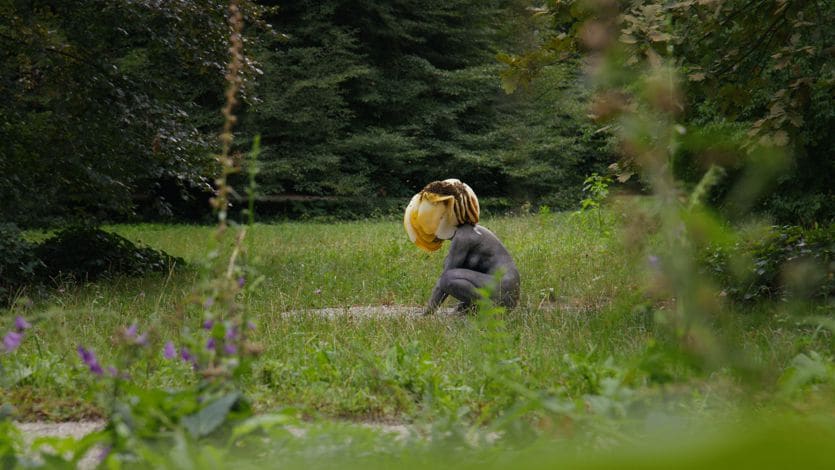
Pierre Huyghe, «Exomind (Deep water)», 2017, Fondation Beyeler, Riehen/Basel© Pierre Huyghe / 2026, ProLitteris, Zurich

The three floors of the Wyss Museum

The works on the ground floor interact with the outdoors – with nature, the pond and the trees. “We want not only to showcase the new spaces, but also the new works and the new loans from collectors, artists and archives. They account for roughly half of those on display.” Many of the works are linked to exhibitions that have just taken place or are planned, such as that by Pierre Huyghe (his exhibition has just closed), or by Otobong Nkanga (who will have an exhibition in the near future). Upstairs, the focus shifts from the external landscape to the interior one, with surrealist works by Arcimboldo, Max Ernst and Magritte (he too will have a major exhibition in a couple of years’ time; the works are not from the Beyeler Collection but are on loan to the museum from other collections), Balthus, in dialogue with contemporary artists such as Robert Gober and Thomas Schütte, and a dialogue between Calder and Miró.
On the third and top floor, where the ceiling is higher and the sky feels closer, there are abstract works that express the spiritual enlightenment of artists such as Agnes Martin, Cy Twombly, Joan Mitchell and Barnett Newman. Some of these dialogues recur in Renzo Piano’s building; for example, the one between Monet, Roni Horn and Tillmans, as well as great classics from the collection, such as Giacometti, Calder and Picasso.

The first year’s temporary exhibitions will be dedicated to Ruth Asawa, Frida Kahlo, Louise Bourgeois and Elizabeth Peyton. “To those who ask me why they’re all women,” comments Keller, “I reply that they wouldn’t ask me the same question if they were all men. “When it comes to art from the past, it is not possible to alter the balance, but we are now living in the 21st century and it is only natural to devote as much space to women as to men.”

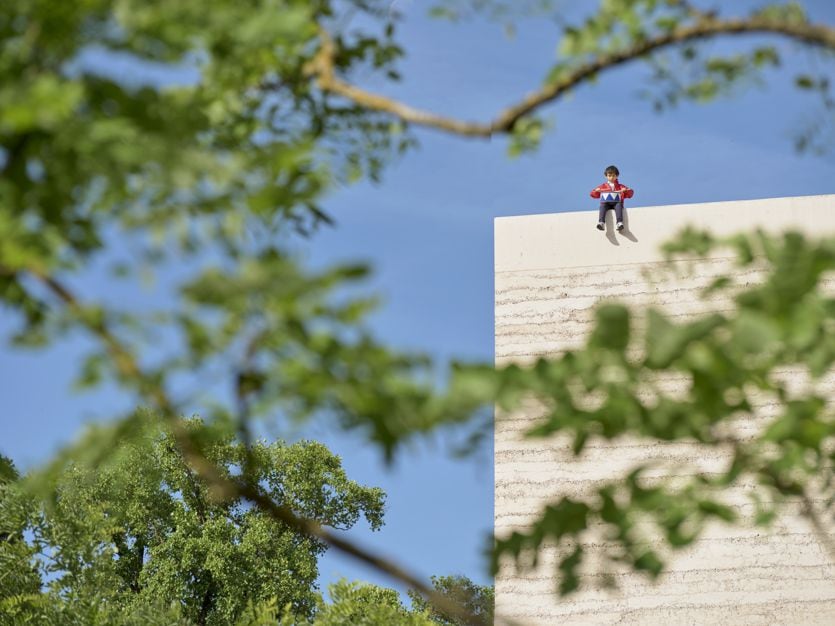
Maurizio Cattelan, «Untitled» 2003, Copyright Maurizio Cattelan, fotografia di Mark Niedermann

The garden

Just as important as the art inside the museum is the surrounding garden, which is now much larger than before. The museum now also has a botanical curator, who looks after the plant and animal species found there. The number of outdoor sculptures has also increased: on the roof of the Wyss Museum there is one by Maurizio Cattelan, depicting a child playing a drum (on loan from the artist), which acts as a ‘disturbing’ element. Then, a monumental ‘Maman’ by Louise Burgeois – the largest she has ever created – fits perfectly into the most ‘Dionysian’ part of the new garden, as Sam Keller describes it. In the same section of the park is the sculpture by Pierre Huyghe ‘Exomin (Deep Water)’, a crouching woman whose head is covered by a beehive that houses real bees in spring and summer, and a large sculpture by Rachel Whiteread depicting the negative spaces of a small house. Finally, the Japanese artist Fujiko Nakaya has created one of her well-known fog installations, but what makes this one special is that it will be permanent here, whereas this is usually rare.

Il complesso ampliato della Fondation Beyeler, Wyss Museum di Atelier Peter Zumthor, Roni Horn, Untitled (“A dream dreamt in a dreaming world is not really a dream…but a dream not dreamt is.”), 2010-2012 © Roni Horn; Claude Monet, Le bassin aux nymphéas, um 1920; Foto: Stefan Altenburger

Il complesso ampliato della Fondation Beyeler, Wyss Museum di Atelier Peter Zumthor, Veduta della mostra «Constellations», Foto: Mark Niedermann

The funders

In addition to Hansjörg Wyss, founder of the biomedical company Synthes Holding AG, there have been other generous donors – many of whom are anonymous – including Thomas and Doris Ammann Stiftung (the auditorium is named after them and it is thanks to them that free admission is available for those aged 25 and under, as well as the outreach programme), and the Daros Collection of Stephan Schmidheiny, as well as Dr Christoph M. Müller and Sibylla M. Müller, who made the expansion of the grounds possible. Further donations were made by the Ernst Göhner Foundation, the Don Quixote Foundation of Rolly van Rappard and the pharmaceutical group Novartis. The collaboration of the city and the canton was also significant. A collective effort for an already magnificent foundation that is now taking it to the next level.

Copyright reserved ©
Loading...

Brand connect

Loading...

Newsletter

Notizie e approfondimenti sugli avvenimenti politici, economici e finanziari.

Iscriviti