First Floor

The black year of prisons, highest levels of suicides and inmates in 2024

Government interventions do not stop the growth of inmates to 62,427. 89 have taken their own lives since January, never so many. Boom of minors in cells after the Caivano Decree

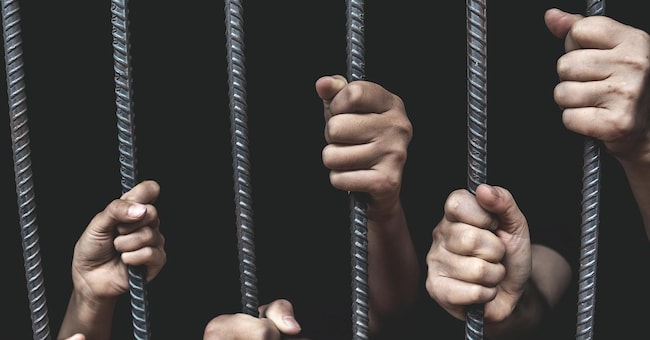
by Valentina Maglione, Bianca Lucia Mazzei and Serena Uccello

(Adobe Stock)

5' min read

5' min read

Never so many in the last ten years. The year 2024 closes marking the worst result since 2013 with regard to the number ofprisoners: then there were 66,028, currently there are 62,427 (of which almost 10 thousand awaiting first trial), compared to approximately 51 thousand available places. An emergency situation testified by the number of suicides in prison that, in 2024, reached 89, the highest ever.

The measures adopted in the past had made it possible to reduce overcrowding but the threshold of 60,000 inmates was exceeded again a year ago and the upward trend continues, despite the measures implemented by the government in recent months. And overcrowding is also affecting juvenile penal institutions, where there were 576 inmates on 30 November.

Loading...

L’AUMENTO DEGLI ULTIMI DUE ANNI

Loading...

The Emergency

.

Many voices have risen in recent months to sound the alarm over the serious situation in prisons, starting with the President of the Republic Sergio Mattarella and Pope Francis, but also from lawyers and associations.

According to Alessio Scandurra, coordinator of the Observatory on Prisons of Antigone, an association that has been fighting for prisoners' rights for years, we are not yet at the numbers of the terrible seasons of overcrowding, "those in which new admissions reached 90,000", but it is not only the overall numbers that are worrying. In fact, those of admissions are starting to rise again: as many as 43 thousand between 9 December 2023 and 9 December 2024. "The truth,' he continues, 'is that if we look at the history of the prison system over the last 30 years, prison admissions have always grown until the day an extraordinary measure is adopted, a clemency measure, which causes them to fall.

In this way, the system was kept in equilibrium. A pathological equilibrium, however, due to or thanks to the presence of this mechanism. 'The system,' adds Scandurra, 'has never set out to work with a zero balance: we did not worry if more people came in than went out because a measure of clemency would have arrived to make amends. Since 2006, when two-thirds of parliament are needed for an amnesty, these solutions have become unworkable,' so the system is collapsing.

Dramatic are the data on suicides: 'Numbers,' Scandurra observes, 'that not even when we reached 69,000 inmates between 2009 and 2010 were so high. These figures are only the tip of the iceberg because they do not record the episodes of self-harm, the ever-increasing psychic malaise". Suffering that primarily involves the inmates but is equally virulent for prison police personnel.

The measures launched by the Government

.

Within this framework, last July the government approved the Prison Law Decree (92/2024). The main intervention concerned theearly release, a reward institution that provides for a 45-day sentence reduction for every six months served, if the person participates in reeducation. The July decree-law did not change the length of the sentence 'discount' (so the stay in prison remains unchanged), only the procedure. Now, in practice, the public prosecutor, when indicating the penalty to the prisoner, communicates both the one with possible deductions and the 'full' one. The decree also identifies the moments in which the supervisory magistrate assesses whether or not to grant early release, ending up by stiffening them: they are in fact identified in the detainee's request for alternative measures or benefits or near the end of the sentence.

The Prisons Decree also provides for the recruitment in 2025-2026 of one thousand prison officers and establishes a new extraordinary commissioner for prison construction. The role was entrusted last September to Marco Doglio, who has extensive experience in the financial and real estate sector (he was, among other things, Head of Real Estate Italy at Ubs and then Head of Real Estate Management at Cdp). He will have to draw up a programme of interventions to build new prisons and upgrade existing facilities. He is supported by five experts and will remain in office until 31 December 2026: a term recently extended by the Justice Decree Law (178/2024, currently being examined by Parliament for conversion into law), which has also doubled the compensation for commissioner and experts.

The crime of revolt

.

Approved at first reading by the Chamber of Deputies and now being examined by the Senate's Constitutional Affairs and Justice Committees, the Security Bill provides for the introduction of the new crime of "prison riot". It is a measure that is on the whole much contested by the opposition and at the centre of controversy, so much so that changes are not excluded, even after the Council of Europe's negative stance last Friday.

The new offence provides for aprison sentence of one to five years for anyone who participates in a riot by acts of violence or threatening or resisting the execution of orders given, committed by three or more persons gathered together. And acts of resistance also include passive resistance when preventing acts or services necessary for the management of order and security.

The Juvenile Front

.

Particularly worrying is the increase in the number of minors inmates, which has risen again after the repressive crackdown introduced in September 2023 by the Caivano Decree, Decree Law 123. After a little over a year, the number of boys and girls (under 18 or young adults between the ages of 18 and 25) imprisoned in penal institutions for minors has risen by 32%, from 436 at the end of August 2023 to 576 on 30 November 2024.

The Caivano decree, enacted after the gang rape of two little cousins aged 10 and 12 in the Campania municipality by a number of minors, broadened the possibilities of entering prison and, in particular, broadened the range of offences and reduced the penalty threshold for precautionary custody (which causes the majority of admissions to Ipm) and, in addition, allowed arrest in flagrante delicto for possession and dealing of drugs, even minor ones.

According to Scandurra, 'although the country has never been able to make a qualitative leap and close these penal institutions, in the past there had been such a marked reduction in the imprisonment of juveniles that juvenile detention was in fact increasingly marginalised. Now, instead, we are witnessing a paradigm shift with the assimilation of the detention of minors to that of adults'.

In the past, that is, the progressive reduction of detention had in fact depowered this institution. Instead, the recent trend is towards a reversal of the paradigm: an example of this is "the fact that even in the PMIs agents are now in uniform after years in which they were present in plain clothes", Scandurra concludes.


Copyright reserved ©
Loading...

Brand connect

Loading...

Newsletter

Notizie e approfondimenti sugli avvenimenti politici, economici e finanziari.

Iscriviti