Is the body's age reversible? Can ageing be slowed down?
Giving cells a new identity, recovering their ability to adapt so that they can repair themselves again. This is the challenge, according to super expert Juan Carlos Izpisua Belmonte, a leading figure at the Regina Apostolorum Pontifical Athenaeum.

Key points
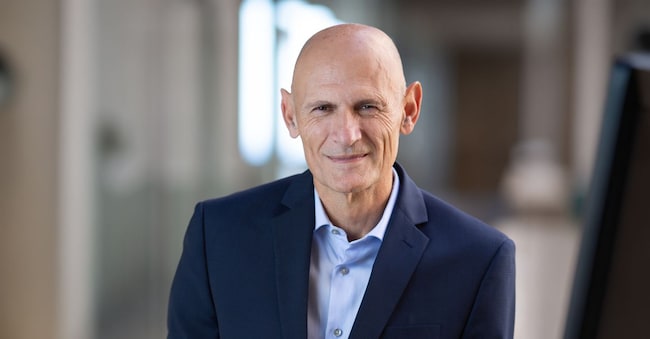
What if ageing is not a destiny, but a process that can at least partly be rewritten? The question, which until a few years ago seemed confined to science fiction, is now at the centre of the most advanced research on human biology. The Spanish scientist Juan Carlos Izpisua Belmonte, former professor at the Salk Institute, one of the world's leading experts in regenerative medicine and founding scientist of Altos Labs (an international biotechnology research company, also funded by Jeff Bezos), is working on precisely this boundary: to bring adult cells back to a younger state, recovering their ability to adapt and repair, typical of the early stages of life.
Changing Perspective
His contribution changed the perspective: ageing is not only accumulation of damage, but also loss of cellular identity. Once this reserve is reduced, even minor stresses can cause lasting damage, dysfunction or disease. The good news is that some of these changes may not be entirely irreversible. Within such a scientific framework lies one of the most talked-about and promising lines of research in recent years: partial cellular reprogramming, based on Yamanaka factors (a group of four proteins capable of 'reprogramming' an adult cell back to a state similar to that of embryonic stem cells). The basic idea is that adult cells can recover part of their plasticity and functionality, but without completely losing their specialisation. It is precisely this sensitive balance, which is still being studied, that much of the current research focuses on.
To understand how far this perspective can be translated into real clinical applications, the question to Izpisua Belmonte concerns the main obstacle in the transition from laboratory experimentation to human medicine. "The challenge is to find a balance: to improve the functionality of the cells without them losing their identity, because a heart cell must remain as such and a neuron must continue to play its role; what we have realised is that the loss of cell stability and identity can lead cells towards inflammatory or dysfunctional states, a phenomenon we call mesenchymal drift. Therefore, the critical point is not just to rejuvenate, but to do so while maintaining the biological balance of the system'.
Driving Cells
the theme of balance also returns when we move on to discuss intervention strategies. It is in fact not a matter of resetting cells, but of precisely guiding them towards a more functional state. 'Any reprogramming strategy must be controlled, because the objective is not to change the cell identity, but to recover part of its functionality without altering its specialisation'. The discourse then shifts to the possible future applications of this research, particularly on the borderline between therapy and prevention. This is an important step, because it implies a paradigm shift in ageing medicine, which no longer limits itself to intervening when the problem is already present, but tries to think in terms of biological resilience. In this perspective, however, the scientist calls for a gradual and realistic reading of the research timeframe. The most immediate applications do not yet concern prevention in the broad sense, but the treatment of diseases that are already present, especially those that share common biological mechanisms. 'The first concrete impact will be on diseases, especially neurodegenerative, cardiovascular and fibrotic ones, because with age tissues lose what we call their buffering capacity, i.e. the ability to respond to stress and recover balance, and when this skill diminishes, vulnerability to disease increases; if we were able to preserve or restore it, then a preventive role could also be envisaged, but today the main focus remains on conditions already in place'.
Strict verification required
In the meantime, the scientist reminds us what the current state of research is and what makes this field particularly promising today: 'Many diseases share similar basic mechanisms, such as loss of cell stability, chronic inflammation, reduced repair capacity and development of fibrosis, and this suggests that by intervening on these fundamental processes we could have cross-cutting effects on multiple diseases, not only on ageing in the strict sense of the word.