Corsica

The Bonifacio Biennale, such as the work ‘Nimu Dormi’

Videos and installations by 12 international artists and six local artists and collectives explore celebration and social interaction as the basis for revolutionary tension

Alex Foxton, «Deposition», © Youna Virus. Courtesy de l’artiste, Galerie Derouillon, Paris and De Renava

6' min read

Translated by AI
Versione italiana

6' min read

Translated by AI
Versione italiana

Five venues, historic buildings and derelict sites reclaimed for contemporary art, and a route structured around an opera. From 23 May to 5 November 2026, the Bonifacio Biennale presents ‘Nimu Dormi’, bringing together 12 international artists and six artists and collectives from the island for this third edition. The logic of daily productivity is replaced by that of passion: the festival becomes a revolutionary moment that allows us to observe difference and engage with the world through music, dance and collective experience. An Overture, a Prelude, three Acts and a grand finale at the Barracks mark the course of the event.

A non-profit Biennale

Behind the event is the De Renava association, a not-for-profit organisation founded and run by Prisca Meslier and Dumè Marcellesi in 2020, with Basile Isitt joining in 2022. The total budget is 600,000 euros, of which 200,000 comes from public funds, including 50,000 euros provided by the city. The remainder comes from private patrons and supporters. What also makes an event of this scale possible on a relatively modest budget is the use of mécénat de compétence. Architects and set designers offer their specialist expertise free of charge as a form of voluntary work: the Biennale thus covers the costs of materials, safety, management and the work required to make historic buildings and derelict spaces accessible. Each artist also receives a participation fee of 1,000 euros. The scope for commissioning new works remains limited: the only site-specific commission was awarded to the young Corsican Philippe Caamano, at the Caserma where, from next year, De Renava also intends to create a permanent exhibition space, a sort of gallery integrated into the association: all profits generated from sales will be reinvested in the exhibitions. At the same time, a Biennale collection could be established at the Caserma.

Loading...

The Journey as an Opera

The exhibition begins at the Agorà, a former nightclub that closed in 1993. Here, the agorà – a place of celebration – is in fact also a political space, where people meet, discuss and live together. “We wanted to explore the theme of celebration as an act of revolution,” explains Prisca. “An act of defiance, of resistance and, at times, of survival for a marginalised group.” Most of the works are videos or sound installations which, compared to the first two editions, are less striking in terms of scale and aesthetics but suggest a different, more intimate and patient way of engaging with the artwork. The videos on display at the Biennale are priced between 50,000 and 70,000 euros.
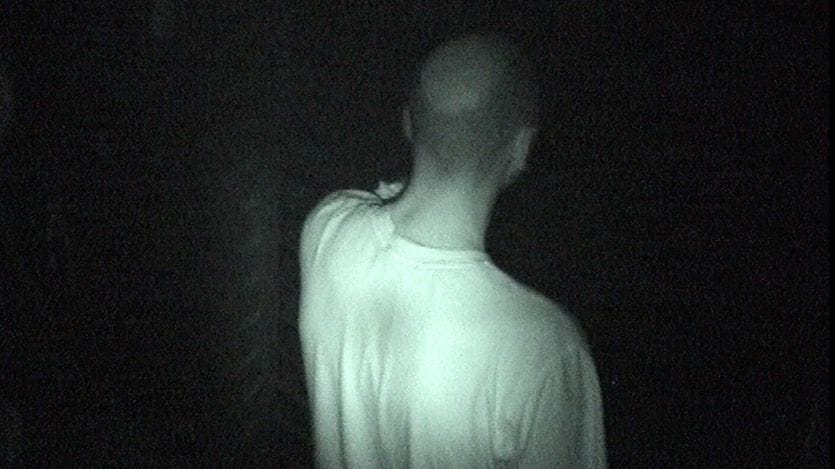
«Nervous», video, 1999-2000 di Adel Abdessemed, Collezione del FRAC Corsica

L’Ouverture has selected ‘Nervous’ (1999–2000) by Adel Abdessemed, a video produced for FRAC Corsica. ‘Dio vi salvi Regina’ links Corsica’s religious tradition with its political history, having become the national anthem in 1735 under Pasquale Paoli, . The title ‘Nervous’ captures that tension between fragility and resilience which also runs through the history of the song, which was at times sung in secret and associated with the independence movement.

Il Preludio presents ‘Lamia’ by Niki Danai Chania, dedicated to the creatures of the night and marginalised cultures. This is followed by works by Alex Foxton (from Galerie Derouillon, priced between 18,000 and 47,000 euros), who has created five biblical scenes centred on the ‘social divine’: the possibility of encountering the sacred not only during liturgy, but also in our relationships with others and in communal settings.
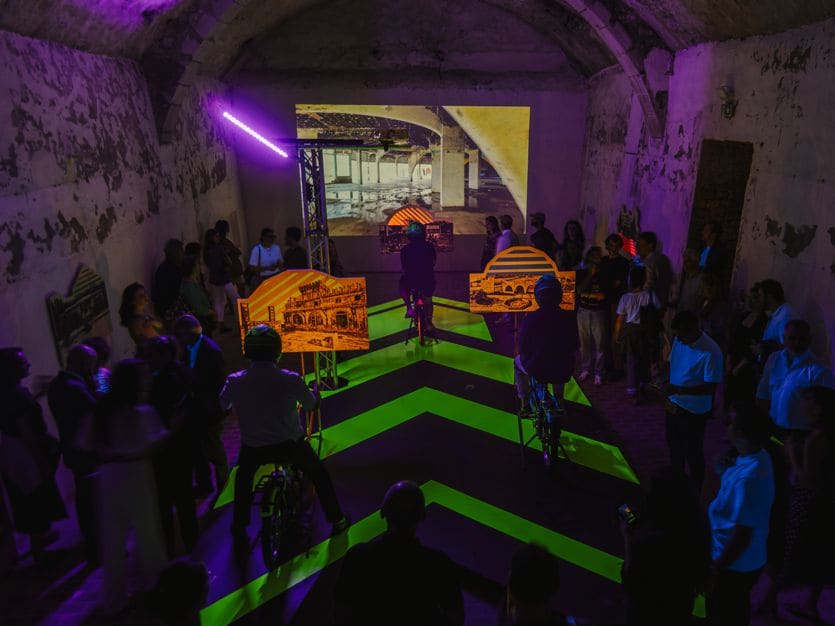
The First Act begins at La Cisterna, dedicated to Dasein, ‘being here’ – the individual’s awareness of being part of a social whole. Tony Regazzoni, represented by Galerie Eric Mouchet, presents ‘Bande Organisée’ (2024), exploring adolescent initiation rites and the motorbike as a symbol of freedom. The artist travelled across northern Italia, visiting around 30 nightclubs – many of which are now abandoned – documenting the heyday of the massive nightclubs of the 1970s: visitors can climb onto the motorbikes in the installation and put on a helmet to listen to the personal accounts of those who used to frequent those mega-clubs.

«Bande Organisée», Installazione, 2024, Tony Regazzoni

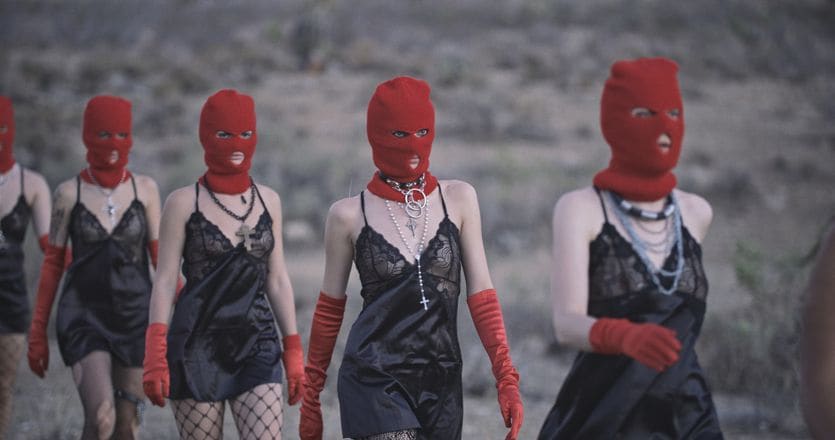
From *Palazzu* we move on to Act II – Anger. Four video performances by Pussy Riot convey the tension of the uprising, beginning with ‘Punk Prayer’ (2012), an action that led to the arrest of several members of the group in a church whilst they were singing: ‘Please, Virgin Mary, drive Vladimir Putin away’.

« Putins Ashes» di Pussy Riot, fotogrammi generali


From the viewpoint at the Citadel, The rhythm of time is explored through Michel Maffesoli’s *L’ombra di Dioniso*: from the linear time of productivity to ‘a society in which time is truly felt, rather than consumed’, as curator Prisca Meslier emphasises. The exhibition features ‘Corsica Humana à Ribella’, a piece of electronic music in the Corsican language created in 1983 by Ghjuvan Petru Graziani and Rinatu Coti, which was rediscovered in 2019.

The Final Act at the Montlaur Barracks

At the Caserne Montlaur, the exhibition concludes with the Finale – Le Triomphe. This phase conceives of celebration both as a stage and an arena, and as ‘a practice that allows one to break free from established rules and open up new paths’. Philippe Caamano, a Corsican artist who graduated from the Nantes Academy of Fine Arts and previously undertook an internship at the Biennale during its first edition, presents ‘Lonely’ (2024): two doors salvaged from a squatted building – a venue for parties and raves – sliding along a metal frame. The doors seem to be courting one another and trying to meet, without succeeding. The work places the visitor before a threshold and a choice: to cross or to go round the obstacle, to enter the arena or to remain safe. A reflection on ligne de fuite by Deleuze, the possibility of devising an alternative to the prescribed path, thereby evading the established order.

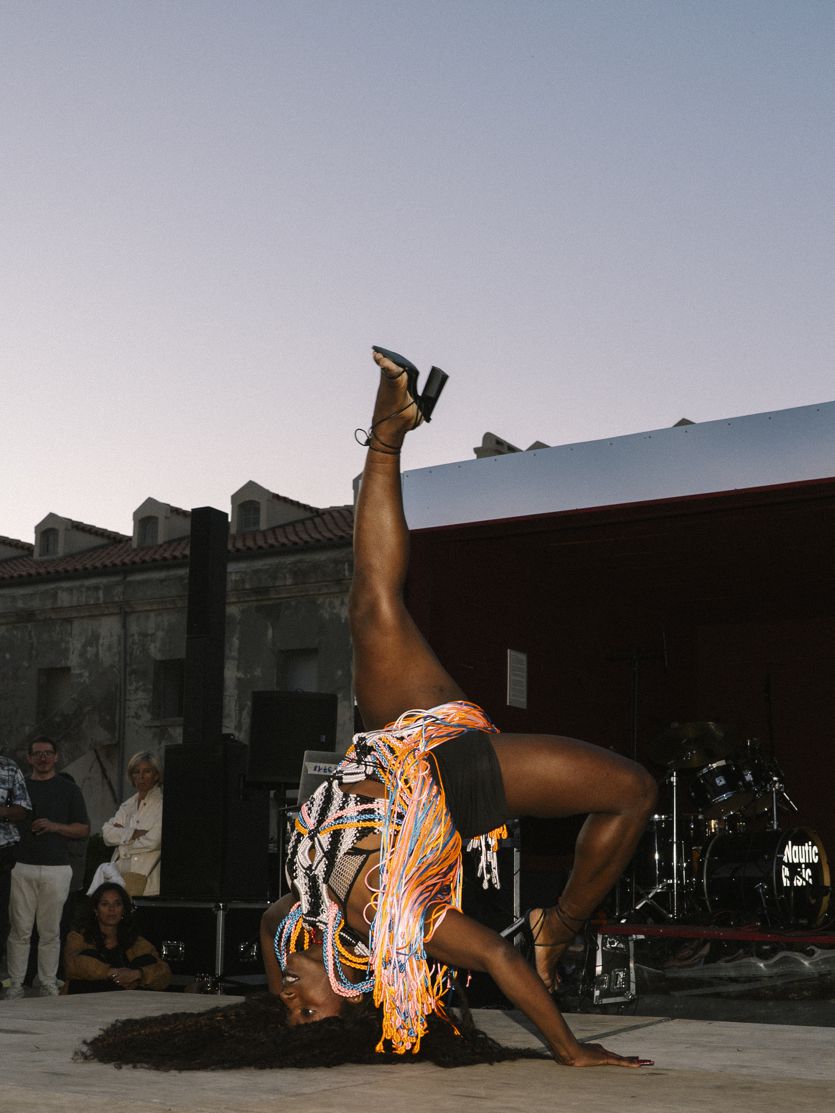
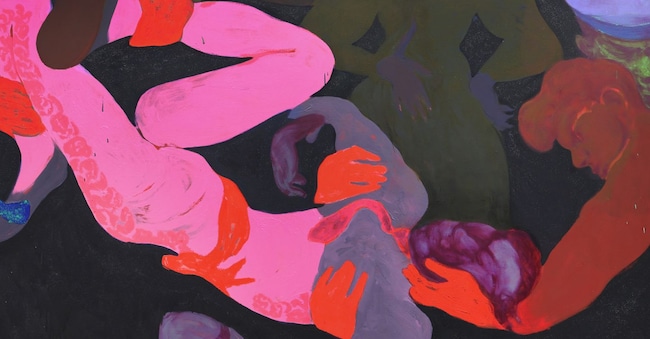
Mode 2, represented by Urban Spree, presents ‘Watergate, Weekend oder Kaffee Burger’ (2023), acrylic and pastel on canvas, alongside a site-specific mural. Inspired by Berlin’s clubs, by dance as an expression of consensus and individuality, and by the accounts of photographer Martha Cooper on graffiti and hip-hop culture, the artist constructs images in which it is difficult to distinguish between a duel and a dance: bodies become entangled, in a delicate balance between sensuality and defiance, violence, caress and punch. Puma Camillê presents ‘Rhythm of Resistance’, blending voguing and capoeira. The latter, which originated in Brazil within slave communities, was a disguised means of learning combat movements. Voguing, developed in the 1980s in Harlem by the LGBTQ+ community, emerged instead as a space of freedom for marginalised groups. The video ‘Manikongo’, in particular, explores the cultural and ritual roots of this practice.

Loading...

«Ritmo di resistenza», 2025 di Puma Camillê

The tension between celebration and violence resurfaces in Anri Sala’s ‘Mixed Behaviour’ (2003), represented by Marian Goodman Gallery, Hauser & Wirth, Alfonso Artiaco and kurimanzutto: the fireworks become the sound of missiles for populations traumatised by the war that has forever changed their daily lives. Nkisi (Melika Ngombe Kolongo), a Belgian-Congolese electronic musician and artist based in London, focuses instead on forbidden sounds in her drum installation. Although not represented by a specific gallery, she has nevertheless exhibited at the Tate Modern and the South London Gallery (London), the Palais de Tokyo (Paris) and the LAS Art Foundation (Berlin). Music therefore persists even when attempts are made to silence it. A sound possesses an unsuspected mnemonic power, just like a smell.

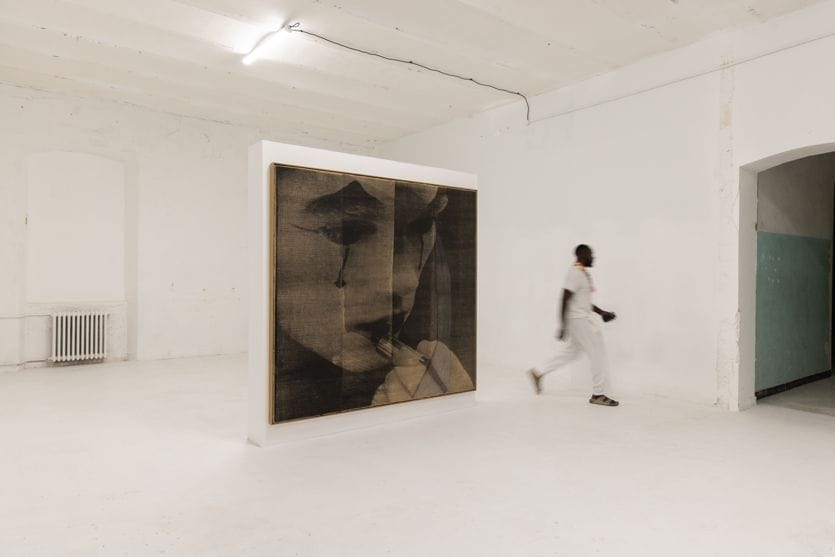
«Senza titolo», di David Noonan, serigrafia su collage di lino, cornice a vassoio in quercia, 2011

The memory of the festival and the body as a political presence

The theme of memory runs through the work of David Noonan, whose works are valued at around 30,000 euros: in ‘Mnemosyne’ (2021), the fleeting nature of memories takes centre stage; in ‘The King II’ (2024), the ‘king’ evokes the madman at the party. The artist is represented by Modern Art (London), and by the Australian galleries Roslyn Oxley9 Gallery (Sydney) and Anna Schwartz Gallery (Melbourne).
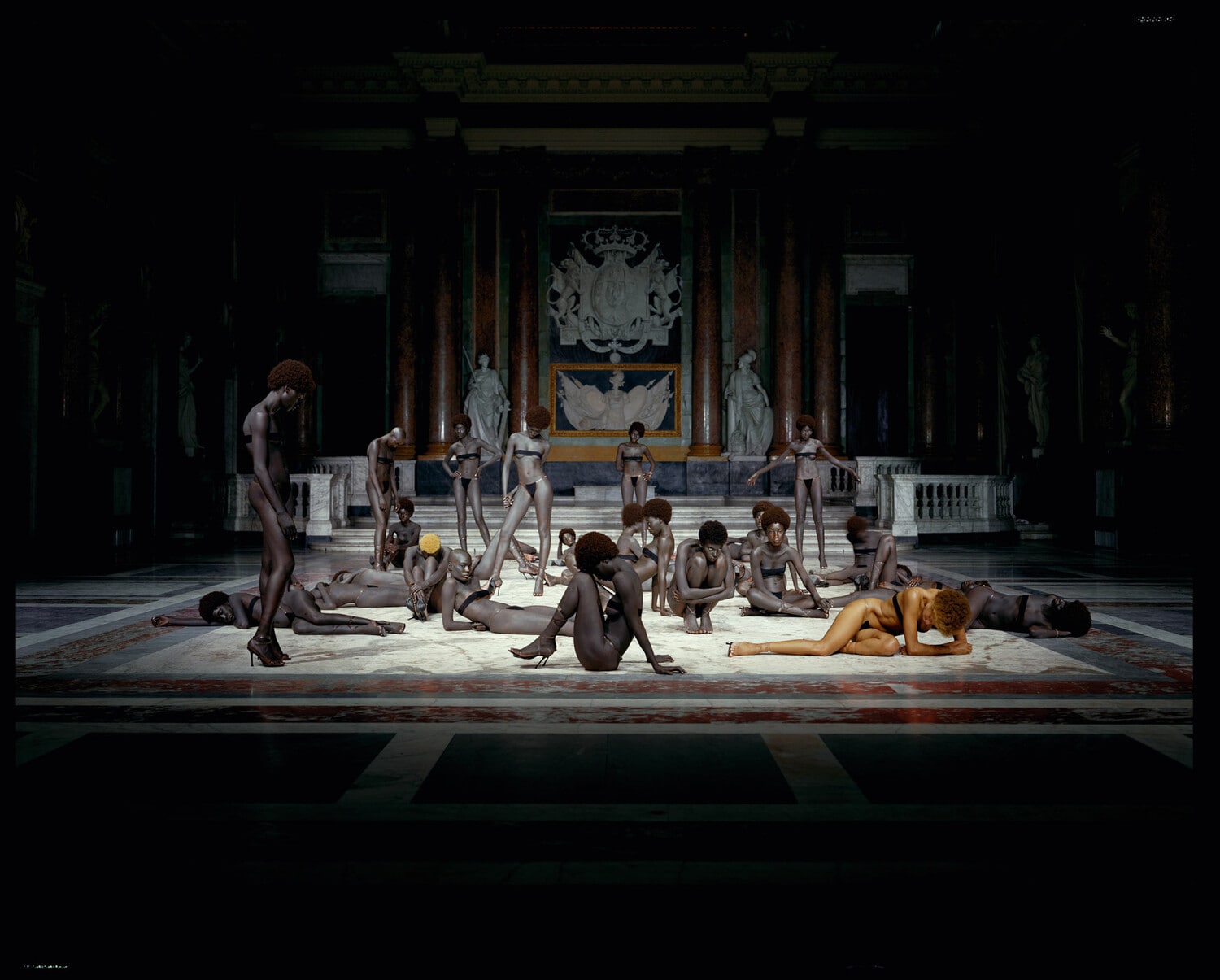
This section features the only work produced specifically for the Biennale: ‘Flicker (Until the Collapse)’ by Caamano, comprising 35 illuminated blocks from the military building transformed into a kaleidoscopic garland and Morse code signals. Among the works in the Finale is ‘VB 48’ (2001) by Vanessa Beecroft, a video of a seven-hour performance featuring semi-naked Black women. The performance reflects on the body as an instrument of power, at a time when the fate of millions of people was being decided by white men gathered for the G8 summit. Performance pieces can have a budget of up to 100,000 euros; photographs and videos are sold for between 20,000 and 100,000 euros.

«VB52», di Vanessa Beecroft, registrazione video di una performance al Castello di Rivoli, 2003, Galleria Lia Rumma, Milano / Napoli.

The grand finale of counterculture

The most recent work is ‘Fiorucci Made Me Hardcore’ (1999) by Mark Leckey, represented by Galerie Buchholz: video and sound explore nightlife and counterculture, from disco to acid house and Northern Soul. The party is not portrayed as a moment of escapism detached from historical and contemporary events; rather, it becomes both a sounding board and a living archive in which individual and collective memory merge, breaking the linearity of time.

Copyright reserved ©
Loading...

Brand connect

Loading...

Newsletter

Notizie e approfondimenti sugli avvenimenti politici, economici e finanziari.

Iscriviti