
'The Boys of Dungeon Lane', the review: Paul McCartney seeks lost time
Macca's 20th solo album is a tribute to Liverpool, John, George, Ringo and the world before the Beatles. What is genius in senility

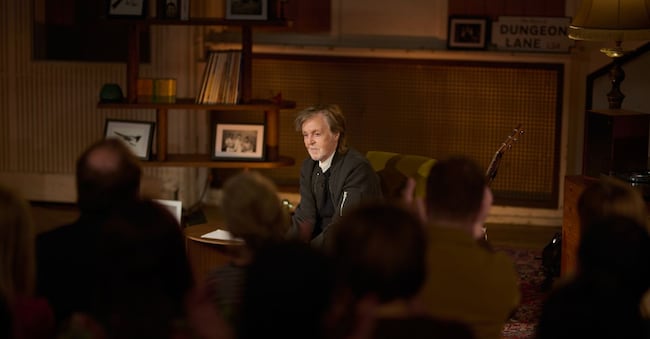
If Paul McCartney had wanted to splurge, he would have titled his 20th studio album In Search of Lost Time, just like the English edition of Marcel Proust's masterpiece, A Search for Lost Time. But, while he could afford it, he is not the type: he chose The Boys of Dungeon Lane, the reference to a half-gravel lane in Speke, the Liverpool neighbourhood that is home to the airport now named after John Lennon and in the 1950s was the terrain of the four's raids.
We've said it before and we'll say it again: the album to be released on 29 May, listened to and re-listened to in preview, is a work of senility, a kind of concept album that follows the vertical axis of the author's life, where each song sounds like a snapshot of Paul's life, but also of John, George and Ringo before the Beatles. It is as if, at the age of 84, Macca - the melodic and calculating soul of the Fab Four - was moved to tears as he thought back to the first 20 years of his existence, the only ones in which he was an ordinary person, the kind who can move freely in the streets, without legions of fans cheering you on and tinted-glass cadillacs waiting for you. The Boys of Dungeon Lane then takes post-World War II black and white Liverpool and makes poetry of the little things.
It starts with the dissonant rock of As You Lie There, Paul's first track recorded with Andrew Watt, a producer who specialises in shining the fur of old rock lions: it is a portrait of a teenager struggling with his first falling in love, between dreams and insecurities. One exotic guitar chord, built one finger at a time, and the atmosphere of the record is already clear. On drums, in the specific circumstance, is Chad Smith of the Red Hot Chili Peppers, one of the few feats on an album that - like McCartney I, II and III - remains almost entirely played by McCartney. Last Horizon is a reprise of an old track from Macca's corpus that for a thousand reasons had never been recorded and now sounds damn Brit Pop. How true that without the Fab Four there would be no Brit Pop.
And here we come to the ballad Days We Left Behind, from which the title verse of the album is taken: undoubtedly the best track on the album, with Paul's voice breaking as he remembers his friendship with John, their meeting at Forthlin Road, the McCartneys' home. We are in the neighbourhood of Early Days, another (remarkable) ballad of Lennonian reminiscences that Paul churned out in 2013. In the former as in the latter, those who grew up with their poster in their bedroom can't help but be moved. From the loving rock song Ripples on a pond we move on to the Mountain top experiment, a psychedelic picture of a girl getting high on a hallucinogenic mushroom at Glastonbury amidst electric guitar feedback and pitchy vocals, proof that Uncle Paul is losing his hair but not his taste for experiments.
Down South is the album's second Beatlesian homage, this time dedicated to Harrison: a minimalist track (vocals, acoustic guitar and nothing else) that evokes a hitchhiking adventure with George down Chester Road, a truck stop destination. Southwards, between dreams of rock 'n' roll and the discovery of Twist and Shout.We two is a pretty love song with an unmistakably Sixties flavour recorded on a four-track Studer, like A Day in the Life, Come Inside a tight rock built on a distorted riff, Never Know a tribute to the Laurel Canyon scene with lots of flutes and guitars recorded backwards, like in the good old days.


