
Brazilian company Azul one step away from bankruptcy
The carrier filed for 'Chapter 11' in US court to restructure its debts, following the path of its other competitors
by Mara Monti
2' min read
2' min read
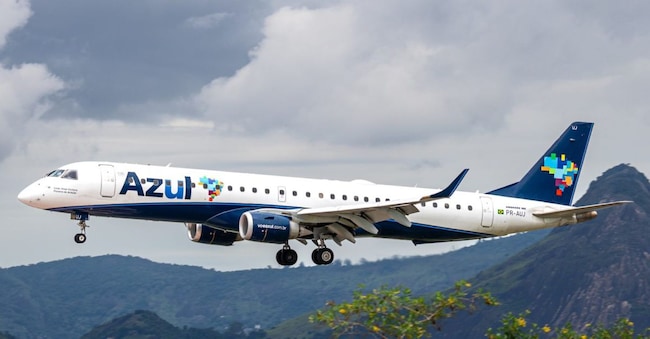
It is not an easy time for South American air transport when another carrier has been forced to access the 'Chapter 11' procedure to restructure its debt and avoid bankruptcy. Azul is the latest airline to file for bankruptcy with the New York courts by accessing the 'Chapter 11' debt restructuring procedure, which allows companies in financial difficulty to continue operating while they restructure their debts.
The Brazilian airline had been founded in 2008 to challenge the Latin American country's majors, LATAM Airlines and Gol Linhas Aereas, specialising in connections to small and medium-sized cities, but the currency crisis and rising costs prompted the carrier to seek alliances resulting in a potential deal with rival Gol itself to create an aviation group with a 60% share of the Brazilian market, a deal that is currently still on paper.
The failed merger has put the carrier in further difficulty, which is now aiming to reduce its debt by more than USD 2 billion with an agreement with major stakeholders, including United Airlines, American Airlines, and the aircraft leasing company AerCap, which have committed to financing of around USD 1.6 billion. Once the restructuring is complete, the company will aim to raise $950 million through a capital increase. Bankruptcy protection was filed in the US because most of Azul's investors are foreign and its bondholders are largely American-based. In the meantime, it will continue to operate and fly as normal.
The anteroom of bankruptcy comes after a long attempt by the company to get its finances back on track. Over the past year, the carrier renegotiated contracts with aircraft lessors, tried to reduce its debt, and raised hundreds of millions of dollars through bond issues and a capital increase operation. All of these efforts failed due to the country's economic difficulties, starting with interest rates at two-decade highs and pressures on exchange rates following increased volatility in currency markets, which weighed on the carrier's liquidity.
Over the past year, Azul's bonds and shares have plummeted. The stock, which is listed on the São Paulo Stock Exchange, left more than 70 per cent on the ground, hitting an all-time low, while its dollar bonds maturing in 2028 lost 62 per cent for investors, making it the worst among emerging market companies. Rating agency S&P recently downgraded the airline's credit rating to CCC-, with a negative outlook, citing cash erosion and 'significant cash consumption'.


