
The case of the ‘Autistici/Inventati’ and the US sanctions targeting the infrastructure, not those responsible

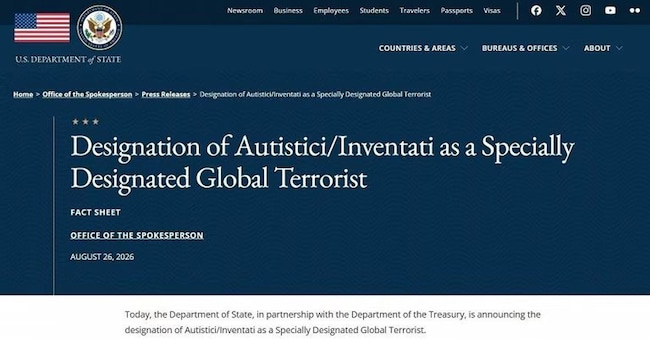
On 26 August, the United States added the Italian collective Autistici/Inventati to the OFAC list of Specially Designated Global Terrorists. The measure, announced by the State Department and the Treasury, invokes Executive Order 13224, the same sanctions framework used against those who finance, assist or provide material, financial or technological support to terrorism.
The US objection is well known: A/I is alleged to provide digital services used by groups that Washington regards as violent or terrorist. Email, web hosting, mailing lists, blogs and tools designed to ensure anonymity and privacy are therefore classified as ‘technological support’.
It is a disproportionate decision and, above all, sets a dangerous precedent. Not because every activity hosted by A/I should be considered legitimate, but because responsibility for a criminal offence should lie with the person who commits or organises it, not with a provider that offers infrastructure to thousands of users without any evidence of a deliberate and concrete contribution to a specific act of violence.
Autistici/Inventati has been active since 2001 and provides free email, hosting and publishing services to individuals, groups and associations with a clear anti-fascist, anti-racist, anti-sexist, anti-militarist and anti-capitalist political stance. The association has been formally recognised in Italia since 2018; according to figures cited by the US authorities, its infrastructure comprised 16,000 email accounts, 10,000 blogs, 5,500 mailing lists and 1,500 websites.
Those figures, however, are a problem with the measurement, not proof of it. Washington has indicated the overall volume of services, but has not disclosed how many email accounts, blogs or websites are attributed to individuals involved in the alleged misconduct, nor what A/I’s specific contribution was to each incident. Targeting 16,000 email accounts on the grounds that some users might use them unlawfully is a form of liability by association, not a detailed analysis.

