The challenge of a more cohesive European Union in a world in turmoil

As recently recalled by the President of the Republic Sergio Mattarella, receiving the diplomatic corps accredited in Italy at the Quirinale, the year that is drawing to a close has seen the number of crises on a global scale expand

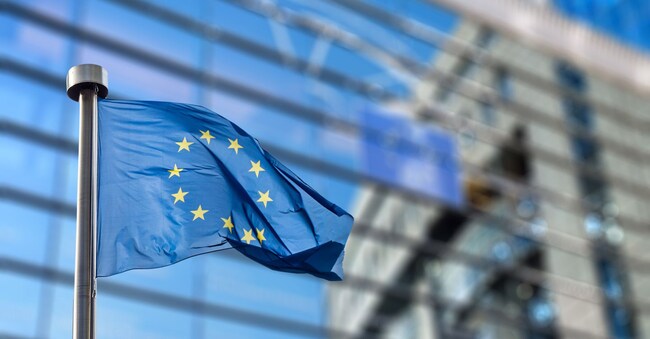
European Union flags in front of the blurred European Parliament in Brussels, Belgium

3' min read

3' min read

As recently recalled by the President of the Republic Sergio Mattarella, receiving the diplomatic corps accredited in Italy at the Quirinale, the year that is drawing to a close has seen the number of crises on a global scale widen, in a context marked by the deterioration of general security conditions and the multiplication of war fronts that now also affect and destabilise Europe itself.

In this scenario, the Head of State reiterated, 'going back, to the time of fragmentation, of national expansionist ambitions, can never mean progress'. It is up to the European institutions to rediscover the reasons for a unitary strategic vision that makes common interests and responsibilities prevail over an increasingly noisy simplistic and divisive rhetoric.

Loading...

It was precisely the revival of the Europeanist perspective that was discussed at the Catholic University of the Sacred Heart on the occasion of the presentation of the book Per un Unione europea coesa, forte e sicura (2024), conceived and edited by Vincenzo Cesareo, Professor Emeritus of Sociology.

The authors (academics, researchers and experts) of this articulate publication believe that there is an urgent need to return to the process of European integration, renewing the centrality of the EU's founding values. All this even though, in recent years, particularisms have emerged within individual states, political instability has grown (think of the situations in France and Germany) and the start of the new European legislature has been somewhat laboured.

The various analyses show that the strengthening of the Union depends on the combination of several key factors. Firstly, it must be acknowledged that in recent years there has been an objective slowdown in the commitment to continue the political process of consolidating the EU, reducing internal inequalities and renewing participatory processes.

This has fuelled accusations of excessive bureaucracy and a 'democratic deficit'. Not unrelated to these is the widespread perception of the Union, in a large part of public opinion, as a distant entity, difficult to understand and complicated in its structure. The evolution of the global scenario, moreover, has made the Union itself a target of autocracies, as Russia's growing interference in domestic elections and China's ambiguous position show. Waiting for the great unknown of the future relationship between the EU and the US with the start of Donald Trump's second presidential term to be dissolved.

The path of European integration therefore appears to be uphill. These are undoubtedly significant difficulties and obstacles, but they must be tackled quickly and with foresight. As Mario Draghi reminded us, Europe needs to 'shake up' because it will find itself embedded in a geopolitical and economic framework that has changed profoundly.

However, precisely in this shifting scenario there are also grounds for hope that entitle one to share the 'cautious optimism', which also transpires from the volume edited by Cesareo, about the real possibility of improving European cohesion. Despite everything, the EU can boast some positive records in economic, cultural and political terms. For example, with its 450 million inhabitants, the EU is the world's largest consumer market and ranks first (next to China and the US) in GDP value. It remains a highly attractive area for investment and global mobility. In addition to this, there are non-negligible factors such as the level of education of Europeans, which is among the highest in the world, the relative advancement of scientific research, the leadership in the development of renewable energy and sustainability policies, and the presence of a European social model that, through welfare, gives substance to the value of solidarity. But perhaps the most important positive aspect is that it is, at present, one of the few free and democratic areas on the planet in the face of the general global regression of democratic spaces. This, in fact, gives it the historic task of being the centre of emanation of values such as the primacy of the person, freedom, recognition of human rights and equality that elsewhere are struggling to assert themselves or are in the process of retreat. Without forgetting the value of peace, a cornerstone of the European Union since its inception. The process of European integration must therefore be continued, in the knowledge that it can succeed also and above all by giving back centrality to the founding values of the EU, which are not abstract principles, but essential pillars for building a stable, inclusive and prosperous future for all Europeans.

Lecturer in Sociology, Università Cattolica del Sacro Cuore

Copyright reserved ©
Loading...

Brand connect

Loading...

Newsletter

Notizie e approfondimenti sugli avvenimenti politici, economici e finanziari.

Iscriviti