
The challenge of Chinese brands: getting on company car lists
Giving Asian brands a boost was the new tax law on fringe benefits that penalises heat engines

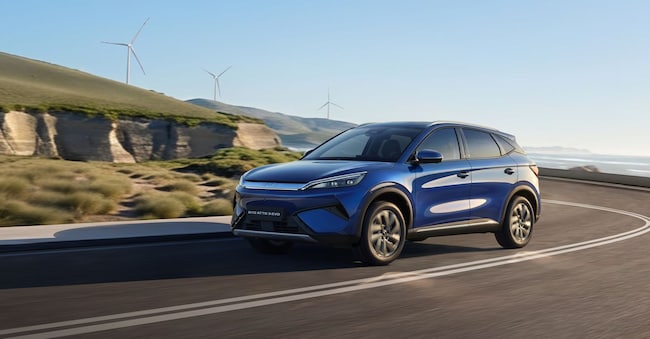
chinese brands are advancing at a fast pace in the sales charts. According to data from Dataforce, they had a combined market share of nine per cent in 2025. In the first two months of 2026, by adding three share points, they reached 12 per cent.
In the rental segment the numbers are different. In the short-term sector the share is very high, almost one in five cars (19%) is Chinese. Why? There are two basic reasons. Short-term is an 'easy' channel for making numbers. And numbers are made with price: discounts to renters are much higher than in other segments. The second reason is that new brands use short term rental to quickly increase awareness of their models. Selling a car to the short term means getting 'free' test drives for different rental customers. These test-drive it, feed the word of mouth among their own circles of friends and acquaintances. And by driving it, they amplify the visibility of that particular model on different roads.
Long-term rental is a different story. In 2025 the share of Chinese brands was five per cent. In the first two months it rose to eight per cent. Long-term selling is different. It is not about selling to a buyer, as in the short term, but to a driver who has the car in exclusive use. It is the car he will drive for three or four years. The choice is personal, conscious and considered. So, to sell for the long term, there are many ingredients to put on the table. The first barrier is to get on the car lists set up by fleet managers. To do this, the managers of the Chinese manufacturers must work closely with the renters, first at the table: they work on the sale price, which cascades down to the rental fees together with the residual value assessment. Then we act in the field by putting in place a series of actions with or without the renter to make fleet managers of companies familiar with the models and perhaps have them try them out. Then there is the service issue. We must ensure that the user experience is the best possible. In the first years of market development, the focus on after-sales must be maniacal.
Lending a big hand to Chinese brands, which have a wide range of electric and plug-in hybrid models, is the new tax legislation on fringe benefits, which has redefined the tax contribution to be paid by the employee who has the company car: a car with a thermic engine costs much more than an electric or plug-in. When you touch your wallet, sensitivity increases: this is why there is a strong migration within companies towards mainly plug-in hybrid (PHEV) models.
"In long-term rental, Chinese brands are gaining important market shares at a dizzying pace," comments Salvatore Saladino, Country Manager Dataforce Italia. They have entered the market with excellent prices and full optional equipment, and have taken advantage of the change in regulations on fringe benefits. In this field, the rise seems unstoppable even in the first two months of 2026: if among petrol and diesel cars Chinese manufacturers are travelling at a negligible share, between 0% (diesel) and 3% (petrol), in plug-in hybrids they conquered 16% last year and exceeded 17% this year. Among pure electrics they approached 10% in 2025 and reached 11% in 2026. Thus, in the Nlt the Chinese reached 4.77% market share in 2025 and this year they are already at 7.65%'.

