
The challenge for nuclear fusion starts at the Enea centre in Frascati
2' min read
2' min read
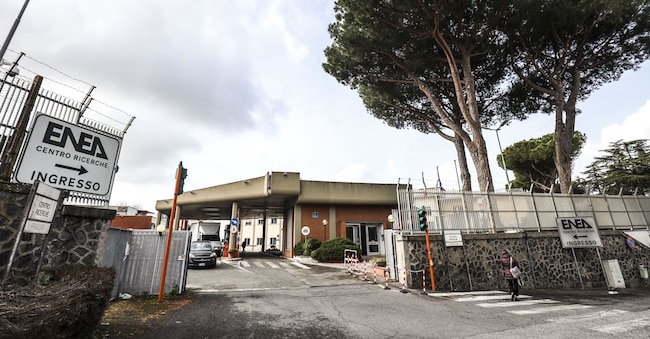
The challenge of producing energy from nuclear fusion starts at the Enea centre in Frascati. Here, in the research centre where the fusion process has been studied for years, a strategic and cutting-edge infrastructure has been designed to test and qualify the 26 superconducting magnets destined for the Divertor Tokamak Test, better known as the Dtt. That is, the '100% Italian' experimental reactor under construction in the Lazio centre's science centre. The facility is called the Frascati Coil Cold Test Facility (Fcctf) and specifically 'has been designed to test, under real operating conditions, the Dtt's magnetic system consisting of 18 toroidal coils, 6 central solenoid modules and 2 poloidal coils, made with low critical temperature superconductors operating at a liquid helium temperature of -269 °C'.
A structure available for research
An important facility, as the researchers reiterate, that will not only serve as a support for the Dtt reactor but will also be available to the international scientific community for other studies. Such as, 'the investigation and qualification of prototypes of superconducting cables at high critical temperature, operating up to the temperature of liquid nitrogen, equal to -196 °C, favouring the development of frontier technologies that are also useful for other applications such as transport and electricity grids'. Reiterating its importance is Francesco Romanelli, president of Dtt Scarl and lecturer in Nuclear Energy Physics at the University of Rome Tor Vergata. "With the Frascati Coil Cold Test Facility, we are making available to the international scientific community a unique infrastructure for testing key technologies for fusion,' he comments. Once operational, it will employ a team of 10 technicians and researchers, making a significant contribution to the development of nuclear fusion technologies, one of the most ambitious energy challenges of our time. And that's not all: the Fcctf laboratory will also be used 'to qualify the electrical power supply system for the toroidal coils (which will then be used in Dtt reactor operations) and the safety devices that protect the magnets from anomalies such as quench, a phenomenon that can degrade superconductors and compromise coil operation'.
Gas heated to 100 million degrees
These powerful magnets will be able to confine the hydrogen isotope gas (deuterium and tritium) inside a toroidal structure, where it will be heated to over 100 million degrees and reach the plasma state, an extreme physical condition required to initiate the nuclear fusion process,' they emphasise.

