
The Chigiana celebrates Pierre Boulez one hundred years after his birth
The International Festival features 18 compositions by the French musician

2' min read
2' min read
In the programmes of the Accademia Musicale Chigiana di Siena signed by Nicola Sani, the artistic director, there is always a focus dedicated to the music of our era, that which is already defined in history and in its stylistic connotations but needs to be relived in order to be properly understood. This year, the focus is on Pierre Boulez, on the centenary of his birth: known to most as a conductor, Boulez was also a composer, theorist, and musical organiser animated by the spirit of the avant-garde and the desire for research (in the 1970s, he founded the IRCAM in Paris, one of the best-known centres dedicated to experimentation).
International Festival
Of the French musician, the Chigiana offers no less than 18 compositions in its International Festival, and the entire summer concert programme refers to him: the title that brings it together is Derive, with explicit reference to two instrumental works by Boulez, but which in its Italian meaning is intended to indicate an artistic path. "The music of all times, of Bach and Beethoven, of Berio and Boulez, is born without knowing what its drift, its destination in time will be," says Sani. That is why, within the dense Chigi calendar (100 events, spread over two months), the concerts trace different paths, each of which seeks to identify what the landing place, today, of those drifts might be.
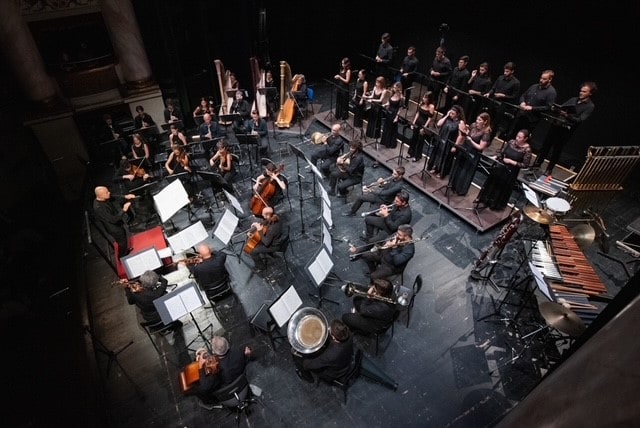
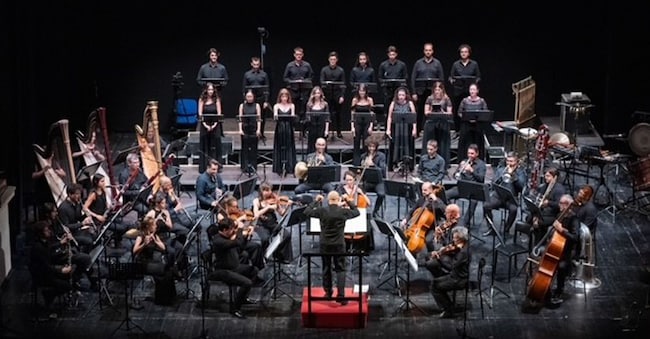
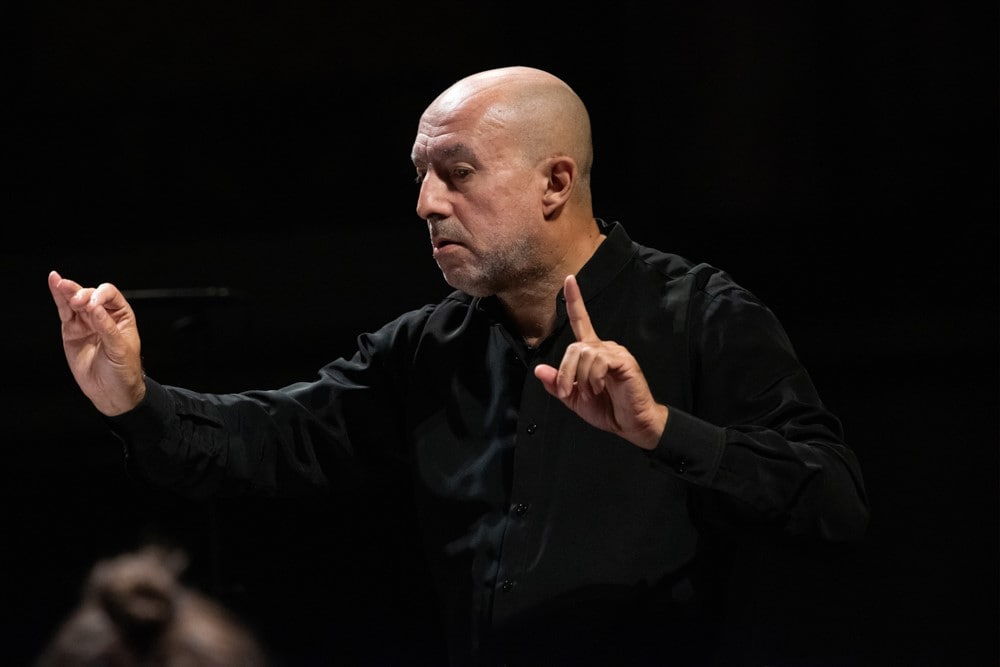
Already the inaugural concert of the Chigiana International Festival, in the Teatro dei Rinnovati overlooking the Piazza del Campo, declared homage to Boulez, with the offering of Cummings ist der Dichter. It is a short piece written in 1970 and revised in 1986, on words from a poem by the American writer Edward Estlin Cummings. Words that he fragmented, subjected to typographic games, and that Boulez transforms into abstract sounds, into movement, into a physical experience: a hypnotic kaleidoscope, which conductor Marco Angius, some musicians of the Orchestra della Toscana, and, above all, the 'Guido Chigi Saracini' Choir, well instructed by Lorenzo Donati, punctually restore to its enigmatic, visionary meaning. This is followed by Mahler's Symphony No. 6, reminding us that Boulez was a convinced interpreter of Mahler, even if not entirely revealing of that world. Mahler's most tragic and, in the end, most autobiographical symphony, was presented in a version with a much lightened ensemble edited by Klaus Simon: it works to appreciate the moments where Mahler's writing becomes more chamber-like, but sometimes (as in the Finale) makes one regret the more powerful sonic eloquence of the original. The doubts, however, pass into second order in the face of the full involvement guaranteed by Angius's breathtaking reading, made up of tight tempi, attention to detail in the instrumental dialogues, and a dryness of lines (precisely à la manière de Boulez, one might say) that make it sound like a dry etching. Twentieth-century premonitions emerge, heralding Stravinsky in particular, in this pressing and very transparent Sixth, and which, moreover, highlights the fine ensemble hold and the convinced participation of an Orchestra della Toscana in top form.
Chigiana International Festival, until 2 September

