
The Chinese invasion has begun and thermals are in the crosshairs
The changing geography. The landing of so many groups, from Byd to Chery, ignites the question of daz. iThe competition is not only on the car front but also in the field of electrified cars

3' min read
3' min read
Sitting on the banks of the river, the Chinese brands together with some Europeans who produce electric cars in China are waiting to see how the duty issue will play out after the World Trade Organisation appeal. In fact, neither the price lists of the Chinese manufacturers' Bevs, among which there is now also Smart, nor those of the Mini hatchback and Aceman, the Cupra's Tavascan and Volvo's Ex30 suvs and the Dacia Spring will change. Basically, they all take advantage of production costs that are much lower than those in Europe to absorb the duties, which range from 7.8 to 35.3% depending on the subsidies received from the Chinese government, which are considered to be the supporting pillars of a policy of unfair competition.
However, duties prove to be ineffective in benefiting European-made Bevs, but also in stopping Chinese manufacturers from continually landing in our parts where, among other things, the market is shrinking and electric cars are not taking off. In short, the door has been left open for the world's largest automotive industry to compete with European cars with thermal engines. A possibility that, today, many of them are exploiting by adding Ice hybrid models to the non-electrified ranges with which they have landed in Europe, and with systems that transform full-electric cars into hybrids such as range extenders in which the heat engine is an energy generator for the electric traction one. This technology, which in Europe also makes it possible to avoid penalties for CO2 averages, is relied on by both the hitherto electric-only Xpeng brand, which is announcing a system promising autonomies of up to 1,400 kilometres, and Changan, which is ready to land in Europe with the Deepal S07 suv, both electric and with a range extender system. The speed of reaction, the resourcefulness of Chinese brands, the attention paid to the perception of quality and Chinese technological skills have been underestimated by Europeans, especially the Germans, who have linked the possibility of producing in China essentially to the export hub concept, not considering the ability of Chinese manufacturers to evolve considerably and rapidly advanced technologies to reduce the development time and cost of their cars, and who have let the best designers slip through their fingers.
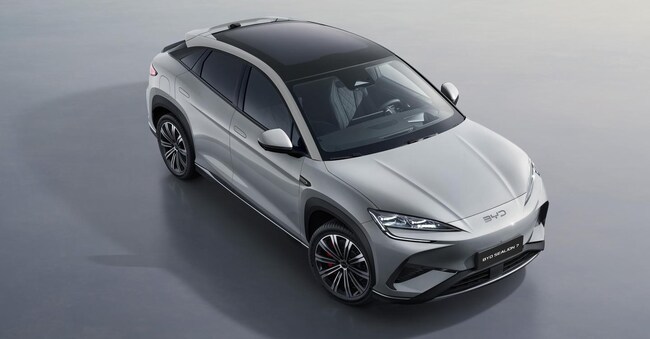
Added to all this is the fact that many Chinese groups want to become European, following in the footsteps of Byd, which from next year will start producing both full-electric and plug-in hybrid cars such as the Seal U Dm-i SUV in Hungary and then Turkey; Leapmotor, which will bring out the T03 electric city car from its Polish plant in Stellantis; and Chery, which has taken over the Barcelona plant from Nissan to produce mainly Ice models such as those of the Omoda &Jaecoo brands created specifically for Europe. In short, a different model from the one linking Chery to Dr Automobili, which completes and customises cars from China in Italy. They also want to produce in Europe Zeekr, which has already landed with the luxury electric suv X, and Dongfeng, in whose galaxy there are the Dfsk, Forthing,Voyah and Mhero brands with which it covers various market sectors. This strategy, for the moment, does not affect Mg, the ex-British brand that has long been in the Saic galaxy and whose range is almost entirely made up of Ice models, including the full hybrid Zs and the Mg3, which remains on the river bank like other Chinese manufacturers waiting for news with the electric Zs Ev, Mg 4 electric and the Cyberster roadster. To confirm how quickly Chinese brands have the ability to modulate their ranges to attack new markets, we add that Maxus, Saic's commercial vehicle brand, also offers turbodiesel models.
Finally, dulcis in fundo, duties and landing in Europe do not affect in the short term a brand like Xiaomi that challenges Tesla with the Su7 electric sedan and even the high-performance ones with its top-of-the-range Ultra version with 1,500 horsepower sold in China at a price equivalent to 100,000 euros.

