
The Chinese Revolution in the City of St Francis of Paola
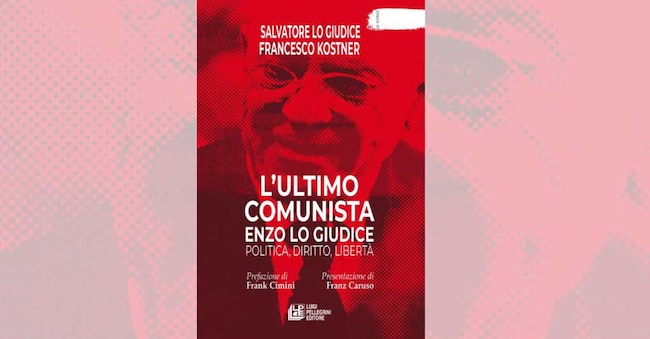
Salvatore Lo Giudice and Francesco Kostner's book, The Last Communist, traces the life of criminal lawyer Enzo Lo Giudice, who was Bettino Craxi's defender

6' min read
6' min read
According to hagiographic legend, St Francis of Paola, faced with the refusal of a boatman, having to cross the Strait of Messina, stretched out his cloak like a floating plank and managed to reach the Sicilian coast. So much for the bridge over the Strait... Since then, the Calabrian saint has been the patron saint of sailors and is celebrated, in the first days of May, with processions of his bust and cloak between land and sea.
Paola
Paola, in the province of Cosenza, is a place of pilgrimage and religious tourism, but in the 1960s, local communist militants contested investments in infrastructure - even roads and motorways - and urged the population to occupy their homes and rebel against the difficult conditions in which they lived: miracles 'have not helped to improve your life' and the Church 'encourages resignation', they said. One cannot "love one's neighbour as oneself". When you are exploited, you must hate those who steal your bread. The Chinese Revolution, which had seen the rural masses triumph, was to be an example.
There is a provincialism of space but also a provincialism of time. Riszard Kapuscinski talks about this in a book entitled Travelling with Herodotus. The provincialism of space is what we all know, seeing the world from the narrow perspective of the corner in which one is born or holed up. The provincialism of time is to look at different eras with the mentality of the present. It is difficult, for example, to put oneself today in the perspective of someone who has been militant among the Maoists, even more so as head of the movement for the South in one of the least developed regions. Maoists of the Mezzogiorno... Like Enzo Lo Giudice, a criminal lawyer born in Paola, the narrator and guiding spirit of a documentary by Marco Bellocchio, 'Il popolo calabrese ha rialzare la testa'. Production house: 'Servire il popolo', a Maoist motto and the title of an Italian newspaper. Paraphrasing an old court aphorism, Mao said: 'We all have to die. But there are deaths as light as a feather and others heavier than Mount Tai. Like that of those who die serving the people'.
Enzo Lo Giudice is also the subject of a book just published by Pellegrini, a Cosenza publisher, and written together with Francesco Kostner by his son Salvatore, a lawyer and lecturer in information law at San Raffaele University. How far removed from our image of Calabria is the idea that that land may have been a laboratory of rebellion, albeit sporadic and short-lived, so much so as to have attracted the director of Bobbio and prompted him to shoot a documentary on the socio-political struggles in Paola in 1969? A few years later, Corrado Stajano recounted the ill-treatment suffered by the inhabitants of Africo, who had been moved to the coast after a flood, receiving a lawsuit and ending up on trial together with Einaudi to be acquitted.
Bellocchio
In Bellocchio's documentary, we see the women in grappling with a raised clenched fist, and we talk above all about the occupation of council houses - assigned according to clientelistic criteria - but also of the hospital in Paola, which was finished being built but never went into operation, then fell into disrepair and was renovated, then fell into disrepair again... So the worker who was injured in Paola had to travel 50 kilometres to reach the nearest emergency room, risking bleeding to death.

