Car stories

The Renault Twingo's Chinese revolution, here's how it came about in just two years

Designed in Paris, it was developed in the ACDC research centre in Shanghai by a predominantly local teamDecentralised procedures, in-house design solutions and a dedicated ecosystem of software and component suppliers

by Lello Naso (Our correspondent Shanghai)

3' min read

Translated by AI
Versione italiana

3' min read

Translated by AI
Versione italiana

Philippe Brunet, CTO of Renault, doesn't mince words: 'We are in China to copy and learn'. Shanghai is home to ACDC (Advanced China Development Cente ), Renault's electric car development centre, whose name recalls direct and alternating current.

The French manager explains how he achieved what many had branded as a slogan, albeit a very effective one: in less than two years and for less than twenty thousand euros. Said better: develop and produce the electric Twingo in two years at a cost to the end consumer of less than 20,000 euros. 'In Europe it would have been impossible. Here in China we did it,' says Brunet.

Loading...

To copy and learn is a strong statement for a European automobile manager. But that is what has happened in these two years of development of the new electric Twingo. Renault, through ACDC, has copied a working method, the Chinese one, based on streamlined structure, fast decision-making, in-house development of all solutions and close collaboration with local suppliers. In an ecosystem, the Chinese one, that is strongly cohesive and at the same time with highly competitive suppliers.

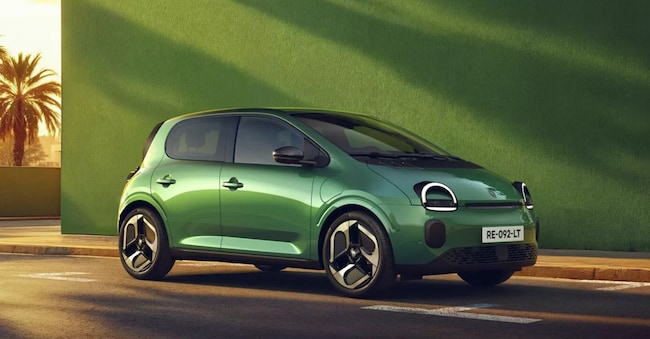
The starting point was the design of the new Twingo, created in Guyancourt, on the outskirts of Paris. Based on that design, the development and pre-industrialisation phase was fine-tuned in Shanghai, culminating in the prototype that will go into production next month in New Mesto in Slovenia.

"The slimness of the structure," explains Brunet, "is a decisive element. Engineers like to spend, it's no secret'. So the more there are, the more they spend. It is inevitable. In Paris, at the development centre, there are seven thousand employees, in Shanghai, at ACDC, there are 150. 'In China, the structures are very lean and reporting to the project manager is immediate. This simplifies the processes a lot,' explains Jeremy Coiffier, Twingo project manager. 'It has also facilitated the realisation of some of the operational pillars we set ourselves. First of all, the shortening of technical decisions to one day. In Europe, the time is one week.

The time cut was automatic. In nine months Twingo went from concept to prototype. In five months from prototype to pre-industrialisation. Also because, another fundamental decision, all styling solutions were made in house, without recourse to external technical studies, and the development of components was possible without contracting external suppliers. A customary practice in China, where they sign when the component is chosen, but unthinkable in Europe. Also decisive was the development of the software, which took half the time compared to Europe. 'For software and suppliers,' Brunet explains, 'the Chinese ecosystem is decisive. Here we easily find great software talent and developers. The range of suppliers is also very wide, with specialised clusters and young companies that have grown dramatically in recent years'.

All this brought the time to market to two years. It was four for Clio 5 and Captur, three for Renault 5 and 4 and for Scenic, to give a few examples. The electric Twingo recorded time cuts of 16 per cent in the design phase, 41 per cent in the concept phase, and 26 per cent in the pre-industrialisation phase.

In Hangzhou, at the newly opened Renault China headquarters (Renault has 400 employees in China), the meeting with suppliers is enlightening. Start-ups and young companies present their futuristic solutions for software (Adas, assisted driving) and the electric car, from batteries to recharging. An ecosystem in which Renault is integrating in an anomalous way compared to other car manufacturers. ACDC and Horse (the Hangzhou electric motor development centre in a joint venture with Geely) develop products designed in Europe in China, which will then be produced and marketed in the relevant markets. 'We will go to China, in a different way than the others,' then CEO Luca De Meo said a few years ago.

Now, with the development of the Twingo and the new electric models to come, the picture is clearer. Europe thinks, China develops, in individual markets we produce and sell with different formulas, alliances and companies. China included, with the alliance with Geely that can also be useful in other markets.'Europe is not cut off,' says Brunet, 'but it will have to adapt to these methods and these times. Otherwise we are out of the competition'.

Copyright reserved ©
Loading...

Brand connect

Loading...

Newsletter

Notizie e approfondimenti sugli avvenimenti politici, economici e finanziari.

Iscriviti