
The Circeo victims and the infamy of that trial
Serena Terziani reconstructs the events that happened fifty years ago, including the court case that followed and the public debate that was generated: a watershed case

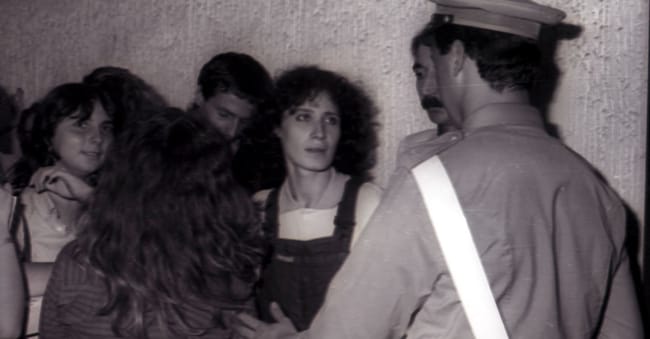
One suffers, reading this essay by Serena Terziani, a research doctor at the Sapienza University in Rome who has courageously taken on the challenge of a meticulous and paper-based reconstruction of the Circeo horror. One suffers not only because it plunges into the abyss of that violence, which cost the death of Maria Rosaria Lopez fifty years ago and a survivor's life marked forever for Donatella Colasanti (who died in 2006). Not only because it presents us with the three torturers, boys from bourgeois Rome, in all their glacial cruelty and without ever a sign of repentance.
One suffers for the aftermath. For a trial that gives us the measure of the unpreparedness and inadequacy of justice in the face of sexual violence (and after all, in 1975 we were, incredibly, a long way from an offence against the person: another 21 years would have to pass before we would have a law that left 'decency' and 'public morality' behind). It has been said many times about the abomination of interrogations that guilt-trip the victims, of lawyers and judges without an ounce of sensitivity and ability to understand the victim, even before empathising with her. Reading, however, is something else. One dwells, one internalises, one empathises. One wonders how it was possible that Donatella Colasanti, reduced to death in the boot of a car next to the corpse of her friend after two days of gruesome abuse, was subjected to a second ordeal. It was made up of insinuating if not accusatory and discrediting questions, of inadmissible proposals (the attempt by the families of the perpetrators to 'buy her off' with a compensation of 24 million lire), of hours of inspection in the cursed villa to explain what she had experienced, how, when... And after the life sentence imposed in the first instance on Angelo Izzo, Gianni Guido and Andrea Ghira, a year later, having to relive everything from scratch for the appeal trial, with the bitterness for the reduction of the sentence imposed on Guido.
The purpose of this essay - in putting down on paper, scientifically, The facts of Circeo (as the title suggests) - is to show how that was also a watershed case for the public debate it generated, for the women's revolt in the streets and in the courtrooms, for a new awareness that was slowly making its way into our society. Terziani explores what has followed over time, the attention paid by cinema and literature so that memory would not fade. Reflection on language intensified, conferences multiplied, and after the approval of the law in '96 - thanks to the common front of parliamentarians of different political colours - we went ahead.
The chronicles tell us that this has not been enough; on the contrary, there are often disturbing setbacks. More than ever, therefore, this book is necessary.
© REPRODUCTION RESERVED


