
The classic car market holds its ground with online
Revenues up slightly with more vehicles in auctions and unreserved bids

3' min read
Key points
3' min read
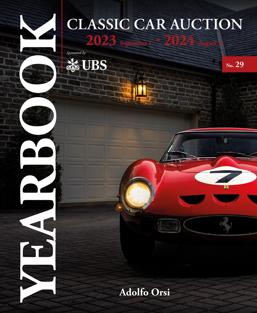
The Auto e Moto d'Epoca exhibition held in Bologna from 24 to 27 October is not only a great opportunity to find the desired vehicle, but also a traditional moment of reflection on the health of the collector car market. In fact, the latest edition of the 'Classic Car Auction Yearbook 2023-24' compiled by Adolfo Orsi for Historica Selecta editions was presented in the halls of the Fair. The yearbook collects data on cars auctioned between 1 September 2023 and the end of August 2024.
The elegant publication offers a mine of data that allows collectors and enthusiasts to analyse last year's performance through numbers. The sensation of an overall slowdown is confirmed: against total auction revenue of more than $2.1 billion (+5%), the number of vehicles on offer rose, but the percentage sold fell to 70% (-3%). The success of online auctions, especially in the USA and in the $100-200,000 price range, increased the number of cars offered by 2,819, of which 1,577 were sold for an additional revenue of $211 million. Without this additional channel, a market decline of 5% would have been reported, as 3,797 of the 11,312 cars offered were online. Buyers are increasingly selective: in the largest market, the US, which accounts for three quarters of the total, the sell-through rate stands at 73%, the lowest in 20 years, while in the UK it plummets to 55%, with a market share of less than 6%, similar to France.
Auction house strategies
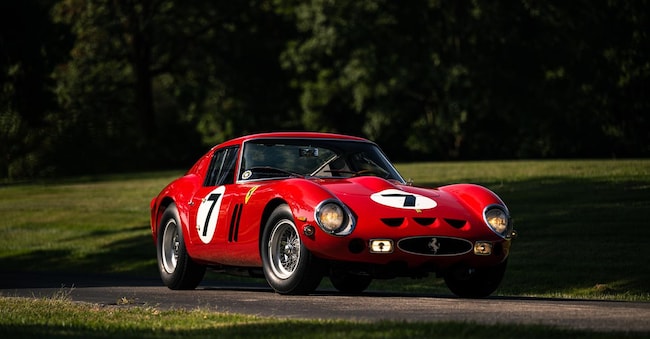
.The auctioneers' response so far has been to use the unreserved bidding mechanism, which allows them to find the correct new break-even price even at the cost of losses for the seller. Slightly more than one in four cars by number and revenue are offered without reserve, important numbers but down on the previous period. For the time being, the mechanism of warranties that has distorted the top end of the art market has not taken hold in this segment, but the recent establishment of the duopoly between Sotheby's and Christie's with the latter's acquisition of the Californian Gooding&Co could change the game. Even with the addition of online auctions, revenue continues to depend on a small number of millionaire cars, 311 in the period or 4% by number and total revenue of $835m, or 39% of the total. Notable among these was the Ferrari 250 Gto sold by RMSotheby's in November 2023 as part of the most important art auction in New York, for more than $51.7 million, below the asking estimate but 100 times the price paid 38 years earlier by current sellers. Maranello cars continue to lead the market with a quarter of total revenue, down from a record one-third of the total ten years ago, and two-thirds of cars sold at an average price of $565,000. This is to the benefit of the growth of Porsche, which is now worth 19% of the market, thanks to more than 2 thousand cars on offer (+36%) with a 74% increase in viewership and an average price of $268 thousand. The Italian brands Maserati and Alfa Romeo are still very much undervalued, while Lamborghini rises to over 3% thanks to the success of the Miura in particular, but with a very selective market that discards almost half of the lots offered.
The most consistent growth is in post-2000 cars, which rose from 25% to 36% of the total in two years, thanks to the boost from new generations of collectors. This figure is closely linked to the recent speculative phenomena that have affected the market and that still do not seem to have subsided. The idea that contemporary cars can constitute investment goods proves to be largely unfounded, all the more so when one looks at the huge production numbers, even of the so-called limited series, particularly of Ferraris and Porsches.
The trend of the gradual (and hopefully slow) fall into oblivion of pre-1960s cars is inevitably linked to generational and taste changes. Only the valorisation of the originality of the few historic vehicles through Concours d'Elegance and competitive and social rallies such as the Targa Florio can counteract this by appealing to rarity and appealing to design elegance, factors that contemporary models lack.

