
The Conference on Augusto Graziani, a Countercurrent Economist
3' min read
3' min read
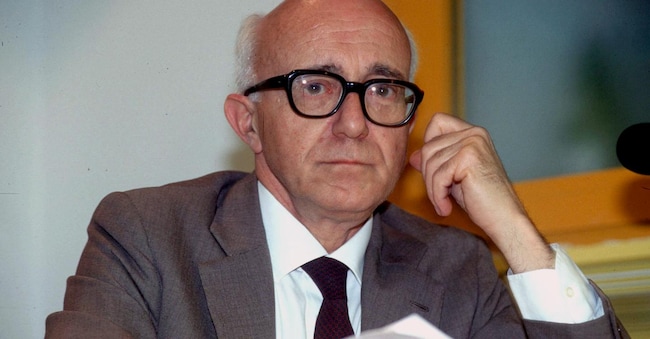
The 'awkward', 'counter-current' economists, those who have the audacity and genius to question accepted theoretical schemes that have become 'classic', are the driving force of economic science. They break the certainties of the past, advance new 'visions' of the economic system, formulate novel hypotheses and new models, with original implications for economic policy. In the last thirty years of the 20th century, the Italian economist who played this role more than any other on the international scene was Augusto Graziani (1933-2014).
Yet Graziani had been brought up on the studies of general economic equilibrium theory, according to which under conditions of perfect competition the market generates equality of supply and demand, full employment and an income distribution linked to the productivity of each factor. In the Graziani family, one breathed that air. Suffice it to say that Graziani's grandfather, also named Augusto, had been an influential 'orthodox' economist, distinguished not only for his economic culture but also for the consistency with which he refused to take the oath to fascism, lost his professorship and had to go into hiding. And indeed, the young Graziani dedicated his first studies to the theory of general equilibrium and throughout his life emphasised its theoretical elegance and analytical rigour. It was his innate curiosity, as well as his sensitivity to the historical and political events of the 1960s, that diverted his gaze towards an alternative research horizon. He abandoned methodological individualism to focus on the study of interactions between macro-social actors, as Keynes had already done by taking up the 19th century tradition. He placed the monetary character of the market economy at the centre of the analysis, masterfully reworking the contents of the books of scholars such as the Swede Wicksell and the Austrian Schumpeter, to the point of giving life to what is now internationally known as the 'Italian school of the monetary circuit', considered one of the most fertile currents of the post-Keynesian theoretical tradition. To understand capitalism, Graziani taught, it is necessary to follow the path of money, from its 'creation', the bank financing of production in favour of enterprises, to its 'destruction', which is then nothing more than the flow of money back to the banking system itself. The result is a sequential analysis of the economic process that is radically different from the mainstream, which is exclusively concerned with final balances, with shocking implications for the market's ability to ensure stable growth and distributive equity.
Graziani's theory of the monetary circuit was expounded in his crowded lectures in Naples and Rome, in his famous textbook on macroeconomics, in his well-known books (including The Monetary Theory of Production published in Cambridge in 2003), and in essays that appeared in prestigious international scientific journals. Famous and a source of controversy were his revisitations of the contributions of the great economists of the past, in which Graziani was able to discern analytical cues that no one else had grasped, proposing unprecedented assonances in retrospect, always using his own economic theory as a litmus test. As was the case in 1983, the centenary of Marx's death and the birth of Keynes and Schumpeter, when scandalously Graziani identified between these very different scholars a subtle thread of continuity that passed right through the analysis of monetary circulation.
Equally strident and countercultural was his famous reflection on the Italian economy. In his books, conferences and newspaper articles, Graziani described an economic system characterised in all respects by dualistic development: the large exporting company that adopts advanced technologies and the small company that turns to the domestic market and uses traditional production systems; the great country of universities and research, and the reality of precarious and underpaid work; the great European North and the subsidised South reduced to a reservoir of labour. And on this dualistic model of development descended Myrdal's circular and cumulative processes of causation, which amplified in Italy - and later, he would say, in Europe - the processes of divergence between centres and peripheries.
Augusto Graziani passed away ten years ago. But part of the international academy continues to develop his work. We will have further evidence of this at the conference 'The teaching of Augusto Graziani, between theory and economic policy' being held at the University of Sannio (9 and 10 May). The conference, which has the patronage of the Italian Society of Economists and numerous other scientific associations, will review the reflections of well-known economists working in universities all over the world on the topicality of Graziani's thought and current studies. The two-day event will close with a new lecture by Augusto Graziani: the screening of an unpublished interview with him recorded in 1998, on topics of monetary theory, made available by RAI.

