
The cost of the drought: up to 74 billion euros and 960,000 jobs
However, there are still measures that can be taken to help turn the tide or find solutions. One of the strategies suggested by the experts involves the recovery and proper management of water resources

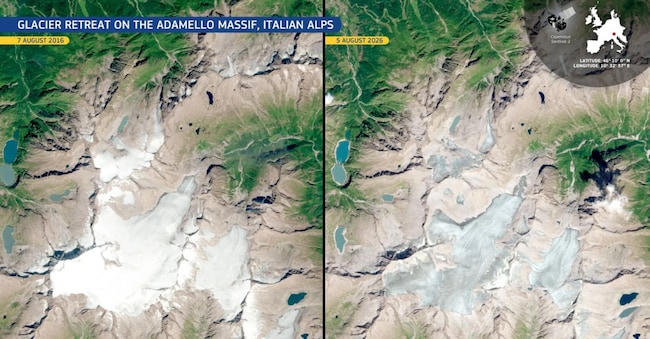
On the one hand, there is the drought, and its impact, which could cost Italia 74 billion euros and 960,000 jobs. On the other hand, there is the opportunity arising from the recycling and, therefore, recovery of wastewater, which could lead to savings of up to 50 per cent. These are the pieces of a mosaic in which the effects of climate change are being felt and in which, above all, temperatures are rising.
74 billion and 960,000 jobs
A study carried out by researchers at the Euro-Mediterranean Centre Foundation on climate change (CMCC) and the Politecnico di Milano, which, for the first time, analyses the economic costs of a prolonged drought in Europe (the study is titled ‘Multi-Year Droughts and Their Compounding Economic Impacts in Europe’). The analysis points to extreme ‘vulnerability’ because the +2-degree threshold would plunge the system into crisis.
From agriculture to construction
The productive sectors are also having to contend with the drought. Starting with agriculture, which suffers the immediate impact. In this case, according to the study, recovery takes two or three years thanks to a series of measures ranging from insurance to a change in crops. But the construction and manufacturing sectors are also affected. Then there is another aspect, which concerns the risk of wildfires. In this case, a drier environment makes it easier for flames to spread, and the resulting damage incurs significant costs that persist over the years.
Changing course
However, all is not lost, and there are some measures that can help turn things round or find solutions. One of the strategies suggested by the experts involves water recovery and recycling.
“The summer of 2026 is confirming that the water crisis is no longer an occasional emergency, but a new structural reality with which we must learn to live – says Francesco Fatone, a lecturer at the Polytechnic University of the Marche and a member of Ecomondo’s Technical and Scientific Committee with responsibility for the entire Water sector. – The scarcity of this resource is certainly exacerbated by climate change and requires policies and measures with time horizons spanning several decades. A significant part of our vulnerability, however, also stems from the still inefficient and linear way in which we use and manage water’.

