
The countdown is on for the richest World Cup ever, amid logistical challenges and geopolitical tensions
The 2026 World Cup kicks off without Italia, which is absent for the third consecutive time, in a tournament involving three host nations and 48 teams
It still seems strange to us that this Thursday, 11 June, amidst so many other dramatic and complicated events, the 23rd FIFA World Cup is kicking off. Without Italia. Or perhaps not; we’ve got used to it, just like with all the things we don’t like: the first time you notice it, but by the third time you’d rather not think about it anymore.
Even the regrets, following the shock of the rejection that lasted three days, have faded. Now, those left without World Cup summers are no longer just teenagers. While it is true that we have missed the last three editions (2018–2022–2026), we also fared poorly at the 2014 and 2010 World Cups, being knocked out in both cases during the first phase, the group stage. In short, it has been since 2006—that is, for twenty years, ever since the skies over Berlin turned blue—that we have been absent from the Great Football Spectacle.
We live on memories, interviews and regrets. We watch Grosso’s final penalty on TV – the one that secured our victory over France – and it feels like a different world. Players like Pirlo, Del Piero, Buffon, even Materazzi, seem to belong not just to another generation, but to another life, when there were no social media, smartphones or artificial intelligence was something still far off in the future, like man on Mars or the Higgs boson.
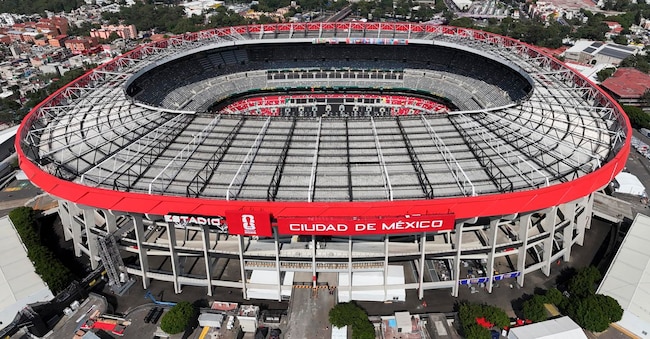
And yet, even without us, the World Cup goes on. In fact, it’s getting bigger. This ‘American’ World Cup, taking place across Mexico, Canada and the United States, features no fewer than 48 teams, with a total of 104 matches and 1,248 players selected. A huge, bloated number, typical of our times, where every event simply has to get bigger and bigger. Just think that at the 1982 World Cup in Spain, the one won by Bearzot’s Italia, there were 24 teams – half the number today. And before that, from 1934 to 1978, there were only sixteen. Different times, we know. But now we’re verging on madness. If we scroll through the list of participants, we find unlikely teams such as Cape Verde, Panama, Curaçao, Ghana, New Zealand, Jordan, Haiti, Uzbekistan, and so on.
It’s quite something to think that Cape Verde and Panama are in the line-up but not Italia, a country that has won four World Cups and finished in the top four on eight occasions. But this is globalised football, baby, as Gianni Infantino, FIFA president and close friend of Donald Trump, would say. He pushed very hard to organise this Super Event where almost everyone seems to have got in, except Italia. For the record, Infantino’s mother is from Brescia and his father from Reggio Calabria. Anyway, best not to be too cheeky: if Bosnia and Macedonia left us out in the cold, perhaps we would have gone down to Ghana and Curaçao too, a Dutch Caribbean island with 156,000 inhabitants, roughly the same as Perugia.


