
The courage to innovate: technical trials for the future
The Ferrari Luce has sparked controversy more for its aesthetics than for its functionality, yet according to Carlo Ratti, in a constantly changing world, deviations from the norm are important in their own right

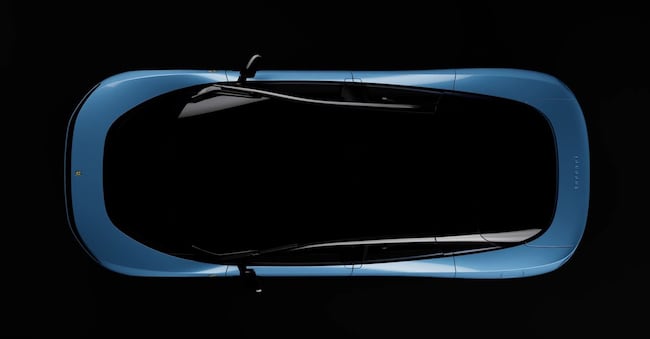
Last month I wrote a guest essay for the *New York Times* on the new Ferrari Luce. The headline chosen by the editorial team was deliberately provocative: ‘It’s ugly. It costs $640,000. And it infuriates everyone – except me.’ It was the most-read editorial that day and generated an avalanche of comments, both online and in print. One of the reactions that amused me most came from a conservative website in Arizona, which remarked: an MIT professor, no doubt a left-winger, argues that we must learn to appreciate ugliness.
Of course, that wasn’t the point. The point is that when you innovate, the result may initially seem strange, awkward, even wrong. And that’s a good thing. I was thinking about this again this week as I returned to Italia, to Enzo Ferrari’s homeland, to visit the construction site of the new Sant’Agostino cultural centre in Modena. Italia, in fact, has a special relationship with beauty. Having lived and worked in many countries, I’m convinced that here, the appearance of things holds a special place.
From Ferrari cars to Armani clothes, from Prada shoes to Cappellini furniture, design in Italia is both a cultural asset and one of the main drivers of the economy. For several weeks each year, Milan becomes the world capital of design and fashion, attracting hundreds of thousands of professionals and visitors. This aesthetic sensibility, however, also carries a risk: that of turning memory into nostalgia. Marcel Proust wrote seven volumes centred on a madeleine which, dipped in tea, managed to unleash a flood of memories. Our visual landscape works in a similar way. The forms we recognise reassure us and anchor us in the face of change, as demonstrated by the reactions to the Ferrari Luce.
I don’t know whether this vehicle will be a commercial success or not. The market will soon tell us. I do believe, however, that Ferrari deserves credit for having tried to rethink the electric car, breaking with established design conventions. The history of the motor car is full of similar examples. In the late 1970s, Gianni Agnelli, the legendary head of Fiat, sought to envisage a radically new vehicle, entrusting the project not only to automotive designers, but also to the architect Renzo Piano and the engineer Peter Rice.
And so the Fiat VSS was born, unveiled at the 1981 Turin Motor Show: intelligent, modular and deliberately devoid of style. So devoid of style, in fact, that Fiat shelved the experiment shortly afterwards. However, many of those ideas found their way into the Tipo, which was named European Car of the Year a few years later. Today, John Elkann seems keen to follow a path similar to that of his grandfather. For the Luce, he has enlisted Marc Newson and Jony Ive, the designer who helped define the aesthetic of Apple’s products. We may debate the final result, but it is hard to deny the courage of the endeavour. Designing a car, after all, is unlike any other exercise in industrial design.

