Competitiveness

The crisis is not holding back ‘Made in Italy’: companies continue to invest abroad

Assocamerestero Observatory: 51 per cent of Italian companies are keen to expand into foreign markets, particularly in South America

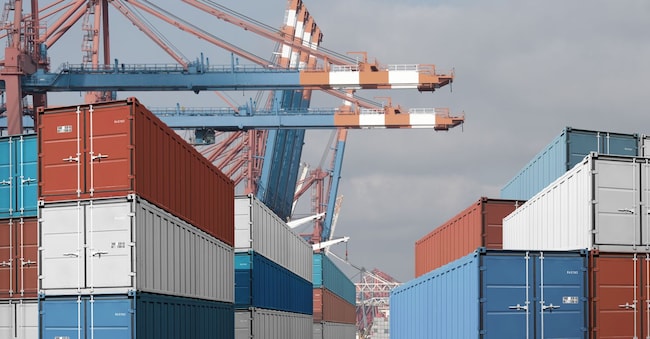
 Andrey Kuzmin - Fotolia

4' min read

Translated by AI
Versione italiana

4' min read

Translated by AI
Versione italiana

Exports are driving not only the growth of Italian businesses, but also their confidence in the future. The international landscape is one we are all familiar with: tariffs and protectionist policies, geopolitical tensions, disruptions or slowdowns in supply chains, and rising costs of raw materials and energy.

Yet Italian companies operating abroad confirm that ‘Made in Italy’ retains its competitive edge, thanks to its reputation for quality, style and reliability, and for this reason, they remain committed to their investment plans.

Loading...

This is revealed in the Assocamerestero 2026 Report, produced through the network of Italian Chambers of Commerce Abroad, drawing on data gathered from markets in Europe, Asia, Africa, the Americas and the Australia-Pacific region.

The survey was conducted during a period of significant geopolitical and economic instability, characterised by trade tensions, uncertainty over tariffs, volatility in energy costs and renewed tensions in areas of strategic importance for international trade. This is reflected in the realisation that ‘the environment in which Italian businesses and exporters are required to operate is becoming increasingly complex. Demand remains favourable, but competitive advantage can no longer be based solely on the strength of the product’, the report states.

Research findings

The overall picture remains favourable: 40 per cent of the companies surveyed describe the climate towards Italian products and businesses as ‘very positive, with growing demand’, and a further 49 per cent as ‘positive, but more selective than in the past’. Nine per cent report a stable situation, 3 per cent a more cautious climate, whilst there are no signs of any marked deterioration.

However, there are differences – some of them significant – depending on the market. The most positive picture is painted by companies operating in Latin America, where 80 per cent of respondents report a ‘very positive’ climate – probably driven by expectations surrounding the agreement between the European Union and Mercosur.

The outlook is more cautious, however, on the African continent, where companies are evenly split between those painting a stable picture and those adopting a more cautious stance, with investment or development decisions appearing to have been postponed pending a clearer picture.

Exports remain a strategic priority

Despite the complexities of the current historical context, 51 per cent of the companies surveyed say they intend to invest in foreign markets. By contrast, 26% report a more cautious approach, whilst 20% indicate a strategy focused primarily on defending their existing positions. Only 3% report a reduction in exposure or investment.

Here too, however, the responses vary depending on the geographical area: ‘In Asia and the United States, all responses indicate that companies are focused on investment, confirming that these markets are still perceived as dynamic and full of opportunities. In Europe, on the other hand, the approach appears more cautious: 39 per cent indicate that companies are focused on new investments, whilst 33 per cent point to a more defensive strategy, centred on maintaining positions already secured’, the Observatory reports.

Potential obstacles to growth

It is interesting to note that, amongst the geopolitical and economic factors affecting Italian companies’ decisions, the ones that have the greatest influence on investment choices are not tariffs or protectionist policies, but energy and raw material costs, cited by 57 per cent of the sample. Protectionist and tariff policies come in only third place, cited by 20 per cent of the companies, on a par with growing competition between economic blocs and with regional conflicts and tensions. Exchange rate risk and financial instability carry more weight than tariffs, cited by 23 per cent of the sample. Further down the list, but still significant, is regulatory and political instability in individual markets, cited by 14 per cent.

Loading...

Less product, more strategy

In this changed – and constantly changing – landscape, the strength of the product alone is no longer sufficient to establish a foothold and grow in foreign markets: whilst it remains crucial, it must be complemented by a medium- to long-term strategy, which over half of the sample identified as a priority. Also considered fundamental (by 29 per cent) are the choice of partner and knowledge of the regulations in the target country (26 per cent).

Whilst the ‘Made in Italy’ brand remains strong in the eyes of global consumers, competition is also intensifying, particularly from China (cited by 77 per cent of the Chambers), France (46 per cent) and Germany (43 per cent).

To remain competitive, there is therefore a need for ‘greater, coordinated promotion of “Made in Italy”’, as highlighted by 71 per cent of operators, followed by ‘greater public support for the internationalisation of SMEs’ (49 per cent).

Forecasts for 2027

Whilst companies’ main objective for 2026 is to maintain the positions they have secured, a return to growth is expected for 2027 (82 per cent of respondents): 24 per cent indicate sustained growth for ‘Made in Italy’ products in their respective markets; 56 per cent anticipate moderate growth; whilst 18 per cent expect a period of stability. No one anticipates a general slowdown.

“The figures coming from the network of Italian Chambers of Commerce Abroad are encouraging, but also very clear,” observes Mario Pozza, president of Assocamerestero, “Made in Italy continues to be perceived as a benchmark for quality, style and reputation. This is an extraordinary asset, but today it is no longer enough. In international markets, what counts more and more is a sustained presence, knowledge of local regulations, the ability to choose reliable partners, to adapt the business model and to develop medium- to long-term strategies. Quality remains the starting point, not the end goal.”

One aspect that deserves particular attention concerns Europe. The figures do not suggest a market in difficulty, but rather a market that is more mature and more cautious than other parts of the world. The short-term outlook also confirms this view: a sense of stability and caution prevails in Europe.

Copyright reserved ©
Loading...

Brand connect

Loading...

Newsletter

Notizie e approfondimenti sugli avvenimenti politici, economici e finanziari.

Iscriviti