The return of cursive on TikTok and the UNESCO proposal to protect handwriting
There are handwriting influencers with millions of followers. While Unesco launches the preservation project and nominates cursive as an intangible heritage of humanity.

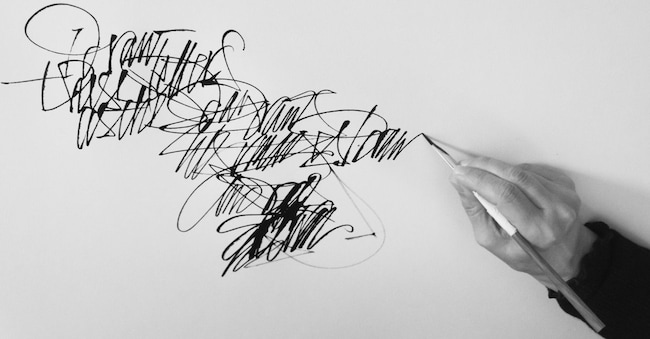
Develops concentration and creativity. It fights digital fatigue and enables better memorisation of information. Writing with pen and paper, in a largely digitised world, is not just a fad of the past, but an exercise in manual dexterity and patience to focus thought, too often distracted by the bombardment of moving images. And also a way to distinguish oneself: a handwritten note is so rare that it definitely sticks in the memory more than a hasty message on WhatsApp.
It is no coincidence, perhaps, that one of the earliest examples of writing in the Italian vernacular, that Veronese riddle of our scholastic reminiscences ("se pareba boves, alba pratalia araba..."), dated between the 8th and 9th centuries, celebrates precisely the act of writing, comparing it to a pair of oxen ploughing the white field of the sheet, where the black seed of ink will be sown.
A project for the preservation of handwriting has just been submitted to Unesco. A public collection of signatures has begun with the aim of nominating cursive handwriting as an intangible heritage of humanity. The Promoting Committee of the initiative is formed by, among others, the Graphological Institute Moretti of Urbino, the Italian Graphologist Association and Ossmed, the Language Mediation Observatory.
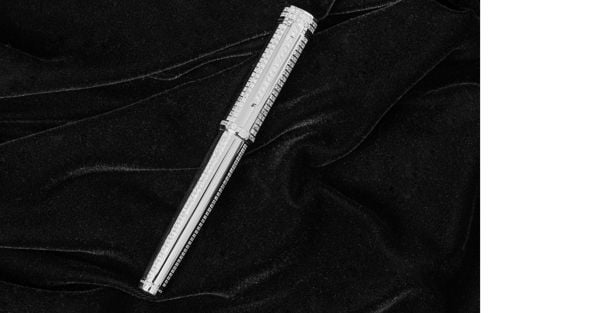
The debate on the need to teach cursive again in primary school is alive in the world and in Italy, where the third edition of the Manu Scribere festival, promoted by the Italian Graphological Association, was held in Bologna at the end of September. In California, the return to cursive writing for the approximately 2.6 million students between the ages of six and twelve, digital natives, has recently become law, while a recent study by a group of neuroscientists at the Norwegian University of Science and Technology has shown how handwriting expands and intensifies brain connections and aids memorisation. One of the most precious pens in Pineider's Masterpiece Collection is called, not surprisingly, Psycho, to evoke the complexity of the human psyche. In silver with a gold nib, it has an intricate labyrinthine and semi-transparent weave design.
A fashion, that of the return to the pen? Also, exploded in counterpoint on digital platforms. TikTok saw a 63 per cent increase in 2024 for the hashtag #calligraphy, and writing influencers such as Vietnamese Nhuan Dao and Peruvian Paola Gallegos have between 2 and 9 million followers.