The debut of the F1 hybrid hypercar with over a thousand horsepower
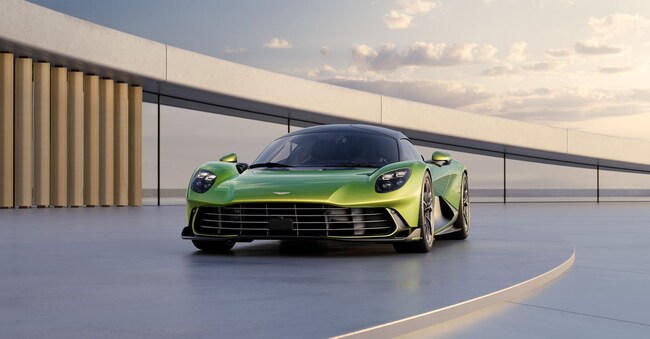
Aston Martin Valhalla, the supercar powered by a four-engine plug-in powertrain, is the British marque's first berlinetta: a condensation of technology.

3' min read
3' min read
The new supercar to be built from the summer of 2025 in 999 examples is the epitome of a series of firsts for Aston Martin. In fact, it is the first mid-engined road car, the first powered by an unprecedented twin-turbo V8 that is also the most powerful ever fitted to an Aston Martin, the first plug-in hybrid and therefore also the first to be able to move on electric drive alone and, finally, the first with a sophisticated double-clutch gearbox developed with electrification in mind.
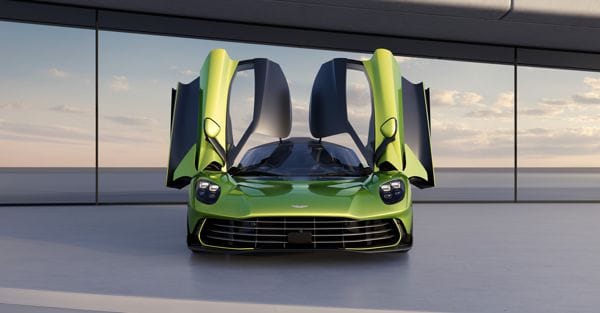
Aston Martin Valhalla, the radiography
The experiences gained in Formula 1 guided the development of the Valhalla. The new plug-in hybrid hypercar directly challenges the Ferrari 296 Gtb, Lamborghini Temerario and McLaren Artura with a superior overall power output: 1,079 horsepower matched by an impressive 1,100 Nm of torque. The system consists of a twin-turbo 4-litre V8 with a flat crankshaft of Mercedes AMG origin with 828 horsepower that drives the rear axle and three electric units, two of which move the front end horsepower while the third contributes to moving the rear axle like the heat engine. In essence, the Valhalla is an all-wheel-drive hypercar.
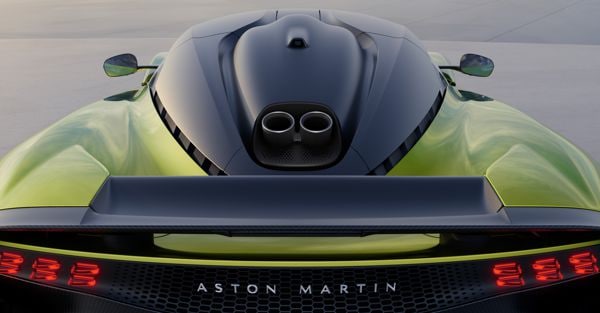
The intertwining of overall power and weight, which is contained in 1,655 kg thanks to the extensive use of carbon fibre from the tub that makes up the body, allows the Valhalla not only to boast a power/weight ratio of 652 hp/1.000 KG to burn through the 0-100 in 2"5, while the combination of the powertrain's cavalry with the active aerodynamics that "shapes" the Valhalla's line according to various parameters by acting on the position of the splitter and spoiler and that can generate up to 600 kg of downforce allows the new British hypercar to reach 350 km/h. The two electric motors, in essence, are almost always at work because in addition to assisting the Torque Vectoring function when cornering, they support the achievement of maximum performance, move the car by themselves in reverse and, of course, for 14 kilometres and up to 140 per hour using Ev mode. The character, dynamism and powertrain management of the Valhalla are orchestrated by the car's Ev, Sport and Sport+ configurations. From the world of Formula One, the Valhalla inherits not only the technologies dedicated to powertrain management and those that configure active aerodynamics, but also push-rod front suspension and the braking system with carbon-ceramic discs together with the system that allows millimetrically precise graduation of braking intensity over the entire deceleration range, which also benefits the effectiveness of regenerative energy recovery for the battery.
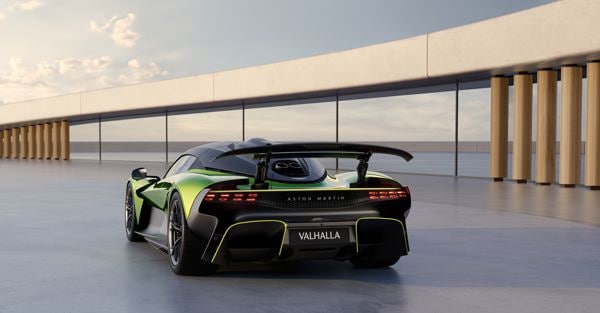
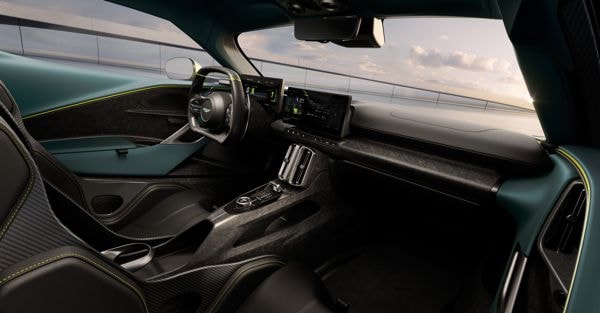
Aston Martin Valhalla, outside and inside form marries function