
The infringement decree is law: from bathers to the environment here's what it provides for
The yes to the vote of confidence requested by the government came with 100 votes in favour, 63 against and 2 abstentions. The decree aims to 'facilitate the closure of 15 infringement procedures' with the European Union.

2' min read
Key points
2' min read
The Senate chamber approved the trust vote requested by the government on the Save-infractions bill in the text that arrived from the House. The yes vote came with 100 votes in favour, 63 against and 2 abstentions. The vote of confidence constitutes Palazzo Madama's final green light on the measure, which had to be converted into law by 15 November. The decree contains rules on bathing establishments and aims to 'facilitate the closure of 15 infringement procedures' with the European Union.
Main measures
.Among the main measures, the measure provides for an expiry date of 2027 for beach concessions and establishes new rules for entrusting and compensating outgoing concessionaires; it strengthens protections for honorary magistrates, extending their social security coverage by INPS; it contains targeted interventions on the code of criminal procedure for the right to defence, procedural guarantees for minors in proceedings, and payments in the justice sector. Substantial changes also concern environmental legislation, with interventions on air quality, e-waste and sustainable management of fauna. Finally, the decree adjusts labour rules, allowing for greater compensation for unlawful fixed-term contracts, and introduces controls on energy-intensive data processing centres.
What changes for bathers
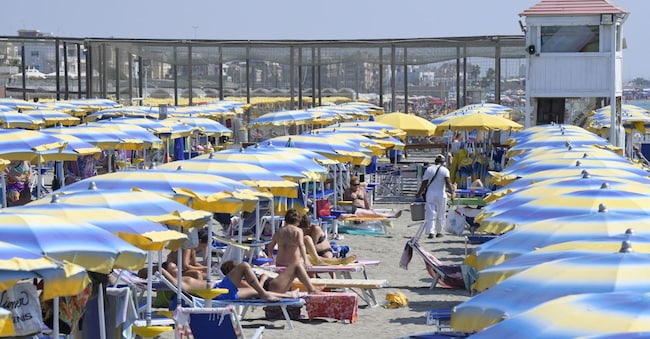
In particular, maritime, lake, and river concessions for the exercise of tourist, recreational, and sports activities are extended until 30 September 2027, with the obligation for municipalities to start the tenders by the previous 30 June. But mayors will have the option to anticipate the tenders by presenting an adequate justification. The term of the concessions may also be extended until 31 March 2028 for pending litigation or other objective reasons of difficulty in the execution of the tenders. Compensation for outgoing concessionaires is envisaged, to be paid by the incoming ones. A decree of the Ministry of Infrastructure and Transport will have to establish an adjustment of the fees, which will in any case be increased by 10 per cent if the measure is not adopted.
Majority pressure on compensation failed
.Proposals to revise upwards the calculation of compensation for outgoing concessionaires were rejected or withdrawn in extremis. Among the various requests - transversal to FdI, Lega, and Fi - was that of eliminating the limit of the last five years in the calculation of the indemnity and to include instead the company value of the enterprise (in some formulations it is specified 'including goodwill', in others it refers to 'tangible and intangible fixed assets').
The exemption for sports clubs
.The amendment on sports clubs, reformulated by the government on the basis of bipartisan proposals and approved with broad consensus in the Chamber of Deputies committee, envisages that maritime, lake and river state concessions will fall outside the scope of the Bolkestein directive if the use is related to the performance of a long series of sports activities. Activities carried out by sports federations, associated sports disciplines and sports promotion bodies, including Paralympic ones, and amateur sports associations and societies entered in the National Register of Amateur Sports Activities that exclusively pursue social, recreational and psychophysical wellbeing promotion purposes, and provided that the uses of the state property "can be considered as non-economic activities according to European Union law". Therefore, amateur sports clubs and associations remain outside the perimeter of the competitions.

