
The Migrant Justice Decree has become law. From the new state examination for lawyers to the rules on asylum, here are the changes
The Chamber of Deputies at Montecitorio has given its approval, with 165 votes in favour and 80 against. The decree-law addresses the justice system and the legal profession, and implements the directives of the European Pact on Migration and Asylum

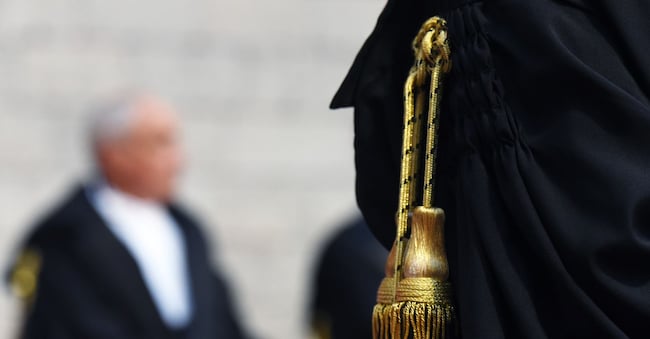
The Justice and Migration Decree has become law. The Chamber of Deputies gave its final approval to the bill – on which the government had called for a vote of confidence – with 165 votes in favour and 80 against late on Wednesday 5 August. The Senate had given its approval at the end of July. The deadline for the bill to become law was set for 11 August. The bill addresses two strategic areas – justice and immigration – and contains provisions ranging from the legal profession to the European Pact on Migration and Asylum, including checks on foreign nationals stopped at borders or rescued at sea.
The legal profession
The decree primarily affects the legal profession: once the Decree-Law is approved, the state examination will take place in a single annual session and will consist of three papers – two written (currently three) and one oral. The aim is to reduce the length of the examination process.
The written examinations will be based on topics set by the Minister of Justice, with candidates permitted to use only the codes annotated with case law – such as the Civil Code and the Criminal Code – but they may not make use of any texts or written materials, including those in digital form, nor any electronic or telecommunications devices, ‘on pain of immediate exclusion from the examination, ordered by a decision of the chair of the sub-committee, after consulting at least two examiners’.
The two written papers will consist, respectively, of drafting a reasoned opinion and a judicial document on issues relating to a subject chosen by the candidate from among private, criminal and administrative law.
The oral examination will consist of three parts. In the first part, trainee lawyers will be asked to resolve a practical case in private, criminal or administrative law, depending on the candidate’s preference. In the second part, candidates will be required to answer three questions: the first on procedural law – civil or criminal; the second on substantive law – civil, criminal or administrative; and the third on constitutional, commercial, employment, international, European Union or tax law. In all three cases, candidates will choose the area of law in which to be assessed. In the final part, a question will be asked on the legal system, professional ethics and the lawyers’ pension scheme.

