
Automotive's deep crisis hit by wars, energy costs and transition to electrics
The results of the AlixPartners Disruption Index study show a dramatic picture for the automotive industry

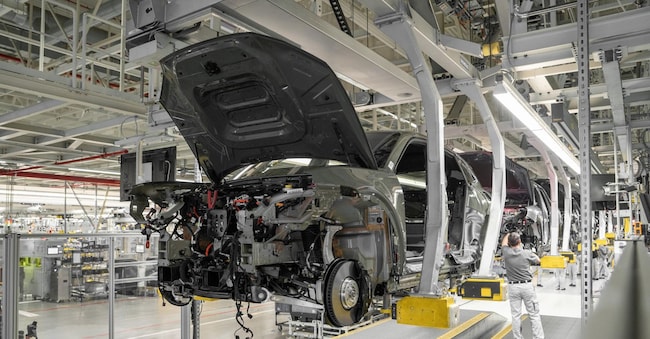
The automotive industry continues to hold the unenviable record of being the most disrupted industry globally, according to AlixPartners' annual Disruption Index report, which gathers the sentiments of 3,200 CEOs and top managers globally.
In Europe in 2025, some 18.7 million cars (including light commercial vehicles) were sold, 17 million were produced, against a theoretical capacity of around 28 million. In an engineering- and capital-intensive business, and with declining but still long development and life cycles, economic sustainability in itself is at risk.
However, the challenge only appears in its entirety if we put these numbers in a context of stagnant market volumes and strong competition, both domestic and from growing - but not encroaching - Chinese players. As if this were not enough, let us add that European operators are under the 'friendly fire' of a coercive transition towards electrification, imposed to the tune of billions of dollars in fines, but in fact not implemented because it lacks the fundamental enabling elements: customer interest, recharging infrastructure, affordability and affordability of vehicles whose prices remain far higher than pre-covid values, and for electrics with very depressed residual values compared to their combustion hybrid counterparts.
Then comes the war in the Middle East, the inflationary flare-up on energy - a raw nerve of Europe and Italy in particular - and fuel costs, phenomena that have manifested themselves rapidly, but whose normalisation will take time, in view of the system's inertia in regaining an equilibrium that could be different from the previous one, due to the fact that important productive energy structures are being damaged, restoring which - once the conflicts are over - could take months or years.
And it doesn't end there: in an average car there is about 200 kg of aluminium (second material by weight), which is increasing to partly compensate for the growth in vehicle mass, and the largest producer of aluminium outside China (Aluminium Bahrain - Alba) is located in the Middle East. The third element by weight of a car is plastic, which is linked productively and as prices to oil.

