
The digital euro will not replace cash, it will complement it
This is the thesis of Chiara Scotti, deputy director of the Bank of Italy, who from Trento anticipated a role for Via Nazionale in the construction of the platform that will manage the settlement of transactions

Simple, reliable, inclusive. Easy even for those not used to technology. Free for basic services offered to citizens. Usable throughout the euro area, online and offline and thus with unparalleled systemic resilience. Accessible to people with visual, motor or cognitive disabilities. Equipped with an individual user access number and branding for instant identification. Convenient for operators. Respectful of privacy. Distributed by private intermediaries, primarily banks, but issued by the European Central Bank with the same status as banknotes. Totally and fundamentally different from stablecoins and crypto-assets. Not least, a protector of European monetary sovereignty and the economic security of the euro area and the EU.
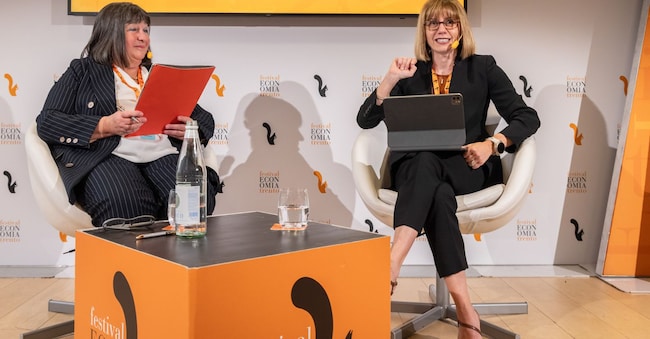
The digital euro will be all of this. This was stated yesterday by Chiara Scotti, deputy director general of the Banca d'Italia and head of the digital euro project within the directorate. Speaking at the Trento Festival dell'Economia to explain to citizens "what the digital euro is and what it is for", Scotti was quick to say that the digital equivalent of cash project is very close to her heart. "What more would we have with the digital euro? We would have a digital form of the euro that will be public, European, free for basic use, and usable throughout the euro area in the main payment situations: in shops, in e-commerce, between citizens, and potentially also offline,' she explained, addressing an audience of the very young and the very old, all of whom are interested in understanding what the future of the euro will be in the digital age.
"This is the key point: the digital euro does not replace cash, but brings into the digital some of the characteristics of cash - simplicity, reliability, accessibility, wide acceptance, public nature of the currency," he added.
Scotti then revealed some news. The ECB has started a collaboration with the Once Foundation - a Spanish organisation that has been working for the inclusion of people with disabilities for almost 90 years - 'to make sure that the digital euro is designed to be truly usable by everyone'.
Moreover, compared to current payment systems, the digital euro will have the Dean - Digital Euro Access Number, the equivalent of the Iban. This means that citizens will be able to freely switch from one payment service provider to another while keeping the same digital euro account. "By changing intermediaries we will keep the Dean," Scotti pointed out. "It is a simple but important principle, because it promotes competition between intermediaries and protects consumers' freedom of choice.


