
Rose's dual identity: between forced masculinity and female freedom
The actress won the Best Actress Award at the Berlinale talks about the bodily and psychological transformation of her character

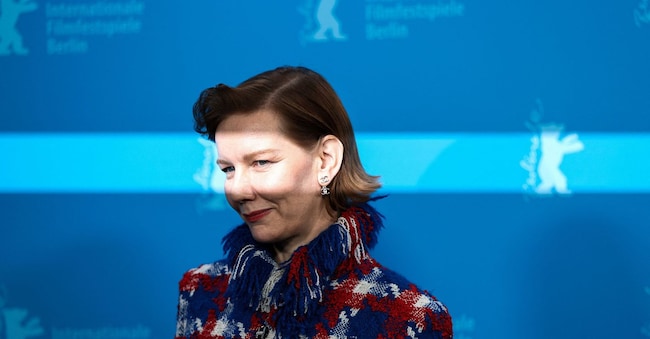
She rightly won the Best Actress award at the Berlinale. Dressed in haute couture clothes and accessories, Sandra Hüller is a far cry from the imagery she has accustomed us to in the films she has starred in: I'll introduce you to Toni Erdmann by Maren Ade (2016), The Zone of Interest by Jonathan Glazer (2023) and Anatomy of a Fall by Justine Triet (2023). Her hair is darker than usual, a brownish blonde tending to red, which sets off her glazed blue eyes. Il Sole 24 Ore meets her in Berlin, where she has just received acclaim for Rose, the film by Markus Schleinzer, in competition at the 76th edition of the German festival. The film, in black and white, shot on location allowing for very long fields, is set in the early 17th century in a small village in Germany where a tiny, beardless soldier arrives, played by Hüller en travesti, with a large scar running down his cheek, procured in the 30-year war from which he is a veteran. The soldier arrives in a remote village claiming ownership of a plot of land, long kept uncultivated, by presenting legal documents for succession. The community is suspicious but cannot help but surrender when faced with the undoubted veracity of the papers. The soldier works hard and succeeds in making the uncultivated land flourish again, proves affable to the village males, is god-fearing and ends up winning everyone over with an act of extreme courage, saving a boy from a wolf attack. The man could live happily, if greed did not make him take the wrong step, as a voice-over explains, of marrying a neighbour's daughter to acquire more land. From there emerges the secret he hides under his clothes, namely a repressed female body.
How did you deal with the very obvious body change that is expressed in the brash and selfish behaviour of the soldier and the tenderness and sweetness of when she is recognised as a woman?
With relief. I liked this transition from forced male to female. Rose had to endure an abrupt and masculine behaviour that was linked to violence at that time and is also linked to violence nowadays. It was really fascinating to excavate this mask, because when Rose stopped wearing masculine clothes, she found a new space in which she could finally feel free, as she hadn't felt that way for at least 15-20 years, or maybe her whole life. So it was, as I said at the beginning, a great relief.
What has surprised you in the study of male body language?
I had to reflect on power and how it translates into physical gestures. We women in public are always very nervous and insecure, we never steal space in the room, whereas men are very calm and impose calmness on you, they have or a certain power over you, they never seem to be afraid. To walk I stretched my hips forward and tried to be heavier in my steps. I tried to speak slowly and be less mobile perhaps also under the weight of the scar made in the war. A physiotherapist explained to me the anatomy of men and that women's bodies move completely differently from men's bodies, which contain themselves more. The costume helped me to maintain rigidity, keeping my neck still.


