
The Egyptian Museum in Turin is expanding and investing in research
The Infrastructure Decree of Monday 9 November includes a provision for the establishment of a national research institute alongside the museum foundation. Funding will start at 5.6 million

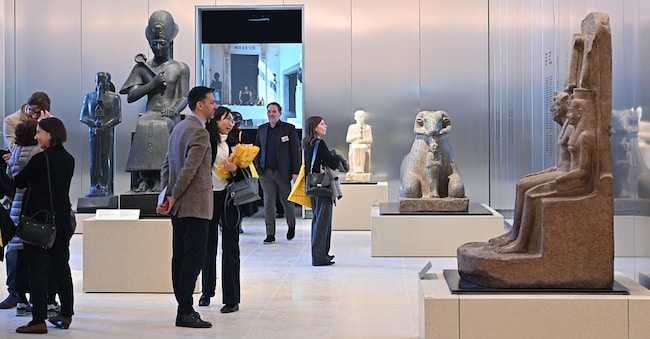
With over 1 million visitors and 7.5 million in revenue, the Egyptian Museum in Turin is the seventh most visited cultural venue in Italia, according to the latest figures certified by the MIC. And it is now preparing to enter a new era in the field of research as well. The infrastructure decree approved on Monday 9 November by the Council of Ministers establishes the ‘National Institute for Egyptian Research’ as an autonomous body, distinct from the Turin Museum of Egyptian Antiquities Foundation. It is a public research body, which will be overseen by the Ministry of University and Research (MUR) as well as the Ministry of Culture, and which is starting with a budget of 5.6 million euros.
The Egyptian Museum today
The Turin Museum of Egyptian Antiquities Foundation is the world’s oldest museum dedicated entirely to Egyptian culture; it is already active in research and the dissemination of scientific knowledge, and is an institution of the highest technical and scientific calibre. It carries out studies and research into the history and culture of the Egyptian world, ensuring that the findings are disseminated to the scientific community and the general public, whilst also establishing itself as a leading centre for the services it offers to the public in the local area.
At present, research at the Egyptian Museum is based on a network of collaborations – which has grown in scope and diversity of expertise over the last ten years – and on participation in competitive calls for proposals, which has become a key tool over the last ten years for driving innovation and consolidating the network of partnerships. However, according to the proposing ministries, in order to make it even more attractive to researchers, it needed to be complemented by a dedicated research body.
The new organisation
The new National Institute will carry out scientific and institutional activities in line with the main strategic priorities pursued by the Foundation to date. We are referring, first and foremost, to archaeology, conservation and diagnostics focused on the study of conservation history and the advanced restoration of artefacts made from various materials. But also digital heritage sciences, focusing on data governance, digital archaeology, artificial intelligence and the promotion of open science practices.
The Institute will have legal personality under public law and statutory, organisational, administrative, financial and accounting autonomy. To enable it to commence operations, the Decree-Law, on the one hand, provides for a body responsible for setting policy and drafting the statutes, known as the ‘Council’, comprising three experts with high technical and scientific qualifications in the sector, appointed by decree of the Ministry of University and Research (MUR) in consultation with the Ministry of Cultural Heritage and Activities (MIC). The rights to use the movable and immovable property, equipment and other operational resources of the Turin Museum of Egyptian Antiquities Foundation, necessary for the new Institute to carry out its institutional and research activities, are transferred to the Institute.

Brand connect


Newsletter Scuola+
La newsletter premium dedicata al mondo della scuola con approfondimenti normativi, analisi e guide operative
Abbonati