
EU index counts butterflies with the help of citizens
The EU Nature Restoration Regulation already in force requires an increase in the number of these insects by 2030

4' min read
4' min read
Italy is now home to 290 species of butterflies, the highest level in the EU. Of these, 18 are considered at risk of extinction, equal to 6.3% of the total. And it is precisely the increase in species and populations of common butterflies within agricultural ecosystems by 2030 that is one of the three indicators on which member states will have to show progress, as required by the EU Nature Restoration Regulation in force from August 2024. The other two are the share of agricultural land with high biodiversity landscape characteristics and the stock of organic carbon in the mineral soil of cultivated land. In the national restoration plans that the Twenty-Seven will have to submit to Brussels by 1 September 2026, governments will have to choose between at least two of these indicators. All steps in the name of defending biodiversity are increasingly central to the strategy of the EU Commission, which on 7 July laid the foundations for a future European market in 'nature credits' and in 2026-2027 intends to allocate 10% of its budget to biodiversity.
How the butterflies will be counted
."Butterflies," notes Massimo Labra, scientific director of the National Biodiversity Centre (Nbfc), "are important pollinators and belong to the ecosystem's trophic chains. They are thus a good indicator of the health of the environment and its balance, and for this reason they are called environmental sentinels'.
How will they be counted? The answer is Lorenzo Ciccarese, head of the Ispra division that deals with habitat and species conservation. The Institute will play a leading role at the technical level in the drafting of the National Plan. "An indicator will be used," he explains, "that monitors the evolution of the numerical abundance of butterflies representative of European meadows and pastures, an index developed by the EU Commission with the first national time series dating back to 1991 (the Italian ones from 2016). The data are integrated and provided by Butterfly Conservation Europe, the partnership of the European Butterfly Monitoring Scheme (Ebms) and the Embrace project. The index takes into account the populations of 17 butterfly species and is updated with data sent to Eurostat, the European statistical office, once a year by EU countries. "The latest data," Ciccarese emphasises, "show that from 1991 to today, at EU level, the population size of the species surveyed has decreased by 32 per cent. It is therefore necessary to implement existing policies more effectively and put in place new measures to protect species and restore habitats to ensure their recovery'.
The main sampling tool is the transect method, with citizen involvement. "It is a standardised method, developed by Ernie Pollard in the UK in 1974," he says, "which consists of counting butterflies along fixed routes (transects), with frequent visits (ideally weekly) in good weather conditions. The transects are one kilometre long and are divided into sections of different habitats'. The monitoring is carried out during the butterfly season, which in Europe runs from the beginning of April to the end of September, and in Italy there are 138 operators supporting the scientists in this activity. "Transects, based on citizen science," Ciccarese notes, "have proven to be a simple and effective method for monitoring the diversity and abundance of butterflies, as demonstrated in the scientific literature. The method is now used in many countries, including non-European ones, as an integral part of their butterfly monitoring programmes. "It is estimated that each volunteer participating in citizen science monitoring programmes," he concludes, "can count from a few dozen up to a few hundred butterflies per day.
The Nbfc project initiatives
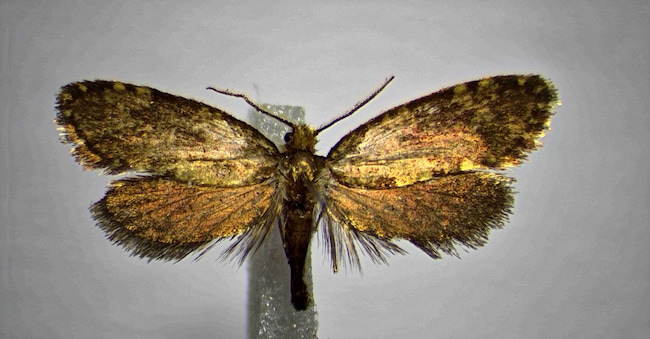
.Meanwhile, as part of the Nbfc project, the Crea (Council for Research in Agriculture and Analysis of the Agricultural Economy) is carrying out various activities to study and protect butterfly biodiversity in Southern Italy. One of the main lines of research is the long-term monitoring of nocturnal macrolepidoptera communities, carried out through the installation of two light traps at the experimental field of the Forest and Wood Research Centre in Rende (Cosenza). The aim is to collect continuous and structured data on species composition and abundance to understand the relationships between ecosystem dynamics and climate change. The data collected provide a solid basis for detecting signs of habitat transformation, both in response to short-term anthropogenic pressures and long-term environmental changes. Another activity concerns the screening of the butterfly collection kept at the laboratory for wildlife management and forest biodiversity. Through Dna barcoding, it was possible to obtain the mitochondrial Dna sequences of a wide range of macro- and microlepidoptera in the collection, helping to fill significant gaps in the distribution of many species. Not only that. Last February, a team of Crea researchers decided to dedicate a new species of butterfly, discovered in the woods near Cosenza, to Giulio Regeni, the young Italian researcher killed in Egypt. This study was also carried out as part of the Nbfc project.


