International trade

The EU is pursuing new trade routes through 12 agreements

In response to the tariffs and global uncertainty, further agreements have been revised or signed since 2024. Negotiations with seven countries

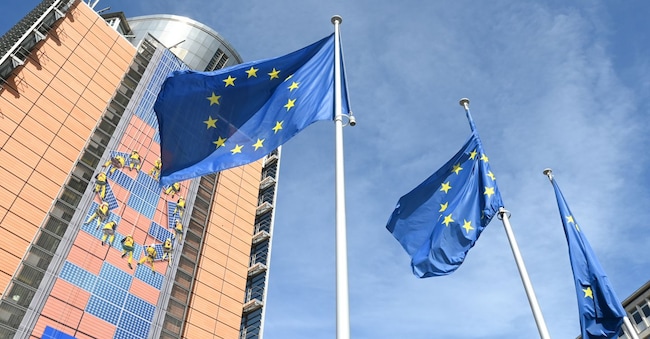
 (AdobeStock)

4' min read

Translated by AI
Versione italiana

4' min read

Translated by AI
Versione italiana

With the world’s highest number of free trade agreements concluded, the European Union is already the main trading partner of many of the 76 countries with which it has active agreements. Opening up to new markets is in line with thetrade policy outlined over the last decade, but there has recently been a sharp acceleration in response to threats from across the Atlantic, with the tariffs imposed – and, as recently as this, threatened – by US President Donald Trump.

Since 2024, three agreements have been modernised, two new ones have been signed and – at present – a further seven are being finalised, bringing the total to 12 agreements.

Loading...

As the President of the European Commission, Ursula von der Leyen, has stated, this acceleration has political as well as commercial significance: agreements have become instruments of economic sovereignty and strategic resilience in a context where geo-economic competition is perceived as a primary and structural risk. Diversifying sources of supply and trading partners, mitigating risks, safeguarding critical supply chains, gaining access to strategic raw materials and consolidating its presence in the most dynamic areas of the global economy are some of the objectives pursued by the EU.

The new agreements

The agreement with New Zealand, which comes into force in May 2024, is characterised by immediate and total liberalisation: 100 per cent of EU exports enter the New Zealand market duty-free, whilst the European Union undertakes to eliminate or reduce tariffs on most New Zealand products by 2031. The sectors benefiting most are machinery and vehicles, furniture and parts thereof, measuring instruments, clothing and accessories, foodstuffs and live animals – products on which New Zealand’s tariffs had reached as high as 10 per cent.

Trade between Mercosur (Argentina, Brazil, Paraguay and Uruguay) and the European Union exceeded €111 billion in 2024. The agreement, provisionally applied since May 2026, aims to safeguard the industrial transition of South American countries, with phased timetables tailored to each sector. The automotive sector requires protection (15 years for combustion-engine vehicles, 18 years for electric vehicles, with initial tariffs of 25 per cent), whilst the agri-food sector will see wine liberalised over four years and cheese/chocolate over 14 years, with preferential initial quotas. This phased approach allows for the protection of Mercosur’s most sensitive sectors, whilst rapidly opening up markets where the EU is most competitive.

Upcoming agreements

Among the forthcoming agreements, those with India, Indonesia, Australia and Thailand reflect the EU’s strategic positioning in the Indo-Pacific.

India, which no longer benefits from the tariff reductions granted unilaterally by the EU, is moving from being a developing country to a partner on an equal footing. The sectors set to benefit most are those in the high-tech sector: machinery, optical and medical equipment, chemicals, iron and steel, and pharmaceuticals, with tariffs currently standing at around 44 per cent. Reduced tariffs are also planned for motor vehicles and for the pearls, gemstones and precious metals sector.

Indonesia will remove high tariffs on industrial products, in particular motor vehicles (currently up to 50 per cent), machinery and electronic equipment, pharmaceuticals, chemicals and agri-food products.

Finally, the agreement with Australia will eliminate Australian tariffs on EU products (machinery, transport equipment, chemicals, metals and metal products, plastics, textiles, stone, glass and ceramics, paper and wood). This reflects a very open trade relationship, a high degree of regulatory convergence and the recognition of a partnership which, as with New Zealand, is already well-established.

Thailand, with negotiations having commenced in 2023 and the ninth round taking place last June 2026, is a potential partner for products such as mineral fuels and oils, chemicals and related products, and base metals.

Loading...

The modernised agreements

The modernised agreement with Chile is one of the most significant examples of Europe’s new era of trade. This is not only due to the volume of trade – the EU is the second-largest market for Chilean goods and Chile is the EU’s third-largest trading partner in Latin America – but also because of its strategic importance. Chile is the EU’s leading supplier of lithium, with a 62 per cent share, and plays a crucial role in the battery and energy transition supply chains.

The agreement with Mexico – which is due to come into force – strengthens one of the EU’s most significant partnerships in Latin America and confirms that, at a time of growing uncertainty, strengthening ties with reliable partners is one of the pillars of the European strategy, particularly for the pork and poultry, medical devices, motor vehicles and components, machinery and pharmaceuticals sectors.

Simplification and flexibility are driving the revision of the PEM Convention, namely the update to the rules of origin involving the EU and over 20 partners across the EFTA region, the Balkans, Turkey and the southern shores of the Mediterranean. The aim is to carry out a strategic review of the long-standing trade network and to offer states and businesses an integrated production ecosystem, with rules that are more modern, simpler and consistent with the current organisation of production.

Copyright reserved ©
Loading...

Brand connect

Loading...

Newsletter

Notizie e approfondimenti sugli avvenimenti politici, economici e finanziari.

Iscriviti