
The EU steps up its efforts on drones: the first technology hubs are being set up in Latvia and the Netherlands
The two hubs are pilot projects under the Decoder (Drone and Counter-Drone European Resolve) programme, one of the first five European projects of common interest in the field of defence.

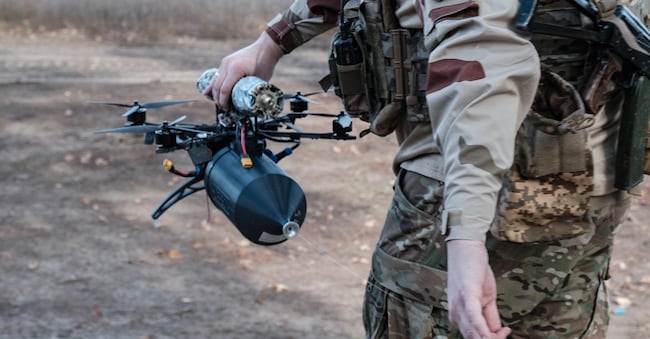
The European Union is working to catch up in the drone sector, which is of strategic importance from a military perspective, and will open the first two European technology ‘hubs’ dedicated to these assets, one at the Selonia military training area in Latvia and the other in Scheveningen, in the Netherlands. The experience in Ukraine has, in fact, set the tone.
“The hub in Latvia – explained Valdis Dombrovskis, Commissioner for the Economy, during a conference on the defence industry organised by NATO in Riga – ‘will focus on technologies for ground-based and aerial drones and the associated countermeasures, whilst the one in the Netherlands will focus on maritime and seabed security’. “Two different areas,” continued Dombrovskis, “but with a common goal: to accelerate the development, testing and deployment of effective solutions, both for the use of drones and for countering them.”
The two hubs are pilot projects under the Decoder (Drone and Counter-Drone European Resolve) programme, one of the first five European projects of common interest in the field of defence.
The two pilot hubs are expected to lay the foundations for a wider European network, bringing together national expertise, industry and operational users to accelerate the development, testing and deployment of drone and anti-drone solutions.
The Latvian hub
The Latvian hub will be based at the NATO Innovation Range, strengthening EU-NATO cooperation on defence innovation. ‘Strengthening our defences,’ Dombrovskis pointed out, ‘does not just mean spending more. It means spending better and spending together. That is exactly what the Decoder project offers. It is one of the first five European defence projects of common interest under the European Defence Industrial Programme and will help European countries to develop, enhance and deploy drones, as well as the systems and technologies needed to neutralise hostile ones.” In this way, he added, “Decoder will fill critical capability gaps and strengthen Europe’s defence industrial base”. The creation of the hubs is “a concrete step towards transferring critical drone-related technologies more rapidly from the laboratory to the operational environment. When it comes to drones and counter-drone systems, Europe enjoys a decisive advantage: its partnership with Ukraine.”


