National security

The European debate on the Muslim Brotherhood focuses on the strategy to exert influence

Concerns about the Muslim Brotherhood are no longer limited to extremist cells: police authorities and legislators in several Member States are now also monitoring the funding, mosques, associations, schools and charities through which, in their view, the group is building long-term networks of influence within societies and institutions. France has an ad hoc law almost ready

by 24Ore NextMed

Aggiungi Il Sole 24 Ore
ai preferiti su Google
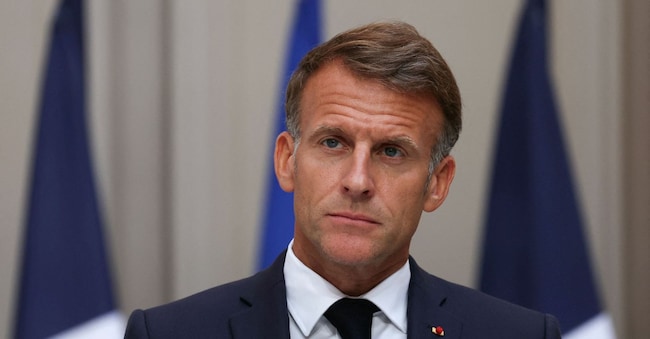
Il presidente francese Emmanuel Macron (THOMAS SAMSON/Pool via REUTERS)

5' min read

Translated by AI
Versione italiana

5' min read

Translated by AI
Versione italiana

European concerns about the Muslim Brotherhood no longer relate solely to violence or extremist cells: police authorities and legislators in various Member States are now also monitoring funding, mosques, associations, schools and charities through which, in their view, the group builds long-term networks of influence within European societies and institutions. Developments recorded in 2026 in Dublin, Paris, Berlin and Brussels highlight an issue that is now being addressed in security planning and legislation. Although the European Union has not designated the Brotherhood as a terrorist organisation, officials and national parliaments are now closely monitoring its funding, networks and influence.

Political Islam hidden in Dublin

Speaking at a conference in Dublin in September, Garda Deputy Commissioner Michael McElgunn, who heads the Garda National Crime and Security Intelligence Service, warned of the networks fuelling violent political extremism. According to the Irish Examiner, McElgunn raised concerns about ‘hidden political Islam’ within groups such as the Muslim Brotherhood, which he believed was hindering integration, whilst also pointing to the ultra-conservative Christian right as a source of rhetorical and financial support for the far right. Within the picture painted by Garda officials, Ireland must also contend with terrorism linked to Northern Ireland, including four Islamist-inspired attacks in three years, a foiled far-right plot to bomb a mosque, and online networks such as ‘Com’.

Loading...

The conference was cancelled whilst the Clonskeagh Mosque was undergoing a reorganisation. The Al Maktoum Foundation, linked to the rulers of Dubai, which founded and funds the mosque, recently oversaw the reorganisation of its management and religious school; according to the newspaper itself, the crackdown stems from long-standing concerns about links with the Muslim Brotherhood, which is banned in the United Arab Emirates.

Money and mosques in Brussels

At the European Parliament, the Finnish MEP Sebastian Tynkkynen, of the European Conservatives and Reformists Group (ECR), denounced in a video shared by the Visegrad24 account what he described as a plan by the Muslim Brotherhood to ‘Islamise Europe’ through funding and the construction of mosques. In March, according to the organisers, MEPs Bert-Jan Ruissen (ECR) and Tomáš Zdechovský (European People’s Party) hosted a conference in Parliament entitled ‘Safeguarding Europe: Exposing the Growing Threat of the Muslim Brotherhood’. In September, as accusations of links to the Brotherhood mounted, the Forum of European Muslim Youth and Student Organisations (FEMYSO) organised a European Day of Action against Islamophobia in Brussels: the organisation rejects these accusations and states that it has no affiliation with any political parties, groups or ideological movements.

France passes legislation, Germany issues a warning

In terms of translating this issue into legislation, France has gone the furthest. On 22 January 2026, theNational Assembly adopted, by 157 votes to 101, a non-binding resolution calling on the European Commission to initiate proceedings to include the movement and its leaders on the EU list of terrorist organisations. According to Franceinfo, the motion was tabled by Les Républicains during their reserved parliamentary session and was passed despite opposition from the entire left, thanks to the support of the government coalition and the Rassemblement National; the National Assembly subsequently published it on its website.

On 5 May, it was the Senate’s turn; it passed, by 208 votes to 124, the bill against ‘Islamist entryism’ tabled by Bruno Retailleau. The authors describe entryism – historically associated with the Muslim Brotherhood – as a covert effort to infiltrate education, sport and the voluntary sector. According to Le Club des Juristes, the bill would allow the authorities to block the construction of places of worship, to dissolve associations accused of circumventing the law by invoking religious grounds, and to freeze their assets, whilst also establishing a new offence of undermining the fundamental principles of the Republic. Having passed through the National Assembly, the proposal is not yet law, whilst the Ministry of the Interior is preparing its own draft bill on the same subject.

The Senate bill is based on the report on the Muslim Brotherhood and political Islam in France, commissioned by the government and partially published in May 2025, which identified 139 Muslim places of worship linked to the Brotherhood and a further 68 considered to be close to the organisation across 55 departments, accounting for 7 per cent of the country’s 2,800 Muslim places of worship, as well as 21 schools linked to the movement with a total of 4,200 pupils. In the same document, Reuters reports, the association Musulmans de France is described as the ‘national branch’ of the Brotherhood.

In Germany, the agencies responsible for safeguarding the Constitution are warning against what they call ‘Islam of influence’, which pursues long-term political and social objectives without relying primarily on violence. In a statement on 4 June, Brandenburg’s Minister of the Interior Jan Redmann stated that the Brotherhood “does not attack our democracy with overt violence, but creeps in through the back door”, explaining that its members carry out social activities and infiltrate political bodies to gain acceptance and, ultimately, public funding: an approach the ministry has described as a ‘treacherous dual strategy’. Redmann made his remarks on the eve of the publication of Brandenburg’s annual report on the protection of the Constitution, which condemns the group’s deliberate infiltration of society.

Washington raises the bar

The European action was matched by a move from the US. On 13 January 2026, as stated by Secretary of State Marco Rubio, the State Department designated the Lebanese Muslim Brotherhood as a Foreign Terrorist Organisation and a Specially Designated Global Terrorist, along with their leader Muhammad Fawzi Taqqosh, whilst the Treasury designated the Egyptian and Jordanian branches as Specially Designated Global Terrorists for providing material support to Hamas. Rubio presented the designations as a first step under Executive Order 14362, issued by Donald Trump on 24 November 2025. Whilst the Egyptian Muslim Brotherhood has rejected the measure, announcing that it will pursue all legal avenues to challenge it, the government in Cairo has welcomed it. The French National Assembly’s resolution, in turn, refers to the Jordanian decision of 23 April 2025 to ban all activities of the Brotherhood, close its offices and begin the confiscation of its assets.

Security and political bodies in these countries therefore describe the threat attributed to the Brotherhood as a network of influence that operates through funding, mosques, associations, education and youth organisations, rather than as a risk of direct violence. The outstanding issues in Dublin, Brussels, Paris and Berlin therefore concern sources of funding, the management of institutions and the links between mosques, associations and cross-border political movements; the outcome of the measures under discussion will depend on the authorities’ ability to prove those links with legal evidence and to distinguish action against the Brotherhood and its networks from measures that end up affecting European Muslims who have no connection with it.

Copyright reserved ©

Brand connect

Loading...

Newsletter

Notizie e approfondimenti sugli avvenimenti politici, economici e finanziari.

Iscriviti