Exports in double-digit decline in 2024

The fall of designer labels holds back Como's textile industry

by Luca Orlando

4' min read

4' min read

"Revenues are holding up but in volume we are -30% and in the factory we stop one day a week.

Cassa integrazione, the one experienced at Ratti led by Sergio Tamborini, which in the Como area, if not the rule, is certainly not an exception. The figures for the first nine months of the year are eloquent, with a 35% increase in applications for Cig.

Loading...

'Which is still fortunate,' explains Tamborini, 'because the industry average is doubling: there is a serious volume problem in the factories. In crisis today is an entire consumption model and a paradigm shift is underway. Between web portals that disintermediate brands and manufacturers, a European consumer who has lost purchasing power and cannot cope with price increases, the growth of Chinese manufacturers who now represent a credible alternative on the local market. If these dynamics continue for much longer I see a major restructuring of the entire sector coming, not only in Como. And more than one company will exit the market'.

An important market, that of Como's textiles, estimated in the latest analyses at 2.1 billion, with exports close to 1.3 billion in 2023 figures, a share that is close to 1.5 adding leather and accessories (with 22% of exports it represents the most relevant sector for the area) a level that will certainly not be reached this year.

Because if in the case of Ratti, revenues are still in line or almost in line with the previous year (-4.2%) in other realities the situation is different.

'I see more of a structural crisis than a cyclical one, with a systematic oversupply,' explains Francesco Gentili, CEO of Gentili e Mosconi (200 employees, 50 million in revenues), 'and this is a really dangerous time of great shortage, Como is in trouble. For us, the drop so far is 15% and I do not see any big turnaround in the market in the short term, not even in the first half of 2025. We have also applied for Cig, but it is not being used at the moment. How should we react? By investing in research and sustainability and by standing united to hold this industry together, a value to be preserved'.

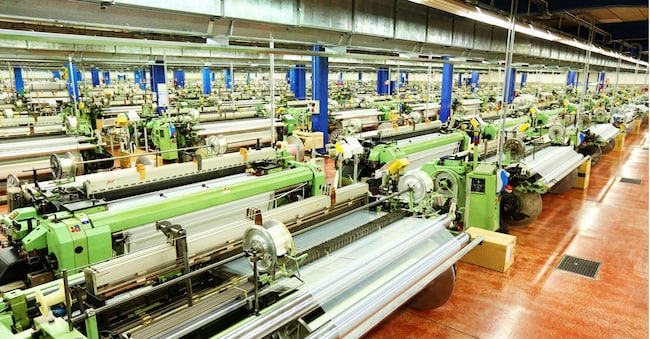
A chain of more than 1,000 companies, employing 14,000 people, engaged in the processing and finishing of fabrics, with a global leadership position for silk. In fact, Como silk covers 80% of European production in this field.

'I hear more companies in the area making redundancies on Mondays or Fridays,' explains Laura Sofia Clerici of Teseo, 50 employees, 7 million revenues (and president of the Italian Silk Office), 'and I still see a difficult year ahead of us. We will close on the levels of 2023, which had not been a good year. In any case, by producing 'classic' fabrics, we perhaps suffer less from seasonality. For us, the average batches of orders from the designer labels are decreasing and this is the result of the uncertainty we are seeing in several markets, to which perhaps we can add a phase of transition linked to the turnover in the role of creative directors that has occurred in several realities".

Nel distretto di Como una filiera di 1000 aziende

I campioni di tessuto di Gentili e Mosconi

Falling volumes are clearly visible in the data for the first half of the year, with an almost doubling of companies applying for the Ordinary Temporary Layoff Benefits Fund (50, up from 30 in the first half of 2023), and the number of employees involved rising from 1,200 to 2,200. Data worsened as the months passed...................

Looking in general at the hours used per registered company, thus taking into account the entrepreneurial population of the territory, Como is among the provinces most affected by the crisis, with a growth of Cig of 35% compared to the first nine months of 2023 and an average demand of 131 hours per registered company, in total more than six million hours.

For companies, however, the current one is something more and different than a 'standard' cyclical difficulty.

'The data,' explains Federico Colombo, President of the Textile Sector Group of Confindustria Como, 'reflect, in my opinion, a structural reduction in volumes. What can be observed is a change in consumption patterns, for example a greater attention by young people to reuse and the environment. Factors that, on average, are compressing clothing consumption, which had perhaps reached excessive levels over the years. No, I don't think we can return to the volumes of the past'.

The drop in demand from the luxury bigwigs in particular is weighing heavily, a drop highlighted in particular by the double-digit fall (-23% in the first half of the year) for Como fabrics destined for France, historically the first foreign outlet market for local production.

'It is a c0mplicated moment,' explains Matteo Uliassi (Achille Pinto, 400 employees, 137 million revenue), 'and all the districts are in great difficulty. Demand from designer labels is falling, but if you look at the feedback from customers and the forecasts for new orders, the real worry is for the first half of 2025: from what we can see, companies are navigating by sight'.

It's a different story for those who move away from standard production and focus on technical fabrics, such as Saati, which makes, for example, the membranes used for smartphone headphones.

"We are growing by 10%,' says CEO Antoine Mangogna, 'going beyond 200 million. We work in completely different markets, including filtration, screen printing and ballistics/personal defence, a great diversification that allows us to continue growing even in this difficult phase. In August, given the mass of orders, we even had to call back some of our staff from their holidays'.

An exception, however, within a district that is slowing down

How to react? The only possible way, not being able to compete on price against Asian productions, is once again that of quality. "I don't see many alternatives," adds Colombo, "because only the creation of unique and innovative products can stem this trend. And then the service, which must be impeccable: once again, speed and flexibility can make the difference in our favour'.


Copyright reserved ©
Loading...

Brand connect

Loading...

Newsletter

Notizie e approfondimenti sugli avvenimenti politici, economici e finanziari.

Iscriviti