The book

The State-Owned Family Business. The Hidden Side of Global Capitalism

An in-depth analysis of Huawei’s governance system, which combines family ties and political control

4' min read

Translated by AI
Versione italiana

4' min read

Translated by AI
Versione italiana

The competition for technological supremacy between the West and China raises some doubts about the correlation between political and institutional frameworks on the one hand, and corporate governance, capacity for innovation and prosperity on the other. And despite strong evidence of the West’s millennia-long superiority, the dissonance created by economic news has been growing since the early 2000s.

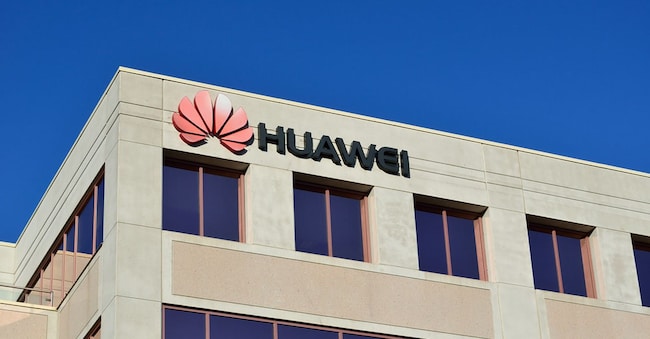
The Huawei case, masterfully described in the book The Wolves of Shenzhen (Eva Dou, Luiss University Press, 416 pages, €25), for example, tells a story - The House of Huawei, the original title, alludes to the influence of political power but also to the role of the Ren family — forcing us to reconsider the thousand years of institutional divergence between the West (Europe and North America in particular) and China. With a disturbing conclusion: perhaps it is not only democracy – however tentative and imperfect – and the free market, as we have idealised it, that guarantee higher rates of innovation and, consequently, long-term economic prosperity.

Loading...

Founded by Ren Zhengfei in 1987 with three employees selling low-quality telephone switchboards, Huawei has become the world’s leading manufacturer of 5G telecommunications equipment. But Huawei is also something else: it is the clearest reflection – and at the same time the most opaque to Western eyes – of the model that China has developed over the last quarter of a century: a system in which large enterprises grow by the grace and at the behest of the Party, where governance oscillates between the family clan and the ideological structure of the Chinese Communist Party (CCP), with boundaries between the public and private sectors that are deliberately porous and never definitive. The Ren family holds less than 1 per cent of the share capital. The rest is in the hands of some 170,000 current and former employees, coordinated by a ‘trade union committee’ which it is very difficult to imagine operating independently of the CCP.

It is a state-owned family business. An oxymoron in terms of corporate governance in Western democracies, but one that works in China. And how. With the ‘clan’ model, which falls within Ouchi’s well-known taxonomy of economic transactions along the continuum between market and hierarchy. The former is governed by price, the latter by authority. Intermediate forms are defined, precisely, as ‘clans’, governed not by contracts or commands but by shared values, rituals and a sense of belonging. Well, it is hard to find a more complete illustration of the clan – and one more unsettling in its effectiveness – than Huawei. A clan cemented by an ideology that has combined with blood ties, giving rise to the most controversial of China’s major multinationals.

The history of Huawei reveals multiple layers of meaning.

The ‘wolf culture’ – from which the evocative title of the Italian edition of the book derives – is, first and foremost, an organisational philosophy: collective struggle against external forces, militarised discipline internally, and a long-term vision serving as a strategic compass. It is Chinese cultural collectivism — as Hofstede explains — taken to the extreme in terms of ideological and organisational rigour, aimed at dominating global markets. A formula that makes no distinction between life and work, between personal identity and corporate allegiance, or between loyalty to the founder and loyalty to the party. In short, a model based on selective trust and pervasive control, governed by the principles of agency theory—which are themselves taken to extremes: incentives and mutual surveillance are extreme, whilst the identification between individual and corporate interests is absolute. And this is not an isolated case history.

This is precisely why it makes sense to broaden our perspective to include a comparison of the ‘two paths to prosperity’, as proposed in the recent book by Nobel Laureate Joel Mokyr, co-authored with Avner Greif and Guido Tabellini (Two Paths to Prosperity: A Thousand Years of Culture and Institutions in Europe and China, Egea, 648 pp., €39). The thesis of this weighty essay is straightforward: European political fragmentation, combined with an institutionalist and horizontal context, has favoured business networks based on impersonal trust, which in turn have stimulated competition (between businesses and between institutions), thereby fuelling innovation in a virtuous cycle; China, by contrast, has cultivated vertical networks based on membership and hierarchy, which are less inclined towards innovation because they are perpetually wary of anything that threatens the established order, pursuing stability through government entrusted to small, exclusive clans. This divergence gave rise to the West’s pre-eminence in innovation and prosperity – a pre-eminence that has lasted for almost a millennium.

The feeling, however, is that something is changing, and very quickly. After all, over 250 million Chinese people now have an average income comparable to that of Europeans. Beijing’s technological leadership in key sectors — automotive, solar, 5G — is a fact, not a trend yet to be confirmed. Control over the supply chains on which these technologies depend (from rare earths to chips; see CXMT) is virtually absolute, just as the drive to assume global leadership in general-purpose technologies is becoming increasingly determined (e.g. World Artificial Intelligence Conference, 2026).

The figures speak for themselves without anyone having to twist them. And the question that remains is whether technology and globalisation have altered the trade-off between the inefficiency of democracy and the effectiveness of innovation, shifting the trade-off curves towards a new, disturbing convergence of interests: that between political autocracies and large technology companies allied on the frontier of global domination.

Well, even if the Great Divergence between the two paths to prosperity is not entirely bridged, the gap between them is certainly narrowing to the point of overlap, from which some of the political and institutional dynamics we are currently witnessing in the West might even stem. The answers do not seem reassuring, but at least we have clues to help us formulate better questions. And at a time in history when the certainties of economic liberalism are creaking under the blows of tariffs, sovereignist reshoring, technology wars and more, asking better questions is already a good result. Here’s hoping that the ability to question remains, for the next thousand years, the only true path to prosperity.

Loading...

Luiss University

Copyright reserved ©
Loading...

Brand connect

Loading...

Newsletter

Notizie e approfondimenti sugli avvenimenti politici, economici e finanziari.

Iscriviti