
The Federal Reserve has left interest rates at 3.50–3.75 per cent, in line with forecasts
Warsh’s debut received unanimous approval. Nine of the 18 members of the Fed’s board expect at least one quarter-point rate rise this year
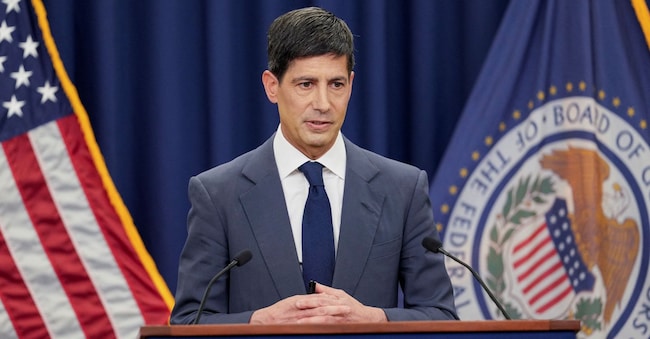
The Fed leaves interest rates unchanged at its first meeting with Kevin Warsh at the helm. The Federal Open Market Committee (FOMC), the Federal Reserve body responsible for US monetary policy, has in fact decided – by 12 votes to 0 – to keep interest rates at 3.50%–3.75%, as analysts had predicted.
Economic activity is expanding “at a sustained pace, despite the high level of uncertainty due, in part, to the conflict in the Middle East”, the statement reads. “Productivity growth and capital investment are robust. Employment growth has kept pace with the labour force, and the unemployment rate has remained virtually unchanged. Inflation remains high relative to the 2 per cent target.”
Dot plot: 9 out of 19 bankers expect interest rates to rise in 2026
Almost half of the members of the Federal Reserve’s Monetary Policy Committee have lost confidence that simply keeping interest rates steady will be enough to bring inflation back to the 2 per cent target, against the backdrop of soaring oil prices following the war with Iran. Nine of the 19 members of the US central bank’s Monetary Policy Committee now believe that it will be necessary to raise interest rates this year, according to projections published by the Fed. None of them shared this view just three months ago, when the Fed published its latest projections.
Six of these nine – or almost a third of the committee – believe that more than one quarter-point rate rise will be necessary this year, according to the projections.
Eight believe that rates should remain unchanged and only one believes a single rate cut is appropriate.
One committee member, whose name has not been disclosed, did not express an opinion on the path of interest rates.
These views, represented by the so-called “dot plot” by the Fed, which illustrate the positions of individual members of the monetary policy committee regarding the path of interest rates, show just how rapidly the debate within the central bank has shifted from the question of how long to keep rates steady before cutting them, to a growing concern – and, for some, a conviction – that the Fed will have to raise rates to prevent inflationary pressures arising from rising fuel prices from spilling over into the wider economy.

