
The Ferrari Luce case raises questions about luxury brands and their role in the automotive industry
Although it is expensive, the car remains a masterpiece of engineering, art, design and technology

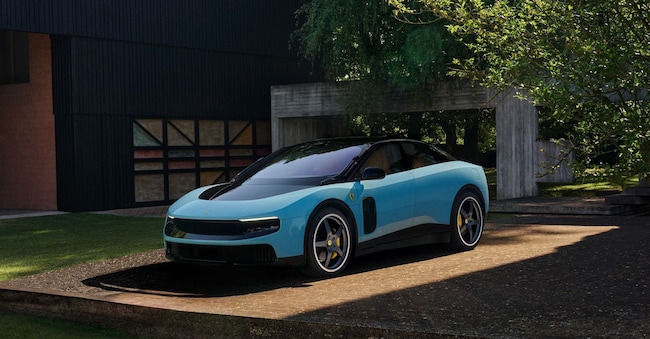
The much-discussed and controversial debut of the Ferrari Luce, the Prancing Horse’s first electric car, has dominated motoring news over the last two months. Aside from the fierce criticism of the design (the brainchild of Jony Ive, a former Apple executive with no experience in the automotive sector, but driven by his collective LoveFrom towards ambitions of being disruptive and innovative), a line of thought has emerged that goes beyond the (superb) technical and engineering merits of the car and centres on a question that has been raised on other occasions too, from the launch of the Jaguar Type 00 to the marketing eccentricities of certain manufacturers (including Audi, BMW and Mercedes). What is a high-end car, and where does it fit in? Many marketing managers and ‘creative directors’ (such as JLR’s former design manager, Gerry McGovern) like to talk about luxury brands. And this actually blurs the lines, because whilst there is nothing to detract from the stylistic research, the choice of materials, forms and interpretations of buyers’ tastes in products such as shoes or handbags, a car is, and remains, a masterpiece of engineering and design that draws on technical and scientific disciplines like no other object in the world. It combines form and function, efficiency and sustainability, performance and comfort, ergonomics and software comprising millions of lines of code. And, of course, this becomes even more striking when dealing with premium cars, luxury cars or supercars.
Ferrari, as well as Porsche and Lamborghini, are not luxury brands simply because their products are expensive. Their cars are considered a luxury simply because few can afford that level of excellence, which is recognised as such by virtue of their DNA – a blend of history, performance, technological research, cutting-edge solutions, sophisticated materials and a style developed with an aesthetic and aerodynamic sensibility. And as well as not being a smartphone, the car – even if it is electric and digital – is certainly not a mobility device: in many cases, it remains an object of desire and a source of pleasure to use. And this must also be clear for models from premium brands, be they BMW or an emerging Chinese brand such as Denza: they are not handbags or trendy orange mobile phones chosen for their colour and almost never for their technical features. They are cars and must be marketed as such. For years, Land Rover has amazed the world with its indomitable cars, true to the slogan ‘Above & Beyond’, which, as a symbol of pushing the boundaries (in a car), was one of the most spot-on slogans in the automotive industry, alongside Pirelli’s ‘Power is nothing without control’ and Audi’s ‘Vorsprung durch Technik’ (leading the way in technology).
Then Jaguar Land Rover set about rebranding itself at breakneck speed as a luxury brand, but it didn’t make lipstick or boots, and it’s not ending well: an important lesson for all those who continue to place car manufacturers – which thrive on science and engineering – in contexts for which they are ill-suited.


