Novel

The feverish glitter of consumerism

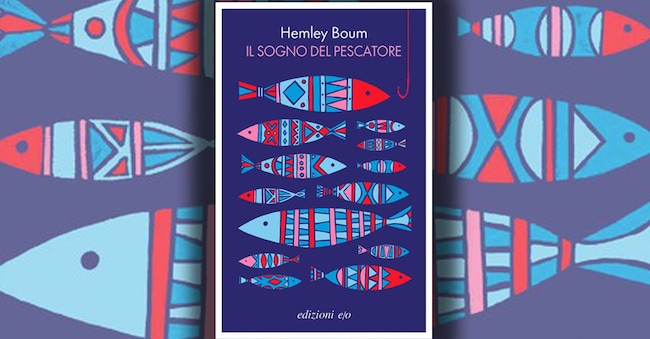
'The Fisherman's Dream', an exciting saga by Hemely Boum, tells the story of a Cameroonian fishing family

4' min read

4' min read

"Don't identify with what you have been put through," says the nganga - the traditional doctor, the 'witch doctor' - to his childhood friend, Zacharias, when he goes to ask him for help, thus trying to untie the knot that will mark a family for three generations. The Fisherman's Dream, the fifth novel by the French-speaking Cameroonian writer Hemley Boum, is the gripping story of a loss of innocence whose consequences are passed on from parents to children, from children to grandchildren.

The fisherman, Zacharias, lives in a small house at the mouth of a river that flows into the Atlantic with a beloved wife and two daughters. The fish he procures with his canoe dug out of a single piece of padouk, a wood that does not rot, the vegetables his wife grows, are exchanged for other goods within the community of ndowe, the people of the water, to which they belong, and nothing else seems to be needed. Life, happiness, seem to be taken for granted 'as much as heartbeats that he could not feel'. Everyone in the village knows, however, that they must keep well away from the dangerous stretch of sea where fresh water meets salt water, especially during the rainy season.

Loading...

One day, western-style 'modernity' arrives to upset the millenary balance, in the form of a fishermen's cooperative, with an attached emporium selling on credit products that no one had previously felt the need for. It insinuates itself into traditional society like river water into that of the sea, and begins to generate effects not unlike the deadly turbulence these two produce when they meet.

The mosaic that made up human, animal and plant life and the landscape breaks into a thousand pieces. Starting with its fundamental constituents, in this case Zacharias's family, which, unlike his wife, allows itself to be enchanted by the glitter of consumerism, becoming a victim of the deception and violence with which it is inherent.

Being a victim, as the sorcerer's illuminating words explain, entails a double drama. In addition to the trauma, there is the imprisonment inherent in the very condition of victim: the trauma in fact infiltrates deeply into the perception that others have of the victim, and above all into the perception that the individual has of himself. Unable to come to terms with it, it contaminates him, overpowers him, dominates him. He finds himself caged in stigmatisation, loneliness, loss of self and others.

The Fisherman's Dream recounts that, once settled in the village, the cooperative begins to sell objects, motorbikes, and other things to the villagers, initially in exchange for their fish, then in exchange for hours of work on large fishing boats that they have brought here and that compete with the canoes with which the villagers had always fished. A move that causes the price of fish to plummet and makes it increasingly difficult for families to repay their debts.

Zacharias makes a fatal mistake, ends up in prison, and the balance on which his existence rested crumbles, without his wife - despite all her wisdom - being able to oppose him. The community of ndowe also crumbles, the village undergoes a terrible exodus: whole families take refuge 'in the city to escape the debt imposed by the cooperative. Of the dream that the cooperative had sold to the fishermen, nothing remained. One after another they were forced to work almost for free to pay off their debts. On board fishing boats they did not know how to operate, they were mere labourers in the service of foreigners. The village emptied out, the abandoned lands were sold to meet their financial commitments'.

Overwhelmed by the misfortunes in her family, one of Zacharias's daughters also moves to a tin shack in the city, where, unable to put her drama into words, she raises Zachary in silence, a son unaware of his origins who, having got into trouble, at one point finds a way to escape to Paris, where he becomes a psychologist, more by chance than by vocation. "None of us should leave home as Sunday and I (a young boy son of emigrants, Zachary's patient in France, who will commit suicide, ndr) cut our bridges and cast off our moorings without being able to go back. We should not be forced to move forward without landmarks and protection, to shed everything we have been, to tear ourselves away from ourselves hoping to sprout in a new land. Those who have the privilege of not being forced to do so travel with a light mind, they leave of their own free will knowing that they can return whenever they wish, while our departures do not involve a return, we are not travellers, we are exiles. There is something deeply inhuman about exile, it means being banished, mutilated. Whatever the danger we run from and the relief of getting away from it, everyone deserves to hold in them somewhere the hope of return'.

Zachary, now married, father of two daughters, but completely lost, is called back to Cameroon by a friend who has not stopped looking for him and loving him, despite everything. The words will be "the golden thread" with which to "patiently stitch together the common story, the one of which everyone had a part that was impossible to understand, enigmatic because it was fragmented". It is the work that the women of the family did during all those years, a work that slowly emancipated them from depression and a sense of powerlessness and that finally managed to get the better of the trauma. It is they who will find the strength, the voice, to unravel the hundreds of pages that make up the life of Zacharias's nephew, thrown into the world without a history, without knowing his roots, and recompose the mosaic of which he will finally feel part.

© REPRODUCTION RESERVED

Hemley Bum

The Fisherman's Dream

Translation by Alberto Bracci Testasecca

Copyright reserved ©
  • Lara Ricci

    Lara Riccivicecaposervizio curatrice delle pagine di letteratura e poesia

    Luogo: Milano e Ginevra

    Lingue parlate: Inglese e francese correntemente, tedesco scolastico

    Argomenti: Letteratura, poesia, scienza, diritti umani

    Premi: Voltolino, Piazzano, Laigueglia, Quasimodo

Loading...

Brand connect

Loading...

Newsletter

Notizie e approfondimenti sugli avvenimenti politici, economici e finanziari.

Iscriviti