
The World Cup of Records: an 11.5 billion FIFA-branded machine
Today in Mexico City, the opening match of the 2026 FIFA World Cup between Mexico and South Africa

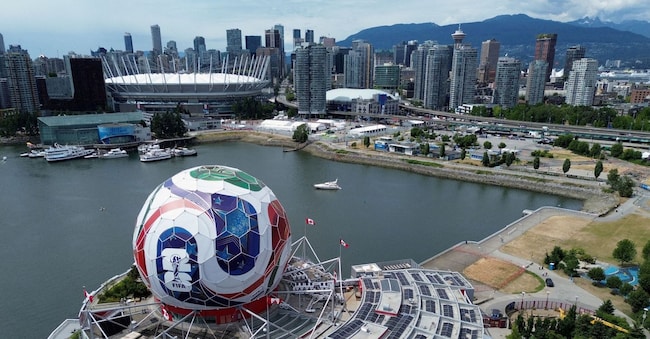
This edition of the World Cup is the first to be organised by three countries – Mexico, the United States, where two-thirds of the matches will be played, and Canada – and, above all, the first to feature an expanded field of 48 national teams (in Qatar in 2022, only 32 teams were allowed to take part). The competition runs over 39 days, with the final scheduled to take place at MetLife Stadium in New York on 19 July.
The FIFA World Cup, which Gianni Infantino has unhesitatingly described as ‘the greatest event humanity has ever seen’, is set to become, above all, the biggest economic venture in the history of global sport. The four-year cycle, which will culminate this summer, is set to bring in around $14 billion for FIFA, of which approximately $11.5 billion relates to the 2026 World Cup (FIFA’s other major events – the 2025 Club World Cup and the 2023 Women’s World Cup – have generated 2 billion and just under 600 million respectively).
FIFA had in fact already achieved record revenue of 7.5 billion dollars for the 2019–2022 cycle (an increase of 18 per cent compared with the 6.4 billion dollars for the 2015–2018 period), thanks to the World Cup in Qatar, which generated the highest revenue in the history of a World Cup tournament at $6.3 billion. Around $930 million was generated through ticket sales ($666 million) and hospitality rights ($243 million), $3.4 billion from TV rights, and around $2 billion from commercial rights (sponsorship and licensing).
From this edition onwards, however, the economic governance of the World Cup has changed. Following the interim arrangement in Qatar, FIFA has, for the first time, managed all revenue streams independently (only for hospitality did it rely on On Location, which also handled this for the Milan-Cortina Games). This full financial independence, combined with the favourable geographical location offering more attractive kick-off times for Europe and North America, and the expansion of the tournament – with the number of matches rising from 64 to 104 – has enabled FIFA’s Chief Business Officer, Romy Gai, to maximise the event’s potential.
Starting with TV and media rights, which remain the primary source of revenue, with more than 5 billion coming from agreements with broadcasters and platforms. FIFA has also begun to monetise new digital channels, licensing partial streaming rights on platforms such as YouTube and TikTok, in an attempt to reach younger generations.


