Games

Cinema put to the AI test: who would fund a film if they didn’t know how it was made?

Artificial intelligence complicates the verification of costs and rights in production. At Futura 2026, the discussion will focus on incentives, contracts and traceability: how to document who did what – a question that also applies to video games.

 Imagoeconomica

5' min read

Translated by AI
Versione italiana

5' min read

Translated by AI
Versione italiana

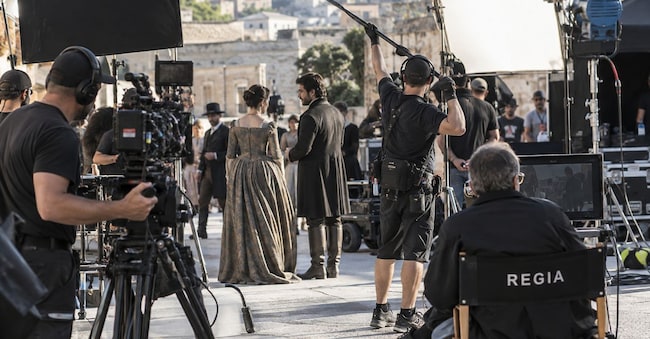
A producer knows how much a scene cost. However, they may not know exactly how it was made. A rejuvenated face, a corrected voice, a reconstructed background: the result appears on screen, whilst the workflow remains within a supplier’s software. When rights, contracts and tax credits depend on that workflow, the issue has a direct impact on the film’s accounts.
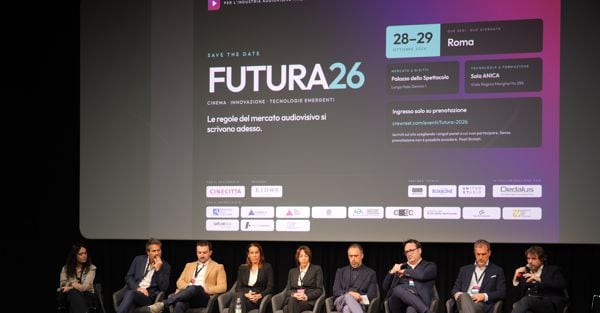
This is the starting point for attempting to study and manage the impact of AI in one of the cultural industries most exposed to artificial intelligence and most vulnerable. During the two-day Futura 2026 event – dedicated to the audiovisual sector and held in Rome on 28 and 29 October – we witnessed a phenomenon that is, to some extent, unfolding across all markets where entertainment content is produced, from video games to publishing. In the case of the big and small screen, however, there is an additional complication.

Loading...

Over the last fourteen months, the situation has changed three times. Since 2 August 2026, the transparency requirement under Article 50 of the AI Act has been in force. Since 30 September, Legislative Decree 160/2026 on civil and criminal liability in the use of artificial intelligence has been in force. The Ministry of Culture has set out in writing what must be included in contracts with authors and performers in order not to lose the tax credit. And a bill on voice, image and artistic performance has been tabled in Parliament.

The tax credit, which is one of the main sources of funding for this industry, allows companies to offset tax and social security liabilities with a credit calculated on the basis of eligible costs. It is a key component of a production project’s financial balance. However, it was established before these technologies were integrated into workflows. ‘If certain expenses are excluded,’ explained Benedetto Habib (Partner, Indiana Production Spa), ‘it alters the financial basis on which the producer has built the project.’ Uncertainty regarding the use of AI can thus trickle up from the post-production department all the way to the decision-makers responsible for financing the film. cinema.cultura.gov.it

It should be made clear that the use of artificial intelligence does not automatically result in the loss of the incentive, as Elena Giacone, a senior official at the Ministry of Culture, emphasised. The decree excludes AI costs relating to the creative and artistic contributions of the subject matter, screenplay, direction and lead actors, whilst allowing for AI used in special effects relating to the latter. It also requires, on pain of forfeiture, that the parts of the work or the production stages in which AI has been used be declared in the opening or closing credits. It is therefore one thing to determine which expenses contribute to the calculation of the tax credit; it is quite another to comply with the obligations necessary to retain it.

The problem, however, remains, and clearer guidance from the Ministry will be needed, not least because – as many industry professionals have pointed out – the boundaries are difficult to define. AI can correct a take, extend a performance or replace it. The implications for artists’ work and rights vary considerably. Remuneration arrangements should also be able to distinguish between these uses without forcing every production to renegotiate the meaning of the terms from scratch.

Giacone highlighted the industrial and employment-related role of public support, stating that the ministry is committed to identifying criteria for assessing new technological costs. This is where the issue becomes political. What does the State wish to fund? The projects themselves, the labour required to carry them out, the development of skills, or businesses’ ability to compete? These are objectives that can coexist, but AI brings the tensions into sharper focus. A manufacturer’s cost saving may correspond to a lost contract for a supplier. Conversely, an overly rigid rule may discourage the use of tools that would enable a filmmaker to shoot a scene that would otherwise be beyond budget.

According to lawyer Chiara Dellacasa, it is when drafting contracts that the issues really come to a head: modifying a performance and creating a digital replica require different agreements. The MiC’s interpretative guidelines stipulate, amongst other things, explicit consent and remuneration commensurate with the personal contribution for the use of digital replicas or synthetic performers. Modifying or supplementing an author’s work using generative AI requires separate written consent.

It remains to be seen to what extent the producer can control what happens between the signing of a contract and the delivery of the material. A contributor uploads an image to a free service. A supplier uses a generative function during routine processing. Someone tries out a programme to speed up a delivery. Each step may introduce different terms of use: what commercial uses are permitted? Are the materials stored? Can they be reused to train a model? A contractual guarantee is necessary, but it is not enough to reconstruct what has happened.

Tech companies such as that of Siliva Paonessa, CEO of CrewReel – the innovative start-up that organised the event – aspire to play a role in this. Paonessa proposes documenting and tracking the production chain through a system that collects information on software, licences and roles, alongside evidence of human decisions and versions of materials. File digital fingerprints, timestamps and signatures help to make the file verifiable. The aim, she explains, is verification within the production process. When looking at the finished film, determining a precise percentage of human creativity means asking software for an answer that also depends on choices, authorisations and responsibilities. Knowing who decided on a particular change, using which materials and with what consent, provides more useful information than a label added at the last minute.

Loading...

However, traceability also comes at a cost. If documenting the use of a programme requires an administrative structure accessible only to large organisations, smaller production units are at a disadvantage from the outset. We need proportionate procedures and agreed criteria: precise enough to allow for checks, yet practical enough to be applied whilst work is in progress.

Further complicating matters are the initial findings emerging from the convergence of AI and cinema. In China, the first ambitious science-fiction film shot entirely using AI – entitled *Sanxingdui: Future Past* – appears to have grossed very little, despite a budget of around 1.5 million. Similarly, the first episode of the new *Odyssey* series, created using Grok, does not seem to have won over audiences. It is not, therefore, a foregone conclusion that AI will kill off art and culture. However, understanding how a cultural product is created could become important – not so much to determine its success, but to understand how (human) talent should be funded.

Copyright reserved ©
  • Luca Tremolada

    Luca TremoladaGiornalista

    Luogo: Milano via Monte Rosa 91

    Lingue parlate: Inglese, Francese

    Argomenti: Tecnologia, scienza, finanza, startup, dati

    Premi: Premio Gabriele Lanfredini sull’informazione; Premio giornalistico State Street, categoria "Innovation"; DStars 2019, categoria journalism

Loading...

Brand connect

Loading...

Newsletter

Notizie e approfondimenti sugli avvenimenti politici, economici e finanziari.

Iscriviti